


Estrogen Receptor-α Suppresses Liver Carcinogenesis and Establishes Sex-Specific Gene Expression
- PMID: 34068249
- PMCID: PMC8153146
- DOI: 10.3390/cancers13102355
Estrogen Receptor-α Suppresses Liver Carcinogenesis and Establishes Sex-Specific Gene Expression
Abstract
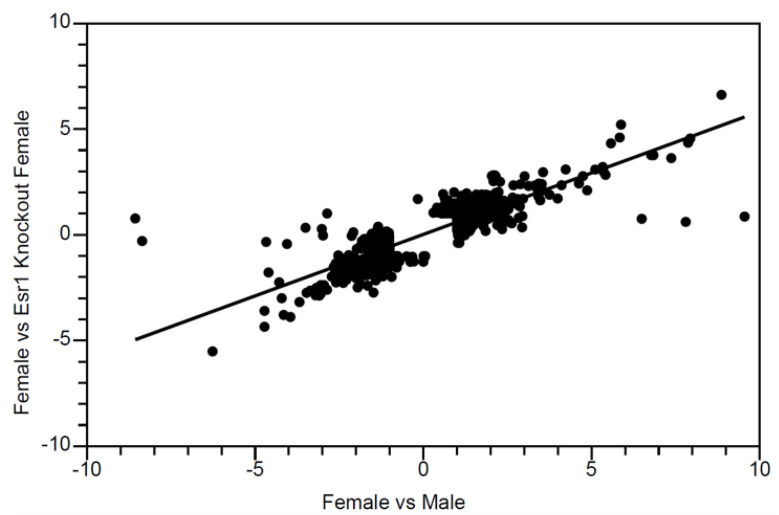
Estrogen protects females from hepatocellular carcinoma (HCC). To determine whether this protection is mediated by classic estrogen receptors, we tested HCC susceptibility in estrogen receptor-deficient mice. In contrast to a previous study, we found that diethylnitrosamine induces hepatocarcinogenesis to a significantly greater extent when females lack Esr1, which encodes Estrogen Receptor-α. Relative to wild-type littermates, Esr1 knockout females developed 9-fold more tumors. Deficiency of Esr2, which encodes Estrogen Receptor-β, did not affect liver carcinogenesis in females. Using microarrays and QPCR to examine estrogen receptor effects on hepatic gene expression patterns, we found that germline Esr1 deficiency resulted in the masculinization of gene expression in the female liver. Six of the most dysregulated genes have previously been implicated in HCC. In contrast, Esr1 deletion specifically in hepatocytes of Esr1 conditional null female mice (in which Cre was expressed from the albumin promoter) resulted in the maintenance of female-specific liver gene expression. Wild-type adult females lacking ovarian estrogen due to ovariectomy, which is known to make females susceptible to HCC, also maintained female-specific expression in the liver of females. These studies indicate that Esr1 mediates liver cancer risk, and its control of sex-specific liver gene expression involves cells other than hepatocytes.
Keywords: estrogen receptor; gene expression; hepatocarcinogenesis; liver cancer; ovariectomy; sexual dimorphism.
Conflict of interest statement
The authors declare no conflict of interest.
Figures




Comment in
-
Sex-specific changes in the expression of ER-alpha and androgen receptor with increasing tumor grade in patients with hepatocellular carcinoma.Hum Cell. 2022 May;35(3):948-951. doi: 10.1007/s13577-022-00695-4. Epub 2022 Mar 29. Hum Cell. 2022. PMID: 35349116 No abstract available.
References
Grants and funding
LinkOut - more resources
Full Text Sources
Molecular Biology Databases
Miscellaneous
