


Psychosocial Distress in Adult Patients Awaiting Cancer Surgery during the COVID-19 Pandemic
- PMID: 34068441
- PMCID: PMC8161781
- DOI: 10.3390/curroncol28030173
Psychosocial Distress in Adult Patients Awaiting Cancer Surgery during the COVID-19 Pandemic
Abstract
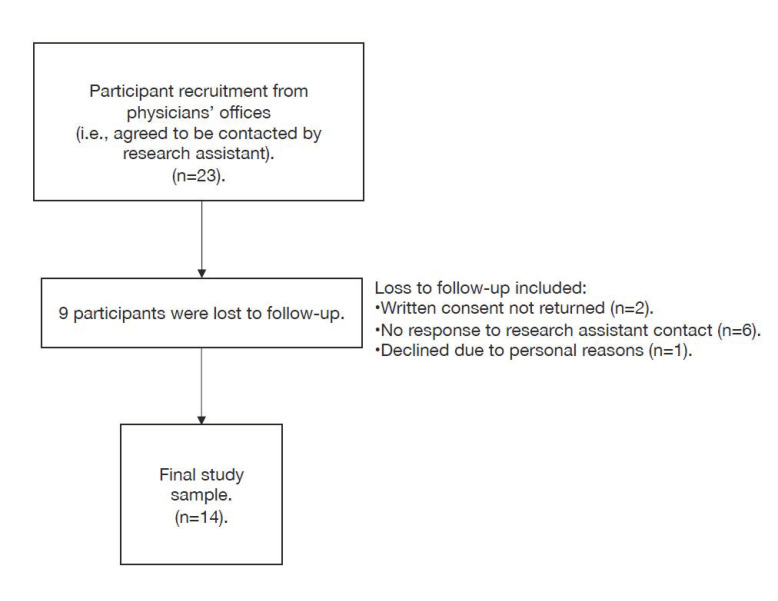
Cancer causes substantial emotional and psychosocial distress, which may be exacerbated by delays in treatment. The COVID-19 pandemic has resulted in increased wait times for many patients with cancer. In this study, the psychosocial distress associated with waiting for cancer surgery during the pandemic was investigated. This cross-sectional, convergent mixed-methods study included patients with lower priority disease during the first wave of COVID-19 at an academic, tertiary care hospital in eastern Canada. Participants underwent semi-structured interviews and completed two questionnaires: Hospital Anxiety and Depression Scale (HADS) and Perceived Stress Scale (PSS). Qualitative analysis was completed through a thematic analysis approach, with integration achieved through triangulation. Fourteen participants were recruited, with cancer sites including thyroid, kidney, breast, prostate, and a gynecological disorder. Increased anxiety symptoms were found in 36% of patients and depressive symptoms in 14%. Similarly, 64% of patients experienced moderate or high stress. Six key themes were identified, including uncertainty, life changes, coping strategies, communication, experience, and health services. Participants discussed substantial distress associated with lifestyle changes and uncertain treatment timelines. Participants identified quality communication with their healthcare team and individualized coping strategies as being partially protective against such symptoms. Delays in surgery for patients with cancer during the COVID-19 pandemic resulted in extensive psychosocial distress. Patients may be able to mitigate these symptoms partially through various coping mechanisms and improved communication with their healthcare teams.
Keywords: COVID-19; cancer; psychosocial distress; waiting lists.
Conflict of interest statement
The authors have no conflict of interest to disclose.
References
-
- Mitchell A.J., Chan M., Bhatti H., Halton M., Grassi L., Johansen C., Meader N. Prevalence of depression, anxiety, and adjustment disorder in oncological, haematological, and palliative-care settings: A meta-analysis of 94 interview-based studies. Lancet Oncol. 2011;12:160–174. doi: 10.1016/S1470-2045(11)70002-X. - DOI - PubMed
-
- Nova Scotia Health Authority Perioperative Services NSHA Perioperative and Interventional Radiology Services during COVID-19 Pandemic. [(accessed on 30 January 2021)]; Available online: https://www.cdha.nshealth.ca/system/files/sites/documents/perioperative-....
-
- Tongco M.D.C. Purposive sampling as a tool for informant selection. Ethnobot. Res. Appl. 2007;5:147–158. doi: 10.17348/era.5.0.147-158. - DOI
Publication types
MeSH terms
LinkOut - more resources
Full Text Sources
Medical
