


The Mechanism of Asparagine Endopeptidase in the Progression of Malignant Tumors: A Review
- PMID: 34068767
- PMCID: PMC8151911
- DOI: 10.3390/cells10051153
The Mechanism of Asparagine Endopeptidase in the Progression of Malignant Tumors: A Review
Abstract
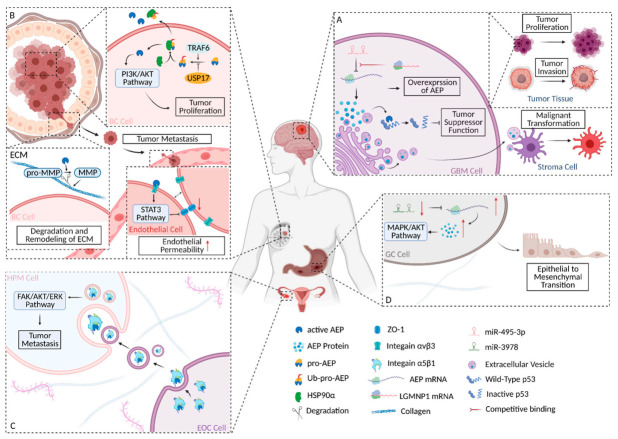
Asparagine endopeptidase (AEP), also called legumain, is currently the only known cysteine protease that specifically cleaves peptide bonds in asparaginyl residue in the mammalian genome. Since 2003, AEP has been reported to be widely expressed in a variety of carcinomas and is considered a potential therapeutic target. In the following years, researchers intensively investigated the substrates of AEP and the mechanism of AEP in partial tumors. With the identification of substrate proteins such as P53, integrin αvβ3, MMP-2, and MMP-9, the biochemical mechanism of AEP in carcinomas is also more precise. This review will clarify the probable mechanisms of AEP in the progression of breast carcinoma, glioblastoma, gastric carcinoma, and epithelial ovarian carcinoma. This review will also discuss the feasibility of targeted therapy with AEP inhibitor (AEPI) in these carcinomas.
Keywords: asparagine endopeptidase; breast cancer; epithelial ovarian cancer; gastric cancer; glioblastoma.
Conflict of interest statement
The authors declare no conflict of interest.
Figures
References
Publication types
MeSH terms
Substances
LinkOut - more resources
Full Text Sources
Medical
Research Materials
Miscellaneous
