


Acute Myeloid Leukemia: Is It T Time?
- PMID: 34069204
- PMCID: PMC8156992
- DOI: 10.3390/cancers13102385
Acute Myeloid Leukemia: Is It T Time?
Abstract
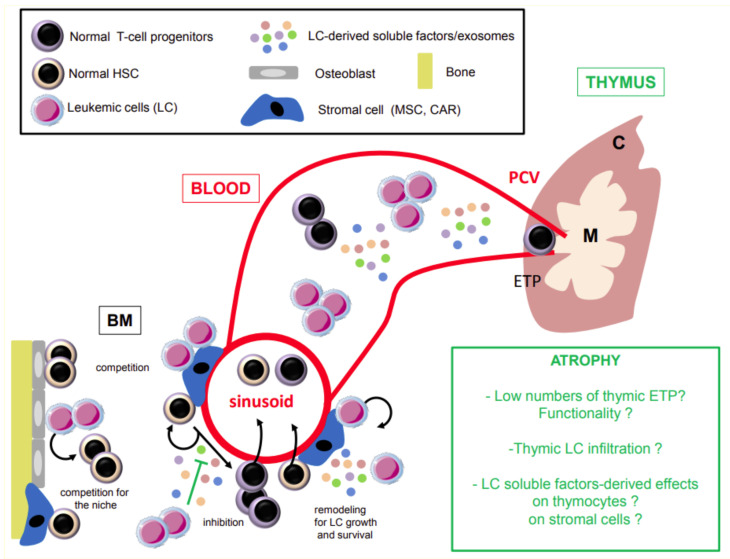
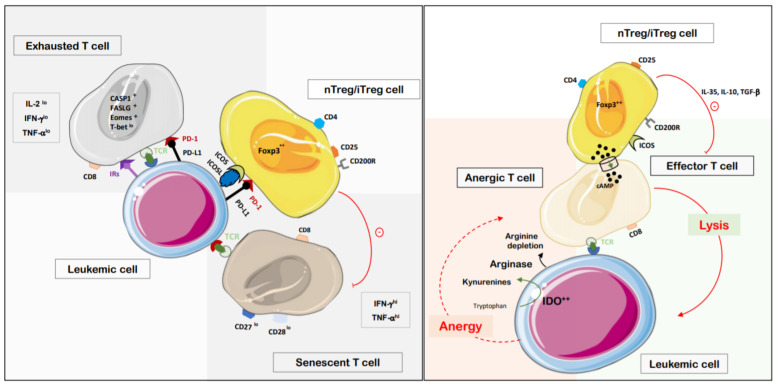
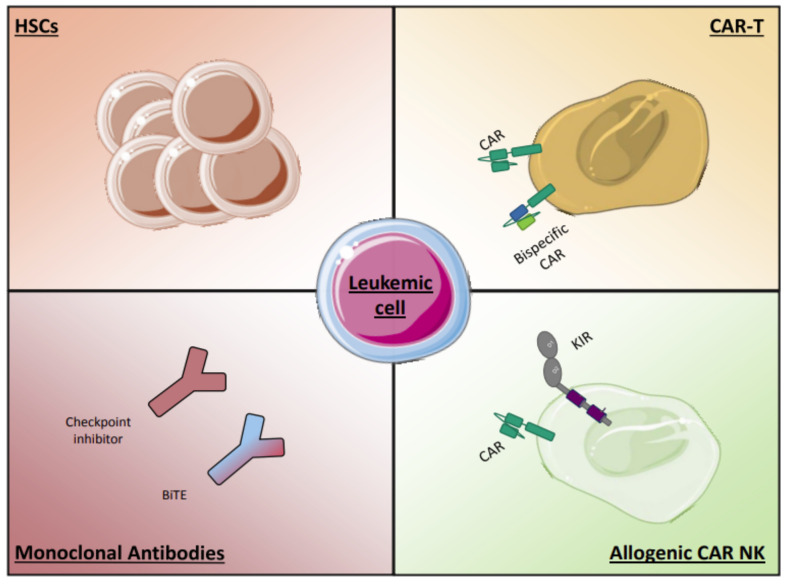
Acute myeloid leukemia (AML) is a heterogeneous disease driven by impaired differentiation of hematopoietic primitive cells toward myeloid lineages (monocytes, granulocytes, red blood cells, platelets), leading to expansion and accumulation of "stem" and/or "progenitor"-like or differentiated leukemic cells in the bone marrow and blood. AML progression alters the bone marrow microenvironment and inhibits hematopoiesis' proper functioning, causing sustained cytopenia and immunodeficiency. This review describes how the AML microenvironment influences lymphoid lineages, particularly T lymphocytes that originate from the thymus and orchestrate adaptive immune response. We focus on the elderly population, which is mainly affected by this pathology. We discuss how a permissive AML microenvironment can alter and even worsen the thymic function, T cells' peripheral homeostasis, phenotype, and functions. Based on the recent findings on the mechanisms supporting that AML induces quantitative and qualitative changes in T cells, we suggest and summarize current immunotherapeutic strategies and challenges to overcome these anomalies to improve the anti-leukemic immune response and the clinical outcome of patients.
Keywords: T cells; acute myeloid leukemia; immunotherapy; thymus function.
Conflict of interest statement
The authors declare no conflict of interest.
Figures
References
-
- Döhner H., Estey E., Grimwade D., Amadori S., Appelbaum F.R., Büchner T., Dombret H., Ebert B.L., Fenaux P., Larson R.A., et al. Diagnosis and management of AML in adults: 2017 ELN recommendations from an international expert panel. Blood. 2017;129:424–447. doi: 10.1182/blood-2016-08-733196. - DOI - PMC - PubMed
Publication types
LinkOut - more resources
Full Text Sources
