


Self-Powered Smart Beehive Monitoring and Control System (SBMaCS)
- PMID: 34069366
- PMCID: PMC8158743
- DOI: 10.3390/s21103522
Self-Powered Smart Beehive Monitoring and Control System (SBMaCS)
Abstract
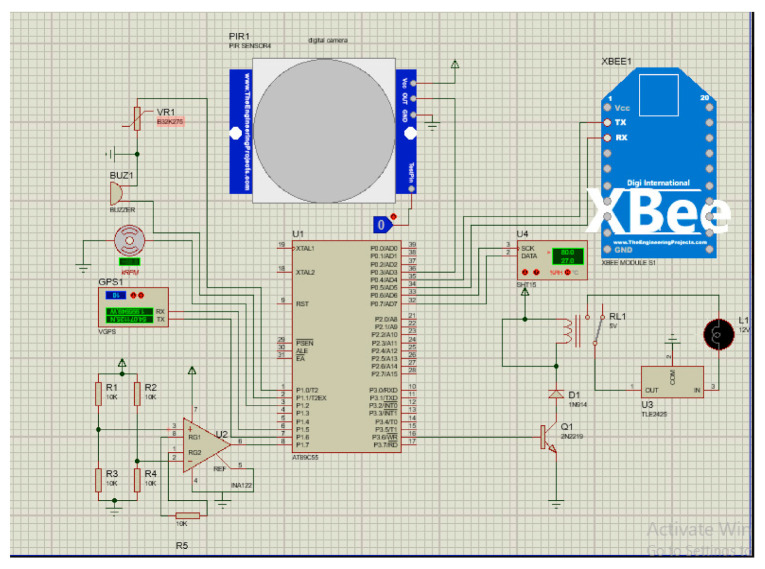
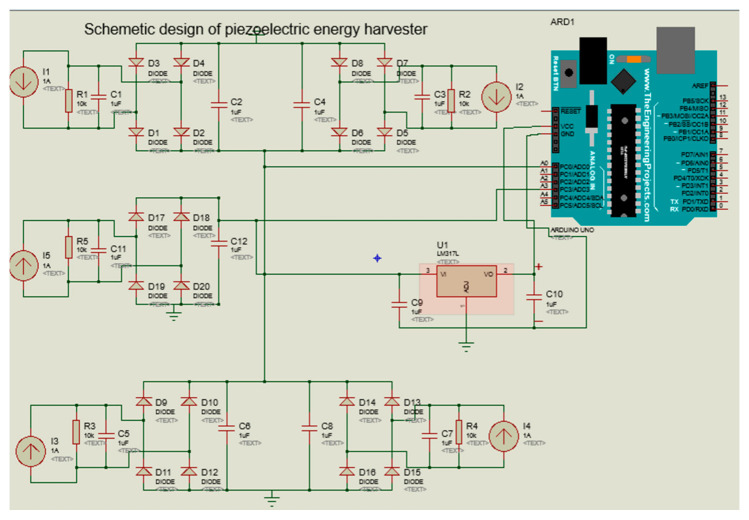
Beekeeping in Africa has been practiced for many years through successive generations and along inherited patterns. Beekeepers continue to face challenges in accessing consistent and business-driven markets for their bee products. In addition, the honeybee populations are decreasing due to colony collapse disorder (CCD), fire, loss of bees in swarming, honey buggers and other animals, moths, starvation, cold weather, and Varoa mites. The main issues are related to un-controlled temperature, humidity, and traditional management of beekeeping. These challenges result in low production of honey and colony losses. The control of the environmental conditions within and surrounding the beehives are not available to beekeepers due to the lack of monitoring systems. A Smart Beehive System using Internet of Things (IoT) technology would allow beekeepers to keep track of the amount of honey created in their hives and bee colonies even when they are far from their hives, through mobile phones, which would curtail the challenges currently faced by the beekeepers. However, there are challenges in the design of energy-efficient embedded electronic devices for IoT. A promising solution is to provide energy autonomy to the IoT nodes that will harvest residual energy from ambient sources, such as motion, vibrations, light, or heat. This paper proposes a Self-Powered Smart Beehive Monitoring and Control System (SBMaCS) using IoT to support remote follow-up and control, enhancing bee colonies' security and thus increasing the honey productivity. First, we develop the SBMaCS hardware prototype interconnecting various sensors, such as temperature sensor, humidity sensor, piezoelectric transducer-which will work as a weight sensor-motion sensor, and flame sensor. Second, we introduce energy harvesting models to self-power the SBMaCS by analyzing the (i) energy harvested from adult bees' vibrations, (ii) energy harvesting through the piezoelectric transducer, and (iii) radio frequency energy harvesting. Third, we develop a mobile phone application that interacts with the SBMaCS hardware to monitor and control the various parameters related to the beehives. Finally, the SBMaCS PCB layout is also designed. SBMaCS will help beekeepers to successfully monitor and control some important smart beekeeping activities wherever they are using their mobile phone application.
Keywords: Smart Beehive Monitoring and Control System (SBMaCS); beekeeping; bees’ vibration; energy harvesting; piezoelectric transducer; smart beehive.
Conflict of interest statement
The authors declare no conflict of interest.
Figures





References
-
- Dietlein D.G. A Method for Remote Monitoring of Activity of Honeybee Colonies by Sound Analysis. J. Apic. Res. 1985;24:176–183. doi: 10.1080/00218839.1985.11100668. - DOI
-
- Garibaldi L.A., Steffan-Dewenter I., Winfree R., Aizen M.A., Bommarco R., Cunningham S.A., Kremen C., Carvalheiro L.G., Harder L.D., Afik O., et al. Wild Pollinators Enhance Fruit Set of Crops Regardless of Honey Bee Abundance. Science. 2013;339:1608–1611. doi: 10.1126/science.1230200. - DOI - PubMed
-
- Ntawuzumunsi E., Kumaran S. Design and Implementation of Smart Bees Hiving & Monitoring System; Proceedings of the 2019 IST-Africa Week Conference (IST-Africa); Nairobi, Kenya. 8–10 May 2019; pp. 1–9.
-
- Watson K., Stallins J.A. Honey Bees and Colony Collapse Disorder: A Pluralistic Reframing. Geogr. Compass. 2016;10:222–236. doi: 10.1111/gec3.12266. - DOI
-
- Qandour A., Ahmad I., Habibi D., Leppard M. Remote beehive monitoring using acoustic signals. Acoust. Aust. 2014;42:204–209.
MeSH terms
LinkOut - more resources
Full Text Sources
