


Exposure to RF-EMF Alters Postsynaptic Structure and Hinders Neurite Outgrowth in Developing Hippocampal Neurons of Early Postnatal Mice
- PMID: 34069478
- PMCID: PMC8159076
- DOI: 10.3390/ijms22105340
Exposure to RF-EMF Alters Postsynaptic Structure and Hinders Neurite Outgrowth in Developing Hippocampal Neurons of Early Postnatal Mice
Abstract
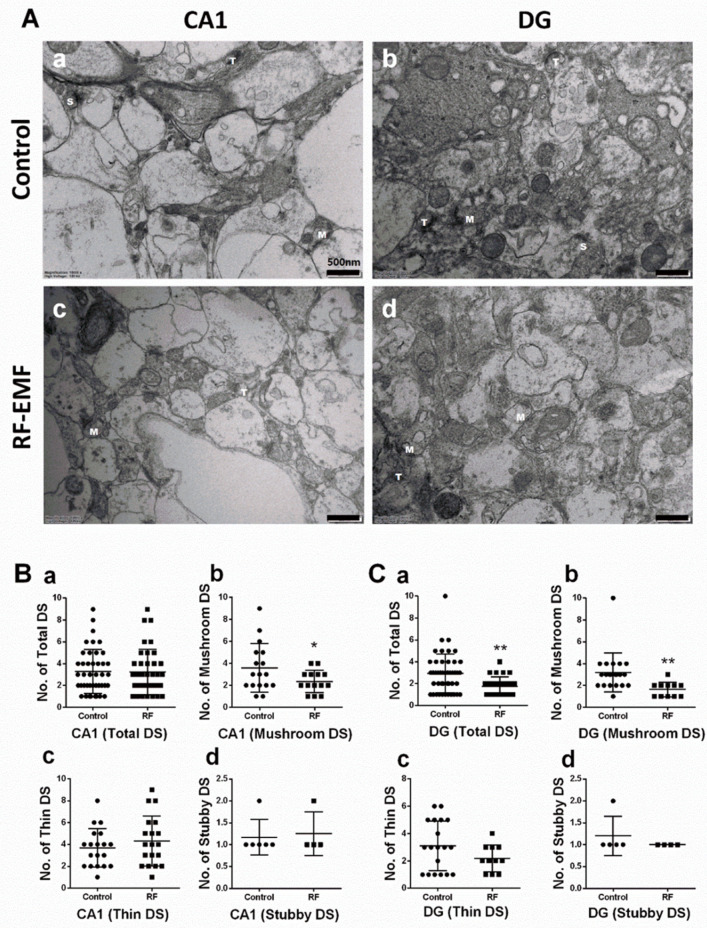
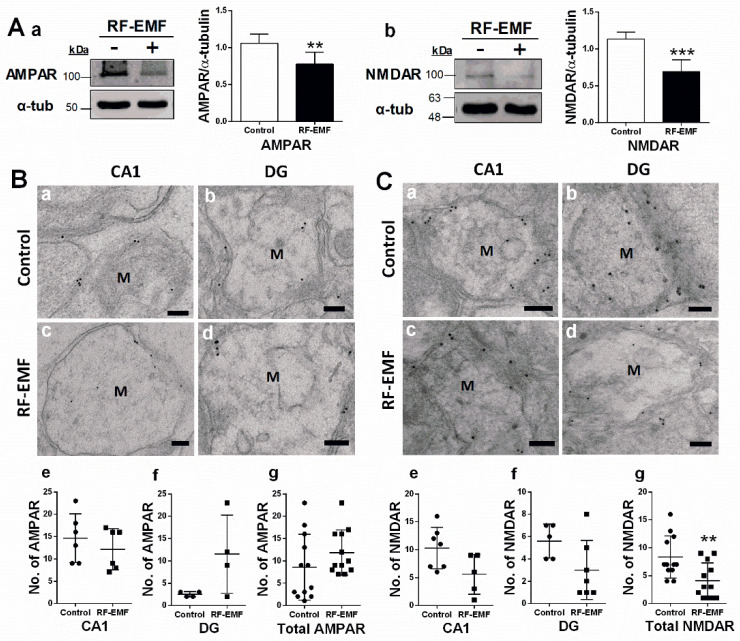
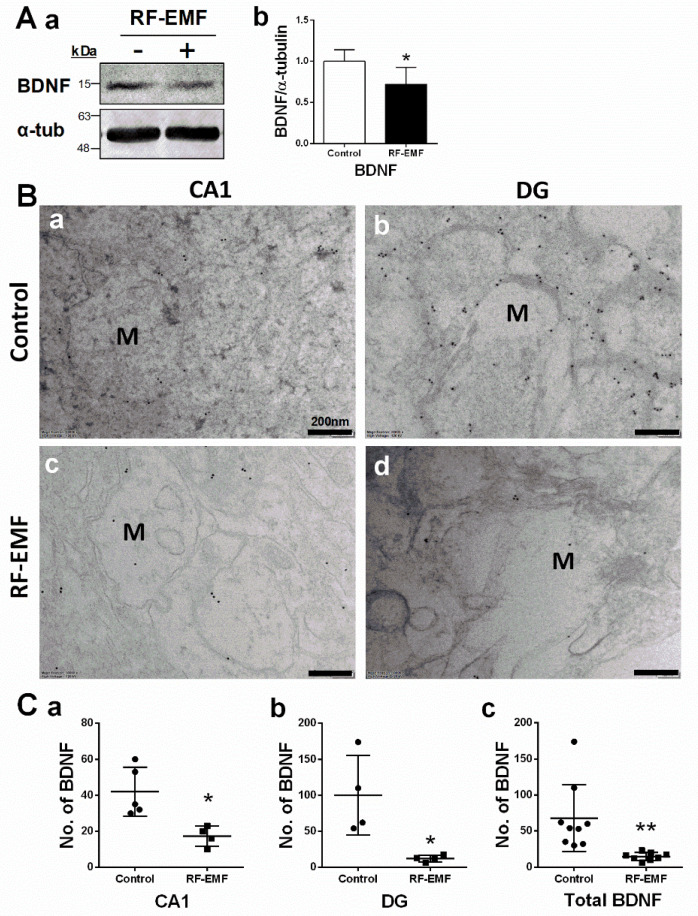
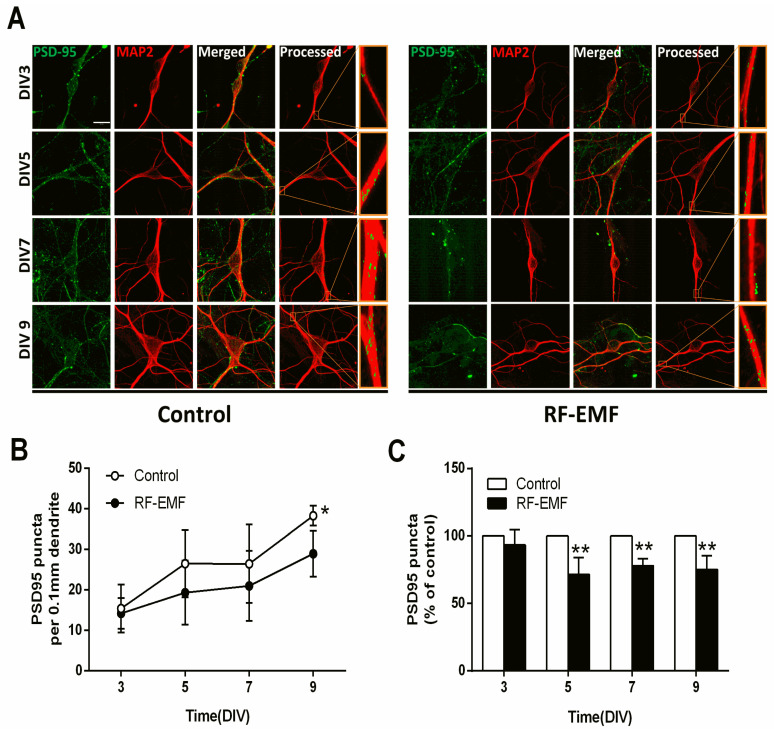
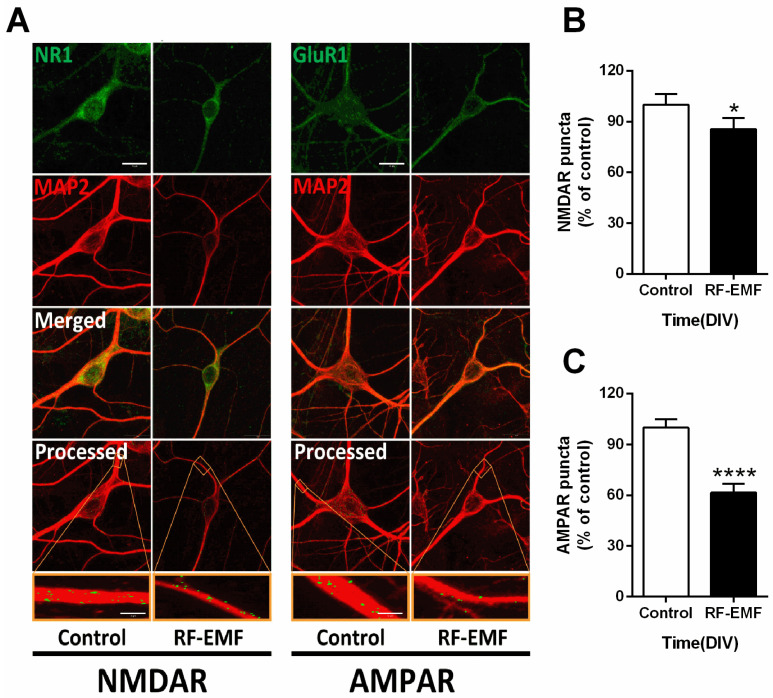
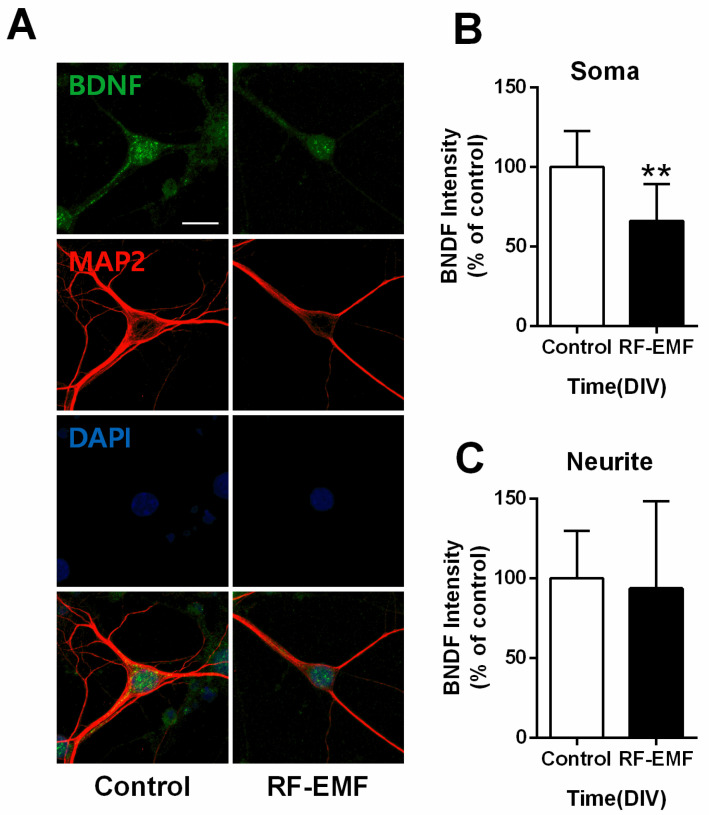
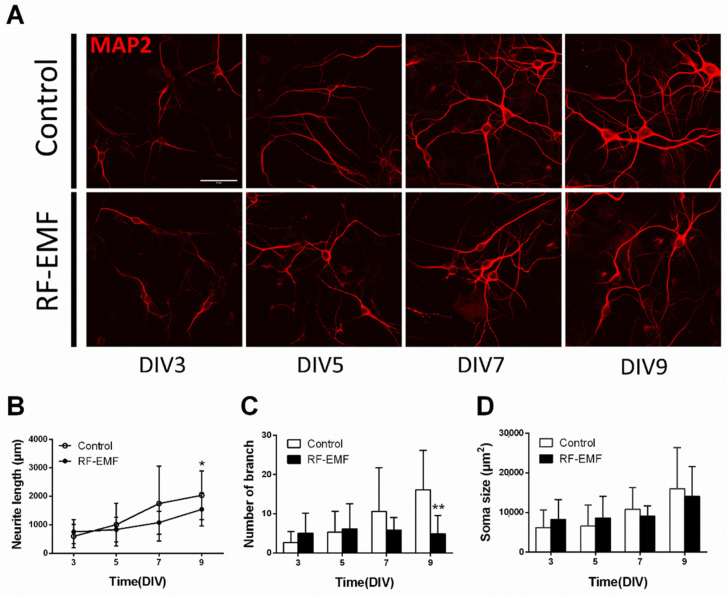
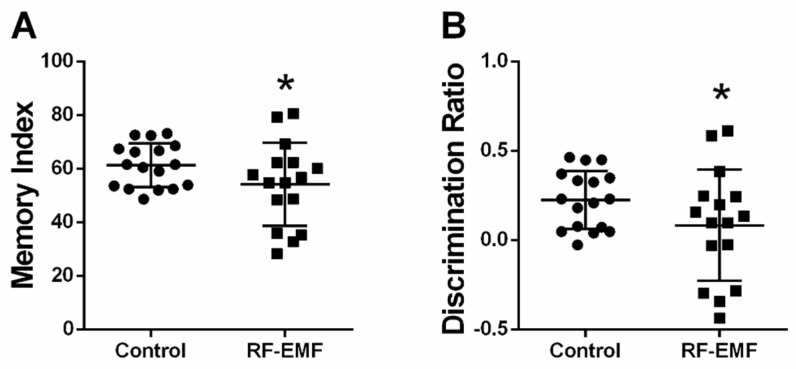
Exposure to radiofrequency electromagnetic fields (RF-EMFs) has increased rapidly in children, but information on the effects of RF-EMF exposure to the central nervous system in children is limited. In this study, pups and dams were exposed to whole-body RF-EMF at 4.0 W/kg specific absorption rate (SAR) for 5 h per day for 4 weeks (from postnatal day (P) 1 to P28). The effects of RF-EMF exposure on neurons were evaluated by using both pups' hippocampus and primary cultured hippocampal neurons. The total number of dendritic spines showed statistically significant decreases in the dentate gyrus (DG) but was not altered in the cornu ammonis (CA1) in hippocampal neurons. In particular, the number of mushroom-type dendritic spines showed statistically significant decreases in the CA1 and DG. The expression of glutamate receptors was decreased in mushroom-type dendritic spines in the CA1 and DG of hippocampal neurons following RF-EMF exposure. The expression of brain-derived neurotrophic factor (BDNF) in the CA1 and DG was significantly lower statistically in RF-EMF-exposed mice. The number of post-synaptic density protein 95 (PSD95) puncta gradually increased over time but was significantly decreased statistically at days in vitro (DIV) 5, 7, and 9 following RF-EMF exposure. Decreased BDNF expression was restricted to the soma and was not observed in neurites of hippocampal neurons following RF-EMF exposure. The length of neurite outgrowth and number of branches showed statistically significant decreases, but no changes in the soma size of hippocampal neurons were observed. Further, the memory index showed statistically significant decreases in RF-EMF-exposed mice, suggesting that decreased synaptic density following RF-EMF exposure at early developmental stages may affect memory function. Collectively, these data suggest that hindered neuronal outgrowth following RF-EMF exposure may decrease overall synaptic density during early neurite development of hippocampal neurons.
Keywords: RF-EMF; dendritic spine; glutamate receptor; hippocampus; neurite outgrowth; neuron.
Conflict of interest statement
The authors declare no conflict of interest. The funders had no role in the design of the study; in the collection, analyses, or interpretation of data; in the writing of the manuscript, or in the decision to publish the results.
Figures
References
-
- Birks L.E., Struchen B., Eeftens M., van Wel L., Huss A., Gajšek P., Kheifets L., Gallastegi M., Dalmau-Bueno A., Estarlich M., et al. Spatial and temporal variability of personal environmental exposure to radio frequency electromagnetic fields in children in Europe. Environ. Int. 2018;117:204–214. doi: 10.1016/j.envint.2018.04.026. - DOI - PubMed
MeSH terms
Substances
Grants and funding
LinkOut - more resources
Full Text Sources
Medical
Miscellaneous
