


Chemical Composition and New Biological Activities of Essential Oil and Hydrosol of Hypericum perforatum L. ssp. veronense (Schrank) H. Lindb
- PMID: 34069597
- PMCID: PMC8161325
- DOI: 10.3390/plants10051014
Chemical Composition and New Biological Activities of Essential Oil and Hydrosol of Hypericum perforatum L. ssp. veronense (Schrank) H. Lindb
Abstract
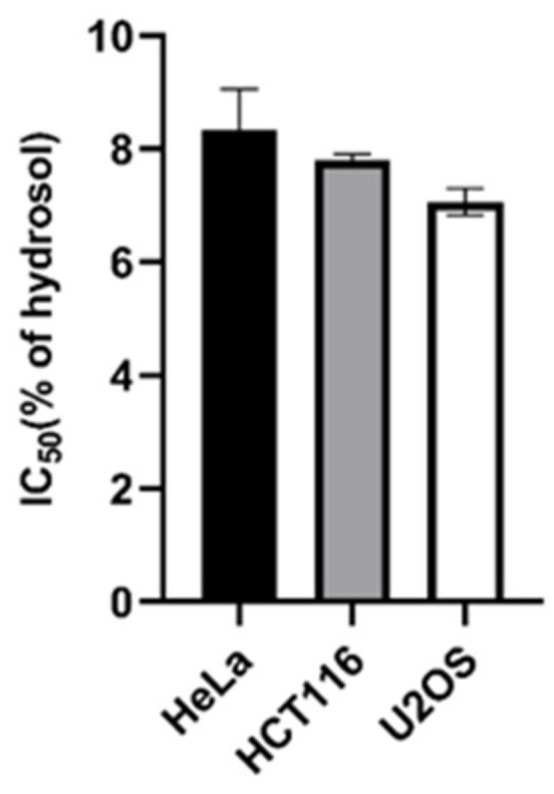
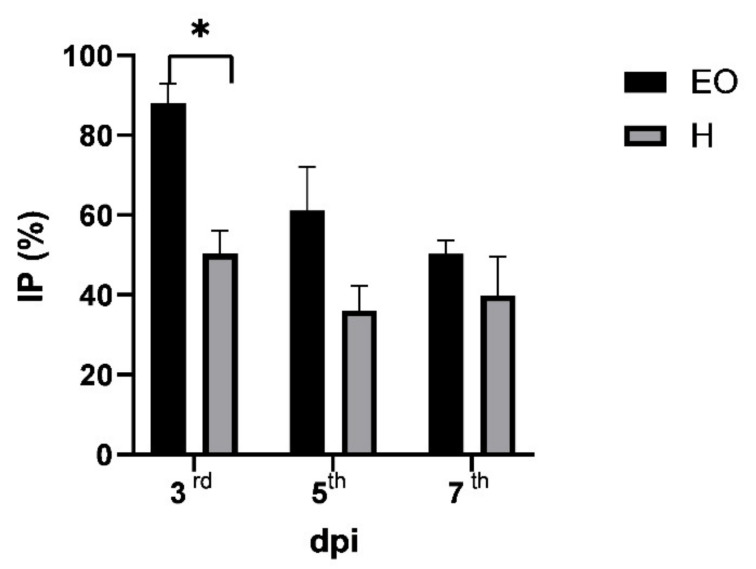
The chemical profile, antiproliferative, antioxidant and antiphytoviral activities of the species Hypericum perforatum ssp. veronense (Schrank) H. Lindb. (Clusiaceae) were investigated. Free volatiles were isolated and the chemical composition was determined in the lipophilic fraction (essential oil) and for the first time in the water fraction (hydrosol). The aim is to provide phytochemical data for H. perforatum ssp. veronense useful for distinguishing ssp. veronense from ssp. angustifolium, as there are taxonomic disagreements between them and the composition of the secretory products may be helpful in this respect. In the essential oil, the most abundant compounds identified were α-pinene and n-nonane, while in the hydrosol, myrtenol, carvacrol and α-pinene were the most abundant. Overall, the class of monoterpenes and oxygenated monoterpenes dominated in the EO and hydrosol samples. The essential oil showed high antioxidant activity, in contrast to the antiproliferative activity, where the hydrosol showed exceptional activity against three cancer cell lines: Hela (cervical cancer cell line), HCT116 (human colon cancer cell line) and U2OS (human osteosarcoma cell line). Both the essential oil and hydrosol showed antiphytoviral activity against tobacco mosaic virus infection on the local host plants. This is the first report dealing with biological activities of hydrosol of H. perforatum ssp. veronense, and the obtained results suggest that this traditional medicinal plant is a valuable source of volatiles with promising antiproliferative, antioxidant and antiphytoviral activities.
Keywords: Hypericum perforatum ssp. veronense; antioxidant and antiphytoviral activity; antiproliferative; essential oil; hydrosol.
Conflict of interest statement
The authors declare no conflict of interest.
Figures
References
-
- Saroglou V., Marin P.D., Rancic A., Veljic M., Skaltsa H. Composition and antimicrobial activity of the essential oil of six Hypericum species from Serbia. Biochem. Syst. Ecol. 2007;35:146–152. doi: 10.1016/j.bse.2006.09.009. - DOI
LinkOut - more resources
Full Text Sources
