


HCV Proteins Modulate the Host Cell miRNA Expression Contributing to Hepatitis C Pathogenesis and Hepatocellular Carcinoma Development
- PMID: 34069740
- PMCID: PMC8161081
- DOI: 10.3390/cancers13102485
HCV Proteins Modulate the Host Cell miRNA Expression Contributing to Hepatitis C Pathogenesis and Hepatocellular Carcinoma Development
Abstract
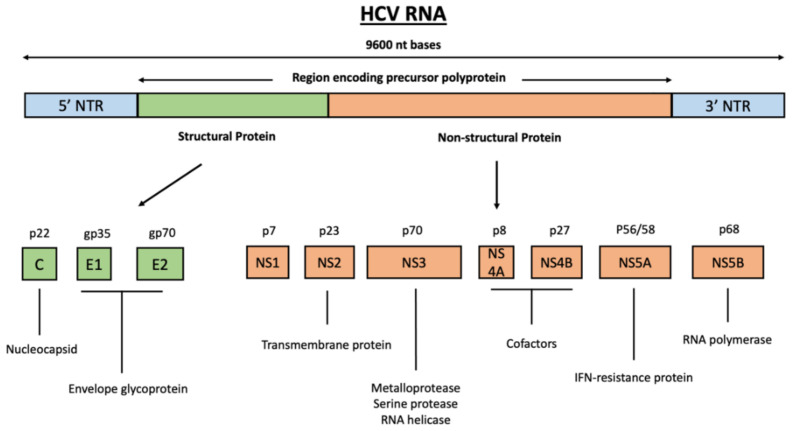
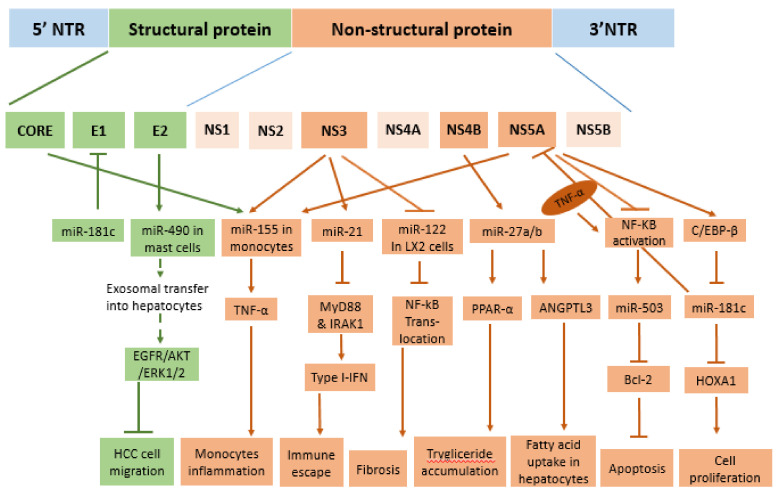
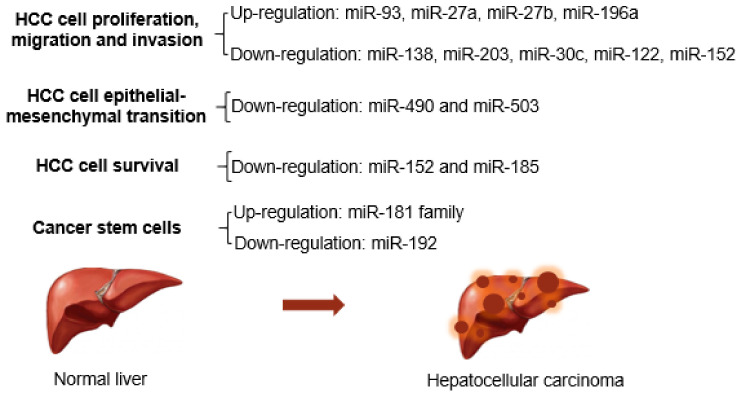
Hepatitis C virus (HCV) genome encodes for one long polyprotein that is processed by cellular and viral proteases to generate 10 polypeptides. The viral structural proteins include the core protein, and the envelope glycoproteins E1 and E2, present at the surface of HCV particles. Non-structural (NS) proteins consist of NS1, NS2, NS3, NS4A, NS4B, NS5a, and NS5b and have a variable function in HCV RNA replication and particle assembly. Recent findings evidenced the capacity of HCV virus to modulate host cell factors to create a favorable environment for replication. Indeed, increasing evidence has indicated that the presence of HCV is significantly associated with aberrant miRNA expression in host cells, and HCV structural and non-structural proteins may be responsible for these alterations. In this review, we summarize the recent findings on the role of HCV structural and non-structural proteins in the modulation of host cell miRNAs, with a focus on the molecular mechanisms responsible for the cell re-programming involved in viral replication, immune system escape, as well as the oncogenic process. In this regard, structural and non-structural proteins have been shown to modulate the expression of several onco-miRNAs or tumor suppressor miRNAs.
Keywords: HCC; HCV; hepatitis C; miRNAs; microRNA; viral proteins.
Conflict of interest statement
The authors declare no conflict of interest. The funders had no role in the design of the study; in the collection, analyses, or interpretation of data; in the writing of the manuscript, or in the decision to publish the results.
Figures
References
-
- GBD 2015 Mortality and Causes of Death Collaborators Global, regional, and national life expectancy, all-cause mortality, and cause-specific mortality for 249 causes of death, 1980–2015: A systematic analysis for the global burden of disease study 2015. Lancet. 2016;388:1459–1544. doi: 10.1016/S0140-6736(16)31012-1. - DOI - PMC - PubMed
-
- WHO . Global Hepatitis Report, 2017. WHO; Geneva, Switzerland: 2017.
-
- Farci P., Strazzera R., Alter H.J., Farci S., Degioannis D., Coiana A., Peddis G., Usai F., Serra G., Chessa L., et al. Early changes in Hepatitis C viral quasispecies during interferon therapy predict the therapeutic outcome. Proc. Natl. Acad. Sci. USA. 2002;99:3081–3086. doi: 10.1073/pnas.052712599. - DOI - PMC - PubMed
-
- Mchutchison J.G., Gordon S.C., Schiff E.R., Shiffman M.L., Lee W.M., Rustgi V.K., Goodman Z.D., Ling M.-H., Cort S., Albrecht J.K. Interferon Alfa-2b alone or in combination with ribavirin as initial treatment for chronic Hepatitis C. N. Engl. J. Med. 1998;339:1485–1492. doi: 10.1056/NEJM199811193392101. - DOI - PubMed
Publication types
Grants and funding
LinkOut - more resources
Full Text Sources
Miscellaneous
