


Effect of Protease Type and Peptide Size on the In Vitro Antioxidant, Antihypertensive and Anti-Diabetic Activities of Eggplant Leaf Protein Hydrolysates
- PMID: 34069802
- PMCID: PMC8157255
- DOI: 10.3390/foods10051112
Effect of Protease Type and Peptide Size on the In Vitro Antioxidant, Antihypertensive and Anti-Diabetic Activities of Eggplant Leaf Protein Hydrolysates
Abstract
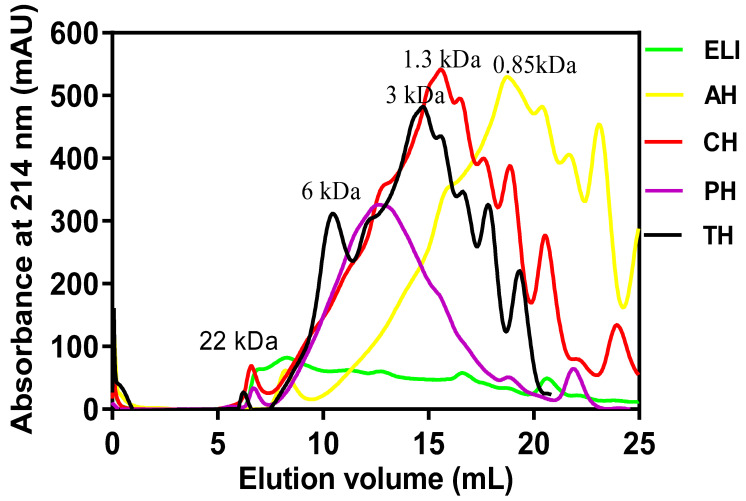
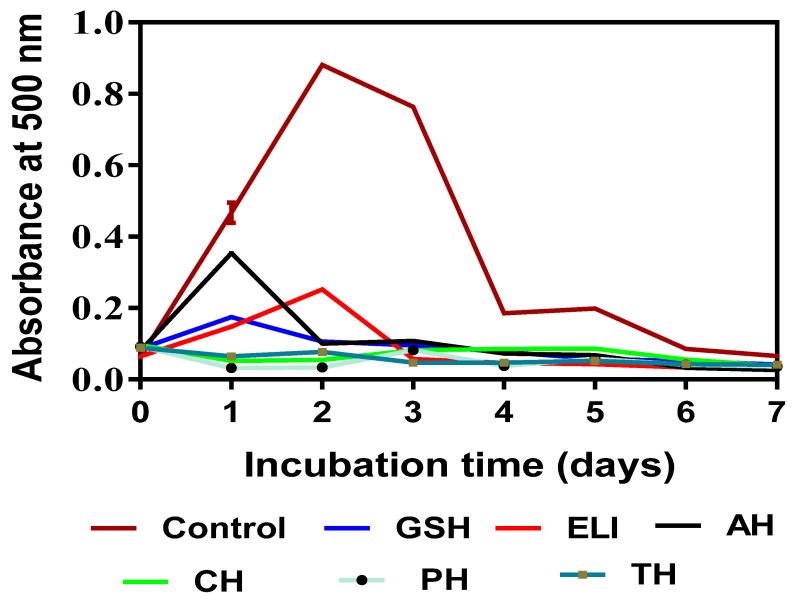
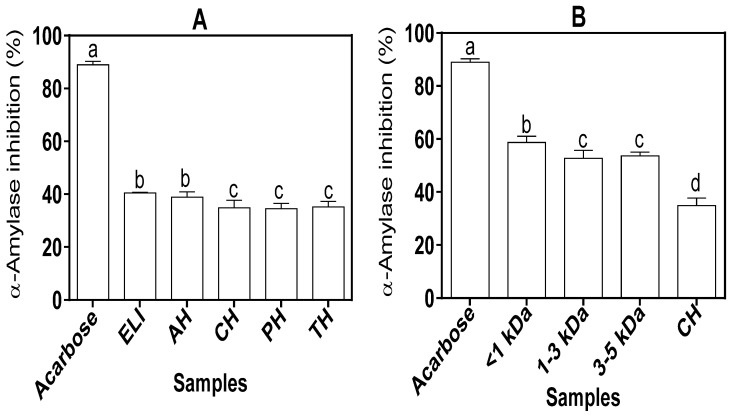
Solanum macrocarpon (eggplant) leaf protein isolate (ELI) was hydrolyzed using four different enzymes to produce hydrolysates from alcalase (AH), chymotrypsin (CH) pepsin (PH) and trypsin (TH). CH had an overall stronger antioxidant property and was separated using ultrafiltration membranes into <1, 1-3 and 3-5 kDa peptide fractions. Gel-permeation chromatography confirmed conversion of the ELI (average of 22 kDa) into protein hydrolysates that contained smaller peptides (<6 kDa). A total of 23 peptides consisting of tri and tetrapeptides were identified from the CH, which is a wider spectrum when compared to seven for AH and four each for TH and PH. CH exhibited stronger scavenging activities against DPPH and hydroxyl radicals. CH and TH exhibited the strongest inhibitions against angiotensin-converting enzyme. In contrast, AH was the strongest inhibitor of α-amylase while AH and PH had strong inhibitory activities against α-glucosidase when compared with other hydrolysates. Ultrafiltration fractionation produced peptides that were stronger (p < 0.05) scavengers of DPPH, and hydroxyl radicals, in addition to better metal-chelating and enzyme inhibition agents. The study concluded that the eggplant protein hydrolysates and the UF fractions may find applications in tackling oxidative stress-related diseases and conditions involving excessive activities of the metabolic enzymes.
Keywords: Solanum macrocarpon; antioxidant; enzyme inhibition; leaf protein; membrane ultrafiltration; peptide sequence; protein hydrolysate.
Conflict of interest statement
The authors declare no conflict of interest.
Figures



References
-
- Udenigwe C.C. Bioinformatics approaches, prospects and challenges of food bioactive peptide research. Trends Food Sci. Technol. 2014;36:137–143. doi: 10.1016/j.tifs.2014.02.004. - DOI
-
- Li-Chan E.C.Y. Bioactive peptides and protein hydrolysates: Research trends and challenges for application as nutraceuticals and functional food ingredients. Curr. Opin. Food Sci. 2015;1:28–37. doi: 10.1016/j.cofs.2014.09.005. - DOI
-
- Awosika T.O., Aluko R.E. Inhibition of the in vitro activities of α-amylase, α-glucosidase and pancreatic lipase by yellow field pea (Pisum sativum L.) protein hydrolysates. Int. J. Food Sci. Technol. 2019;54:2021–2034. doi: 10.1111/ijfs.14087. - DOI
-
- Olagunju A.I., Omoba O.S., Enujiugha V.N., Alashi A.M., Aluko R.E. Pigeon pea enzymatic protein hydrolysates and ultrafiltration peptide fractions as potential sources of antioxidant peptides: An in vitro study. LWT-Food Sci. Technol. 2018;97:269–278. doi: 10.1016/j.lwt.2018.07.003. - DOI
Grants and funding
LinkOut - more resources
Full Text Sources
