


Role of Fucoidan on the Growth Behavior and Blood Metabolites and Toxic Effects of Atrazine in Nile Tilapia Oreochromis niloticus (Linnaeus, 1758)
- PMID: 34069982
- PMCID: PMC8157872
- DOI: 10.3390/ani11051448
Role of Fucoidan on the Growth Behavior and Blood Metabolites and Toxic Effects of Atrazine in Nile Tilapia Oreochromis niloticus (Linnaeus, 1758)
Abstract
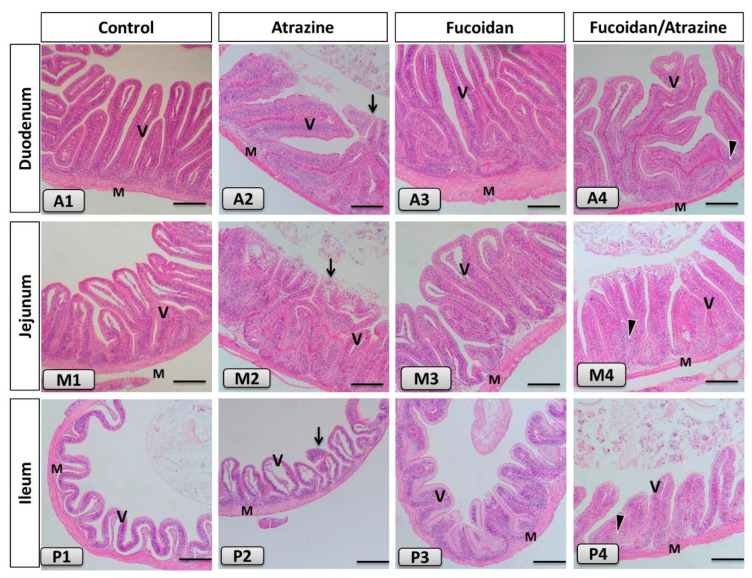
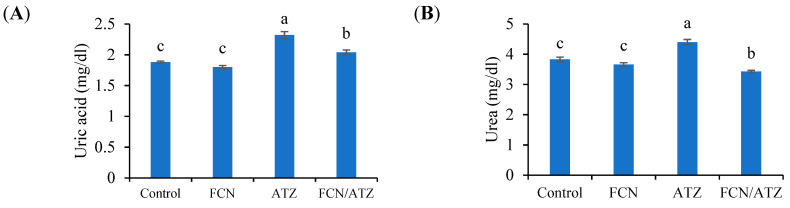
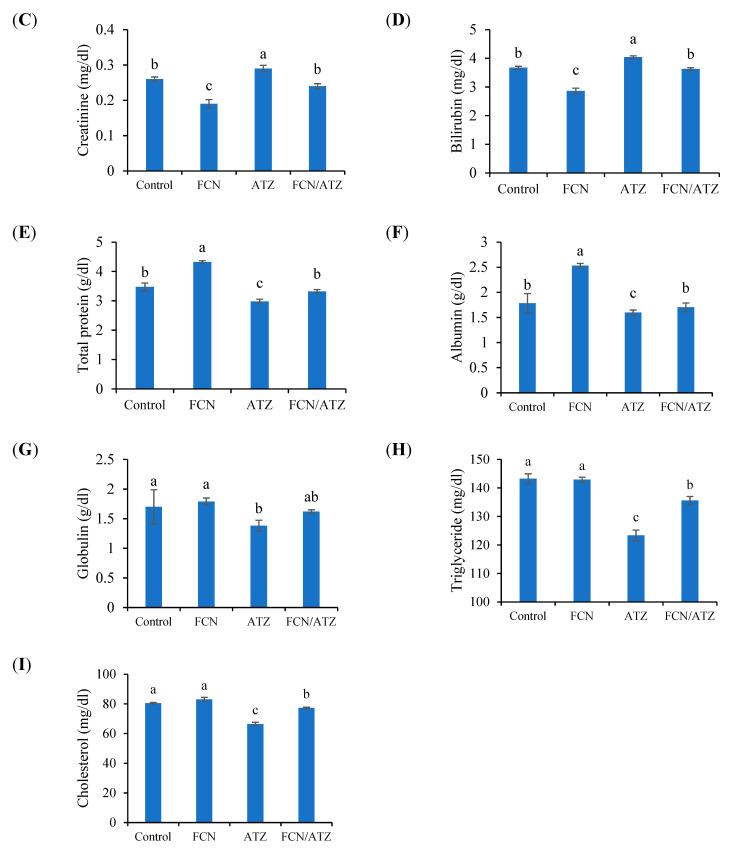
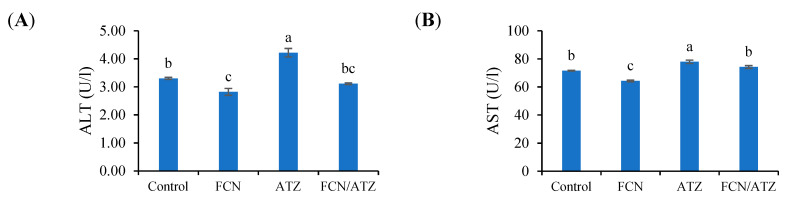
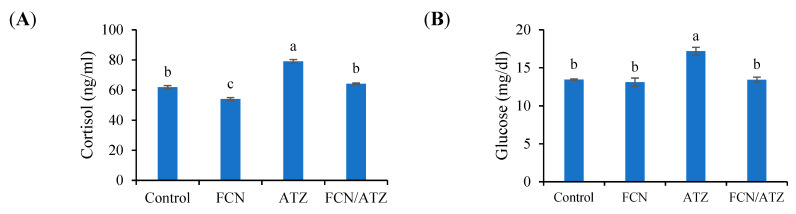
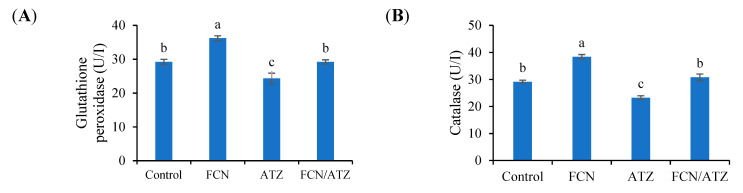
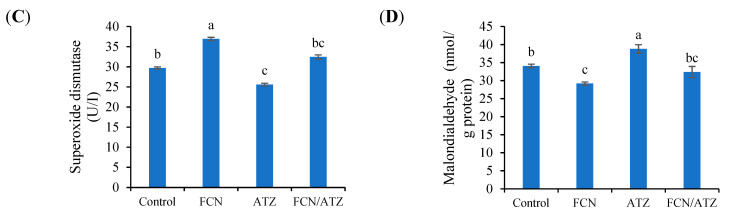
Waterborne herbicides are stressful agents that threaten the productivity and safety of finfish species. In this study, the toxicity impacts of atrazine (ATZ) and the protective role of fucoidan were investigated on the health performance of Nile tilapia. For 40 days, the total number of 180 Nile tilapia was assigned in four groups (triplicates, 15 fish/replicate), where the first (control) and third groups were offered the control diet, while the second and fourth groups were offered a fucoidan (FCN). Further, in the third and fourth groups, the water was mixed with atrazine (ATZ) at 1.39 mg/L daily. The growth rate, FCR, and survival rate were markedly enhanced by fucoidan but severely declined by ATZ exposure (p < 0.05). The morphological structure of the intestine in the control fish revealed normal structure, while fucoidan-treated groups showed eminent enhancement and branching of the intestinal villi. The intestine of ATZ-treated fish revealed deterioration and the intestinal mucosa, inflammatory cell infiltration, and separation of lining epithelium. The highest Hb, PCV, RBCs, WBCs, total protein, and albumin were observed in Nile tilapia fed fucoidan, but the worst values were seen in ATZ-intoxicated fish (p < 0.05). The liver-related enzymes (ALT and AST) and kidney function (urea and creatinine) showed impaired values by ATZ toxicity and were regulated by dietary fucoidan. Meanwhile, fish fed fucoidan and exposed to ATZ had lower total cholesterol and triglyceride values than fish exposed to ATZ without fucoidan feeding (p < 0.05). The SOD, CAT, GPx, cortisol, and glucose levels were increased in ATZ-exposed fish and reduced by fucoidan (p < 0.05). However, the level of malondialdehyde (MDA) was reduced in fucoidan-fed fish and increased in ATZ-exposed fish (p < 0.05). Altogether, dietary fucoidan is required in fish diets to alleviate the impacts of ATZ-induced toxicity.
Keywords: aquaculture; finfish; hepatotoxicity; herbicides; renal toxicity; seaweeds extracts.
Conflict of interest statement
The authors declare no conflict of interest.
Figures
References
-
- De Anna J.S., Castro J.M., Darraz L.A., Elías F.D., Cárcamo J.G., Luquet C.M. Exposure to hydrocarbons and chlorpyrifos alters the expression of nuclear receptors and antioxidant, detoxifying, and immune response proteins in the liver of the rainbow trout, Oncorhynchus mykiss. Ecotoxicol. Environ. Saf. 2021;208:111394. doi: 10.1016/j.ecoenv.2020.111394. - DOI - PubMed
-
- Banaee M., Akhlaghi M., Soltanian S., Gholamhosseini A., Heidarieh H., Fereidouni M.S. Acute exposure to chlorpyrifos and glyphosate induces changes in hemolymph biochemical parameters in the crayfish, Astacus leptodactylus (eschscholtz, 1823) Comp. Biochem. Physiol. Part C Toxicol. Pharmacol. 2019;222:145–155. doi: 10.1016/j.cbpc.2019.05.003. - DOI - PubMed
-
- Gewaily M.S., Shukry M., Abdel-Kader M.F., Alkafafy M., Farrag F.A., Moustafa E.M., Doan H.V., Abd-Elghany M.F., Abdelhamid A.F., Eltanahy A., et al. Dietary Lactobacillus plantarum relieves Nile tilapia (Oreochromis niloticus) juvenile from oxidative stress, immunosuppression, and inflammation induced by deltamethrin and Aeromonas hydrophila. Front. Mar. Sci. 2021;8:203.
-
- Neamat-Allah A.N.F., Abd El Hakim Y., Mahmoud E.A. Alleviating effects of β-glucan in Oreochromis niloticus on growth performance, immune reactions, antioxidant, transcriptomics disorders and resistance to Aeromonas sobria caused by atrazine. Aquac. Res. 2020;51:1801–1812. doi: 10.1111/are.14529. - DOI
Grants and funding
LinkOut - more resources
Full Text Sources
Miscellaneous
