


Propionate Fermentative Genes of the Gut Microbiome Decrease in Inflammatory Bowel Disease
- PMID: 34070019
- PMCID: PMC8157882
- DOI: 10.3390/jcm10102176
Propionate Fermentative Genes of the Gut Microbiome Decrease in Inflammatory Bowel Disease
Abstract
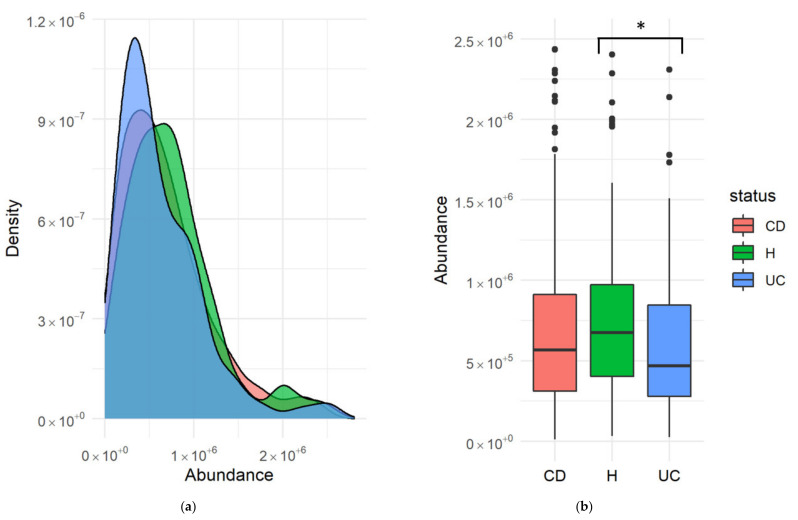
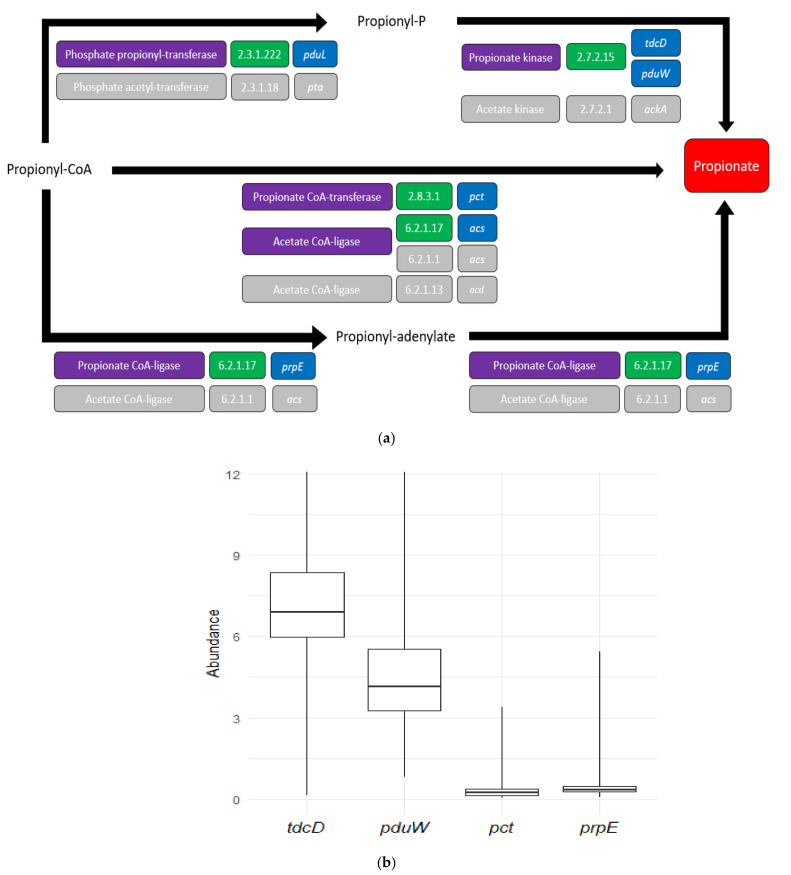
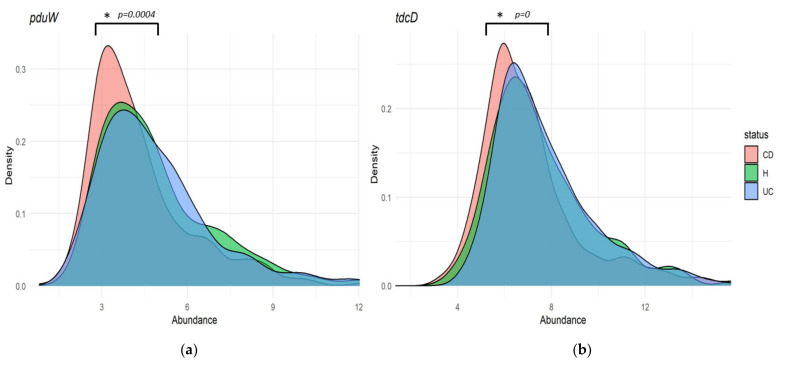
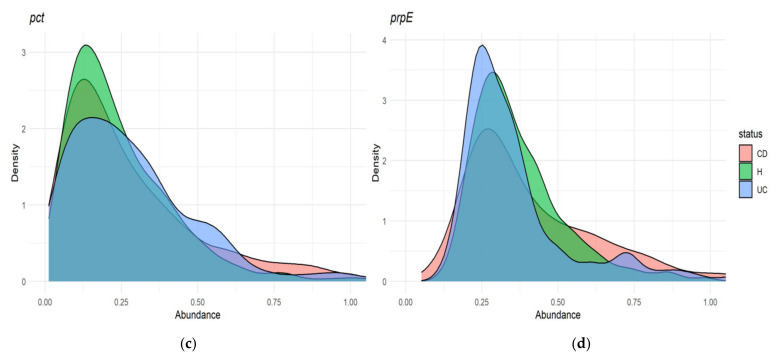
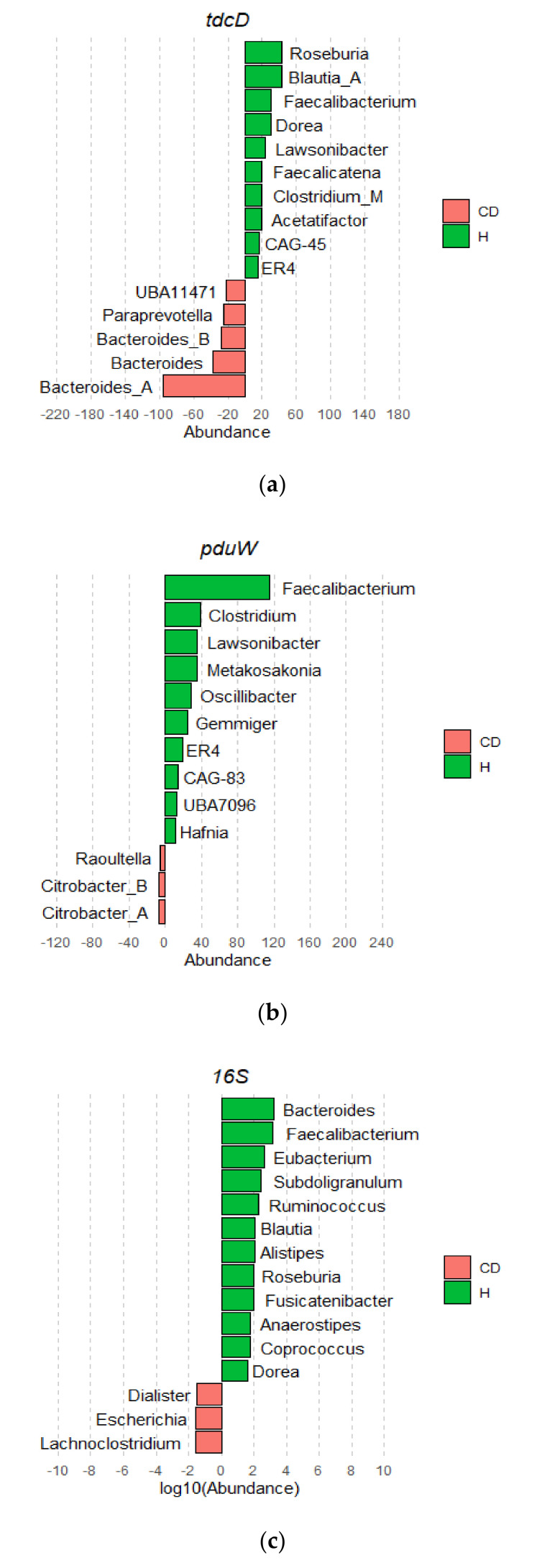
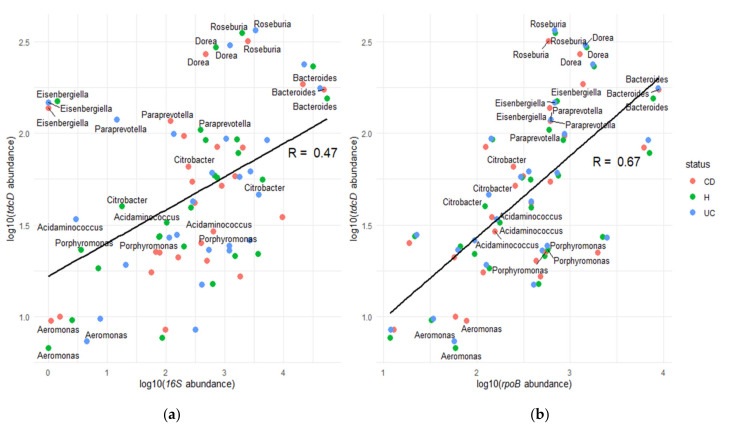
Changes in the gut microbiome have been associated with inflammatory bowel disease. A protective role of short chain fatty acids produced by the gut microbiota has been suggested as a causal mechanism. Nevertheless, multi-omic analyses have failed to identify a clear link between changes in specific taxa and disease states. Recently, metagenomic analyses unveiled that gut bacterial species have a previously unappreciated genomic diversity, implying that a geno-centric approach may be better suited to identifying the mechanisms involved. Here, we quantify the abundance of terminal genes in propionate-producing fermentative pathways in the microbiome of a large cohort of healthy subjects and patients with inflammatory bowel disease. The results show that propionate kinases responsible for propionate production in the gut are depleted in patients with Crohn's disease. Our results also indicate that changes in overall species abundances do not necessarily correlate with changes in the abundances of metabolic genes, suggesting that these genes are not part of the core genome. This, in turn, suggests that changes in strain composition may be as important as changes in species abundance in alterations of the gut microbiome associated with pathological conditions.
Keywords: Crohn’s disease; metagenomics; microbiota; short chain fatty acids.
Conflict of interest statement
The authors declare no conflict of interest. The funders had no role in the design of the study; in the collection, analyses, or interpretation of data; in the writing of the manuscript, or in the decision to publish the results.
Figures
References
-
- Wlodarska M., Luo C., Kolde R., D’Hennezel E., Annand J.W., Heim C.E., Krastel P., Schmitt E.K., Omar A.S., Creasey E.A., et al. Indoleacrylic Acid Produced by Commensal Peptostreptococcus Species Suppresses Inflammation. Cell Host Microbe. 2017;22:25–37.e6. doi: 10.1016/j.chom.2017.06.007. - DOI - PMC - PubMed
