


Novel Flexible PVDF-TrFE and PVDF-TrFE/ZnO Pressure Sensor: Fabrication, Characterization and Investigation
- PMID: 34071010
- PMCID: PMC8224787
- DOI: 10.3390/mi12060602
Novel Flexible PVDF-TrFE and PVDF-TrFE/ZnO Pressure Sensor: Fabrication, Characterization and Investigation
Abstract
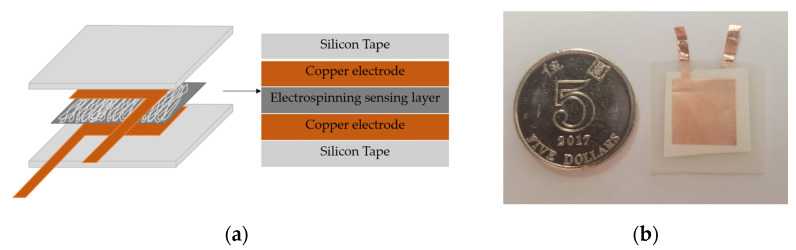
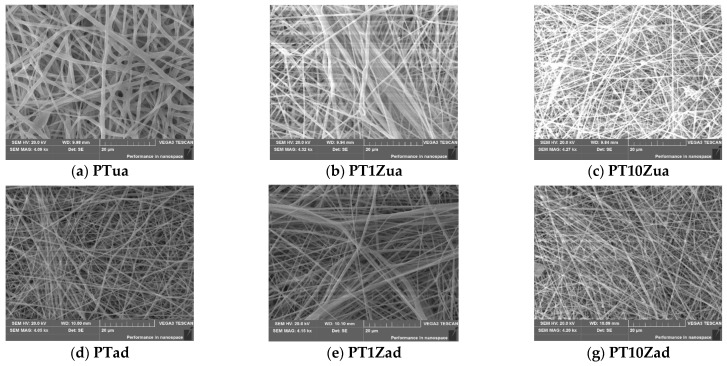
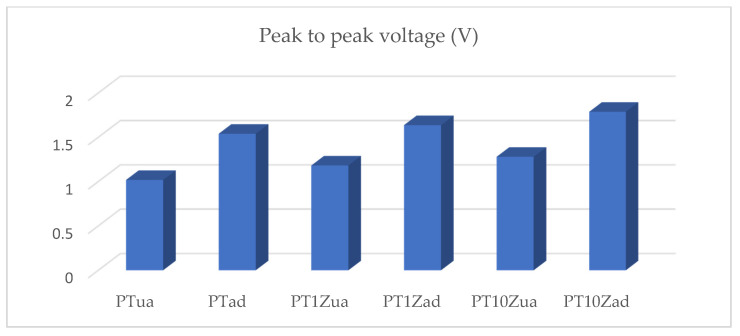
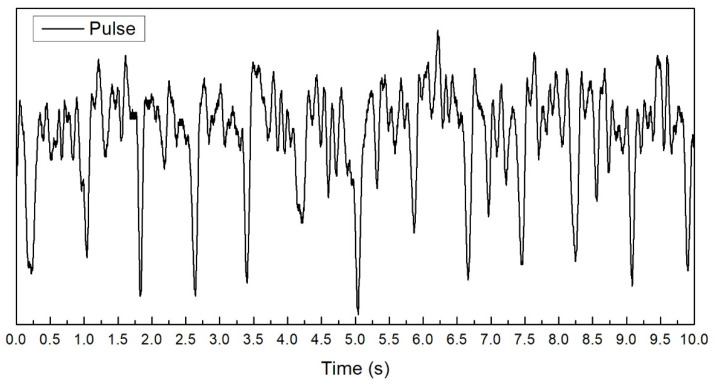
With the development of human healthcare devices, smart sensors, e-skins, and pressure sensors with outstanding sensitivity, flexibility, durability and biocompatibility have attracted more and more attention. In this paper, to develop a novel flexible pressure sensor with high sensitivity, different poly (vinylidene fluoride-trifluoroethylene) (PVDF-TrFE)-based composite membranes were fabricated, characterized and tested. To improve the β-phase crystallinity and piezoelectricity of the membranes, and for the purpose of comparison, nano ZnO particles with different concentrations (99:1, 9:1 in a weight ratio of PVDF-TrFE to ZnO) were, respectively added into PVDF-TrFE polymer acting as a nucleating agent and dielectric material. To facilitate the formation of β-phase crystal, the membranes were fabricated by electrospinning method. After the electrospinning, an annealing process was conducted to the fabricated membranes to increase the size and content of β-phase crystal. Then, the fabricated PVDF-TrFE membranes, acting as the core sensing layer, were, respectively built into multiple prototype sensors in a sandwich structure. The sensitivity of the prototype sensors was tested by an auto-clicker. The stimulation of the auto-clicker on the prototype sensors generated electrical signals, and the electrical signals were collected by a self-built testing platform powered by LabVIEW. As a result, combining the addition of ZnO nanofillers and the annealing process, a highly sensitive pressure sensor was fabricated. The optimal peak-to-peak voltage response generated from the prototype sensor was 1.788 V which shows a 75% increase compared to that of the pristine PVDF-TrFE sensor. Furthermore, a human pulse waveform was captured by a prototype sensor which exhibits tremendous prospects for application in healthcare devices.
Keywords: PVDF-TrFE; PVDF-TrFE/ZnO; human pulsation sensor; β phase crystal.
Conflict of interest statement
The authors declare no conflict of interest.
Figures
References
-
- Almassri A.M., Wan Hasan W.Z., Ahmad S.A., Ishak A.J., Ghazali A.M., Talib D.N., Wada C. Pressure Sensor: State of the Art, Design, and Application for Robotic Hand. J. Sens. 2015;2015:846487. doi: 10.1155/2015/846487. - DOI
-
- Panda P.K. Review: Environmental friendly lead-free piezoelectric materials. J. Mater. Sci. 2009;44:5049–5062. doi: 10.1007/s10853-009-3643-0. - DOI
-
- Anton S.R., Sodano H.A. A review of power harvesting using piezoelectric materials (2003–2006) Smart Mater. Struct. 2007;16:R1. doi: 10.1088/0964-1726/16/3/R01. - DOI
LinkOut - more resources
Full Text Sources
Research Materials
