


The Role of HPA Axis and Allopregnanolone on the Neurobiology of Major Depressive Disorders and PTSD
- PMID: 34071053
- PMCID: PMC8197074
- DOI: 10.3390/ijms22115495
The Role of HPA Axis and Allopregnanolone on the Neurobiology of Major Depressive Disorders and PTSD
Abstract
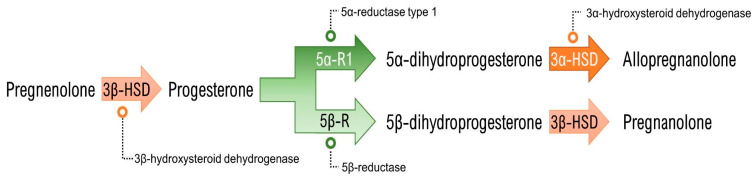
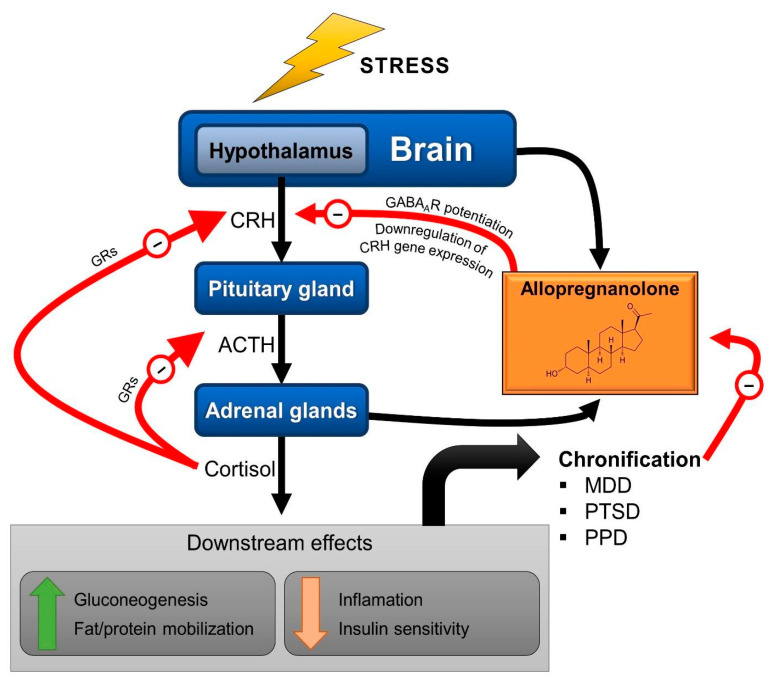
Under stressful conditions, the hypothalamic-pituitary-adrenal (HPA) axis acts to promote transitory physiological adaptations that are often resolved after the stressful stimulus is no longer present. In addition to corticosteroids (e.g., cortisol), the neurosteroid allopregnanolone (3α,5α-tetrahydroprogesterone, 3α-hydroxy-5α-pregnan-20-one) participates in negative feedback mechanisms that restore homeostasis. Chronic, repeated exposure to stress impairs the responsivity of the HPA axis and dampens allopregnanolone levels, participating in the etiopathology of psychiatric disorders, such as major depressive disorder (MDD) and post-traumatic stress disorder (PTSD). MDD and PTSD patients present abnormalities in the HPA axis regulation, such as altered cortisol levels or failure to suppress cortisol release in the dexamethasone suppression test. Herein, we review the neurophysiological role of allopregnanolone both as a potent and positive GABAergic neuromodulator but also in its capacity of inhibiting the HPA axis. The allopregnanolone function in the mechanisms that recapitulate stress-induced pathophysiology, including MDD and PTSD, and its potential as both a treatment target and as a biomarker for these disorders is discussed.
Keywords: PTSD; brexanolone; depression; hypothalamus-pituitary-adrenal axis; neurosteroids; stress.
Conflict of interest statement
The authors declare no conflict of interest.
Figures
References
Publication types
MeSH terms
Substances
LinkOut - more resources
Full Text Sources
