


Mutation Associated with Orange Fruit Color Increases Concentrations of β-Carotene in a Sweet Pepper Variety (Capsicum annuum L.)
- PMID: 34071303
- PMCID: PMC8227262
- DOI: 10.3390/foods10061225
Mutation Associated with Orange Fruit Color Increases Concentrations of β-Carotene in a Sweet Pepper Variety (Capsicum annuum L.)
Abstract
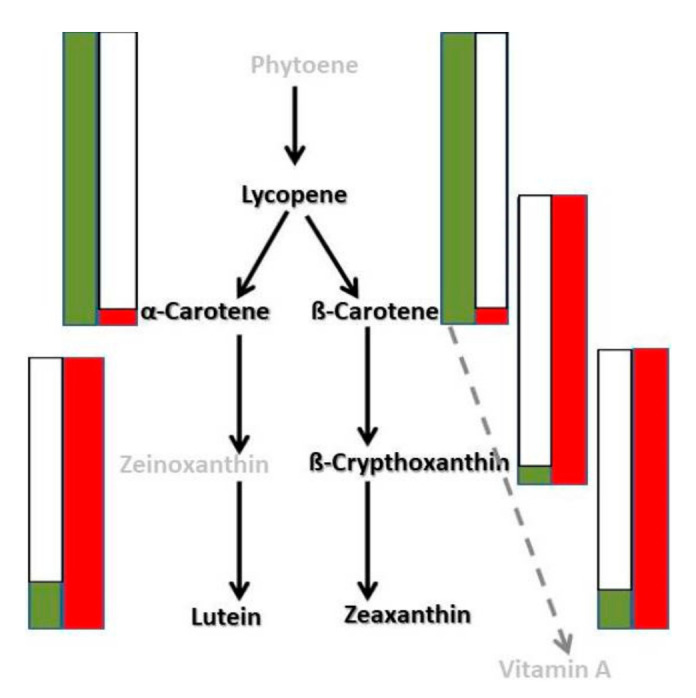
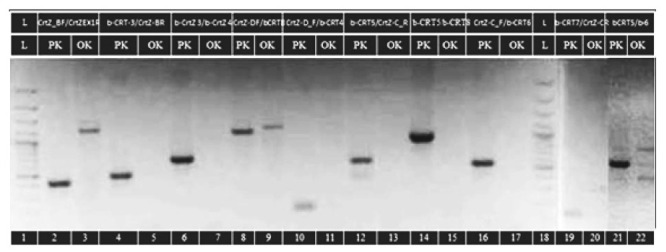
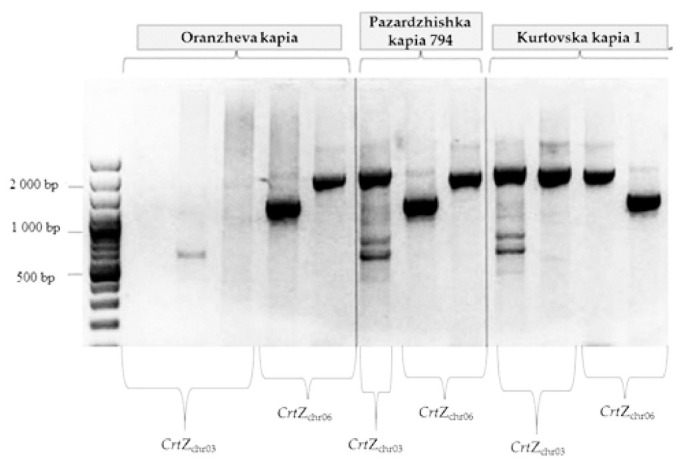
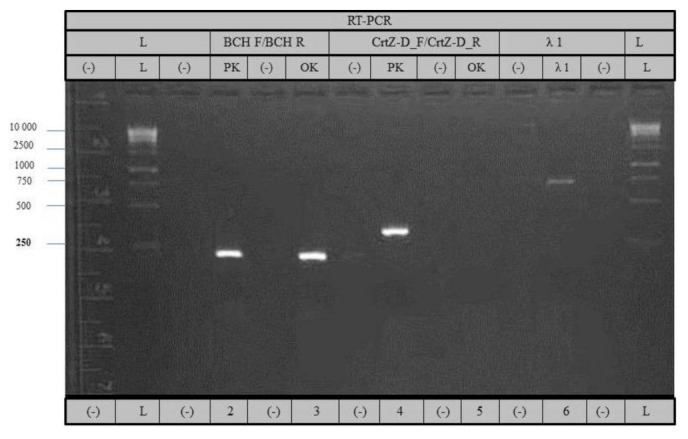
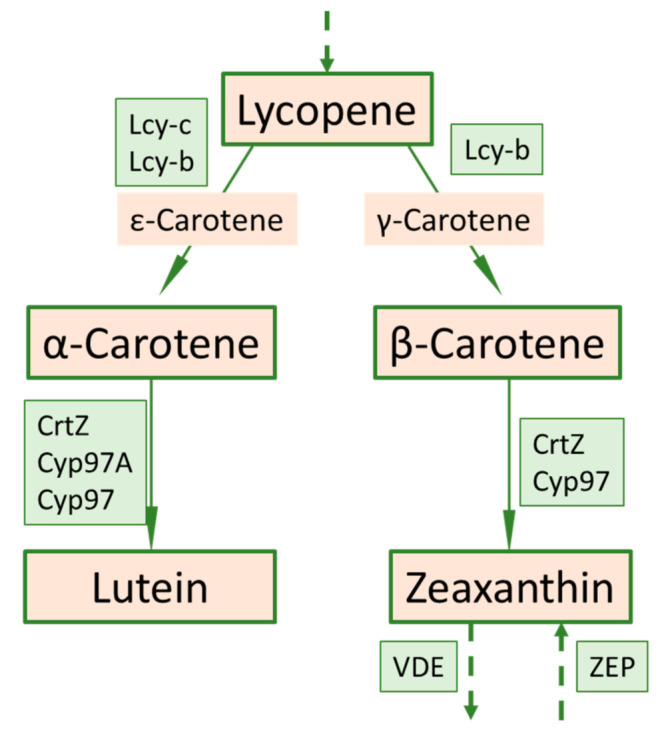
Pepper is the second most important vegetable crop in Bulgarian agriculture and has become the subject of extensive breeding programs that frequently employ induced mutagenesis. The success of breeding programs can be enhanced by the efficient and integral application of different biochemical and molecular methods to characterize specific mutant alleles. On the other hand, identifying new cost-effective methods is important under a limited-resources environment. In this paper we compare the levels of five health-related carotenoid compounds of fruits (α-carotene, β-carotene, lutein, β-cryptoxanthin, zeaxanthin) between a mutant variety Oranzheva kapia (possessing high ß-carotene concentration) and a corresponding initial pepper variety Pazardzhishka kapia 794. Both varieties are intended for fresh consumption. Pepper is a major natural source of β-carotene. It was observed that fruit at both commercial and botanical maturity from mutant variety had greater α-carotene and β-carotene concentrations to the initial variety (7.49 and 1.94 times higher, respectively) meaning that the mutant was superior in fruit quality to the initial genotype. Two hydroxylase enzymes, converting α- and β-carotene to lutein and zeaxanthin, respectively, are known to exist in pepper and are encoded by two genes on chromosomes 3 and 6-CrtZchr03 and CrtZchr06. The molecular characterization of the mutant variety through locus-specific Polymerase chain reaction amplification, gene cloning and sequencing as well as expression was performed. Our results suggest that the increased ß-carotene accumulation in the mutant variety Oranzheva kapia results from a biosynthetic pathway breakdown due to deletion of CrtZchr03 gene.
Keywords: carotenoids; high performance liquid chromatography; molecular characterization; mutagenesis; sweet pepper; β-carotene hydroxylase.
Conflict of interest statement
The authors declare no conflict of interest. The funders had no role in the design of the study; in the collection, analyses, or interpretation of data; in the writing of the manuscript, or in the decision to publish the results.
Figures


References
-
- Hurtado-Hernandez H., Smith P.G. Inheritance of mature fruit color in Capsicum annuum L. . J. Hered. 1985;76:211–213. doi: 10.1093/oxfordjournals.jhered.a110070. - DOI
-
- Kraft K.H., Brown C.H., Nabhan G.P., Luedeling E., Ruiz J.D.J.L., D’Eeckenbrugge G.C., Hijmans R.J., Gepts P. Multiple lines of evidence for the origin of domesticated chili pepper, Capsicum annuum, in Mexico. Proc. Natl. Acad. Sci. USA. 2014;111:6165–6170. doi: 10.1073/pnas.1308933111. - DOI - PMC - PubMed
-
- Bharath S.M., Cilas C., Umaharan P. Fruit trait variation in a Caribbean germplasm collection of aromatic hot peppers (Capsicum chinense Jacq.) Hort. Sci. 2013;48:531–538. doi: 10.21273/HORTSCI.48.5.531. - DOI
-
- Tomlekova N.B. Induced mutagenesis for crop improvement in Bulgaria. [(accessed on 11 December 2020)];Plant Mutat. Rep. 2010 2:1–32. invited paper. ISSN: 1011-260X. Available online: http://www.iaea.org/inis/collection/NCLCollectionStore/_Public/42/080/42....
Grants and funding
LinkOut - more resources
Full Text Sources
