


Machine Learning in Agriculture: A Comprehensive Updated Review
- PMID: 34071553
- PMCID: PMC8198852
- DOI: 10.3390/s21113758
Machine Learning in Agriculture: A Comprehensive Updated Review
Abstract
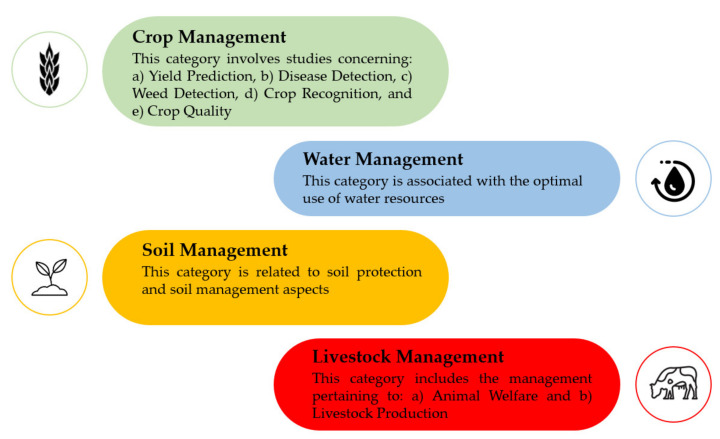
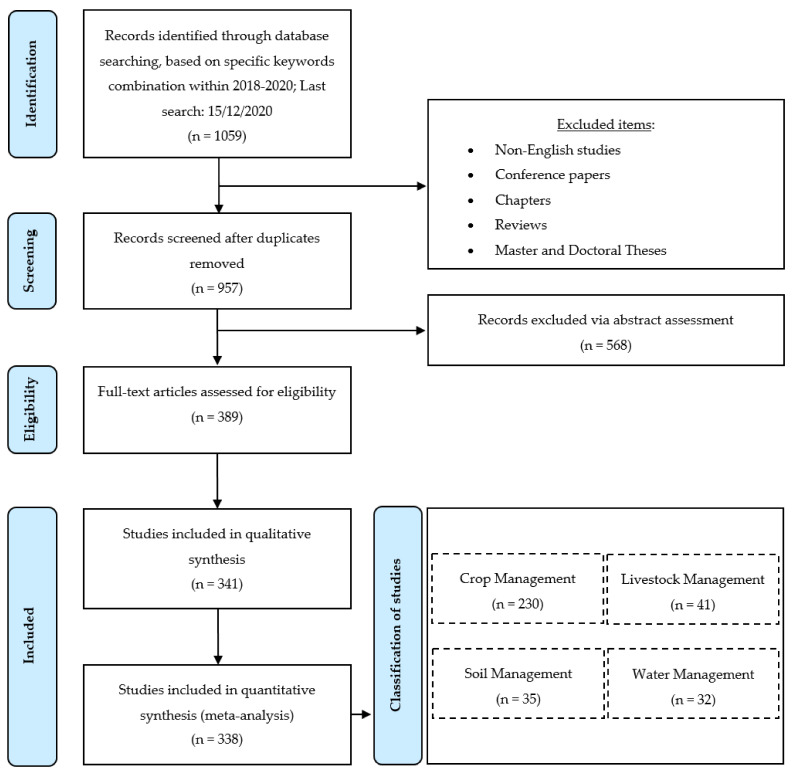
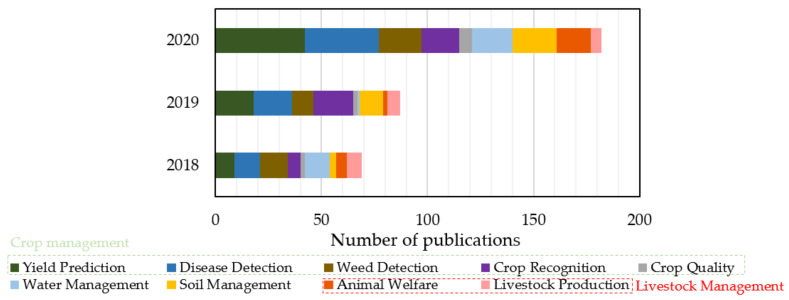
The digital transformation of agriculture has evolved various aspects of management into artificial intelligent systems for the sake of making value from the ever-increasing data originated from numerous sources. A subset of artificial intelligence, namely machine learning, has a considerable potential to handle numerous challenges in the establishment of knowledge-based farming systems. The present study aims at shedding light on machine learning in agriculture by thoroughly reviewing the recent scholarly literature based on keywords' combinations of "machine learning" along with "crop management", "water management", "soil management", and "livestock management", and in accordance with PRISMA guidelines. Only journal papers were considered eligible that were published within 2018-2020. The results indicated that this topic pertains to different disciplines that favour convergence research at the international level. Furthermore, crop management was observed to be at the centre of attention. A plethora of machine learning algorithms were used, with those belonging to Artificial Neural Networks being more efficient. In addition, maize and wheat as well as cattle and sheep were the most investigated crops and animals, respectively. Finally, a variety of sensors, attached on satellites and unmanned ground and aerial vehicles, have been utilized as a means of getting reliable input data for the data analyses. It is anticipated that this study will constitute a beneficial guide to all stakeholders towards enhancing awareness of the potential advantages of using machine learning in agriculture and contributing to a more systematic research on this topic.
Keywords: artificial intelligence; crop management; livestock management; machine learning; precision agriculture; precision livestock farming; soil management; water management.
Conflict of interest statement
The authors declare no conflict of interest.
Figures
References
-
- Thayer A., Vargas A., Castellanos A., Lafon C., McCarl B., Roelke D., Winemiller K., Lacher T. Integrating Agriculture and Ecosystems to Find Suitable Adaptations to Climate Change. Climate. 2020;8:10. doi: 10.3390/cli8010010. - DOI
-
- Nassani A.A., Awan U., Zaman K., Hyder S., Aldakhil A.M., Abro M.M.Q. Management of natural resources and material pricing: Global evidence. Resour. Policy. 2019;64:101500. doi: 10.1016/j.resourpol.2019.101500. - DOI
-
- Benos L., Bechar A., Bochtis D. Safety and ergonomics in human-robot interactive agricultural operations. Biosyst. Eng. 2020;200:55–72. doi: 10.1016/j.biosystemseng.2020.09.009. - DOI
-
- Lampridi M., Sørensen C., Bochtis D. Agricultural Sustainability: A Review of Concepts and Methods. Sustainability. 2019;11:5120. doi: 10.3390/su11185120. - DOI
Publication types
LinkOut - more resources
Full Text Sources
