


Effect of Reactive Oxygen Species on the Endoplasmic Reticulum and Mitochondria during Intracellular Pathogen Infection of Mammalian Cells
- PMID: 34071633
- PMCID: PMC8229183
- DOI: 10.3390/antiox10060872
Effect of Reactive Oxygen Species on the Endoplasmic Reticulum and Mitochondria during Intracellular Pathogen Infection of Mammalian Cells
Abstract
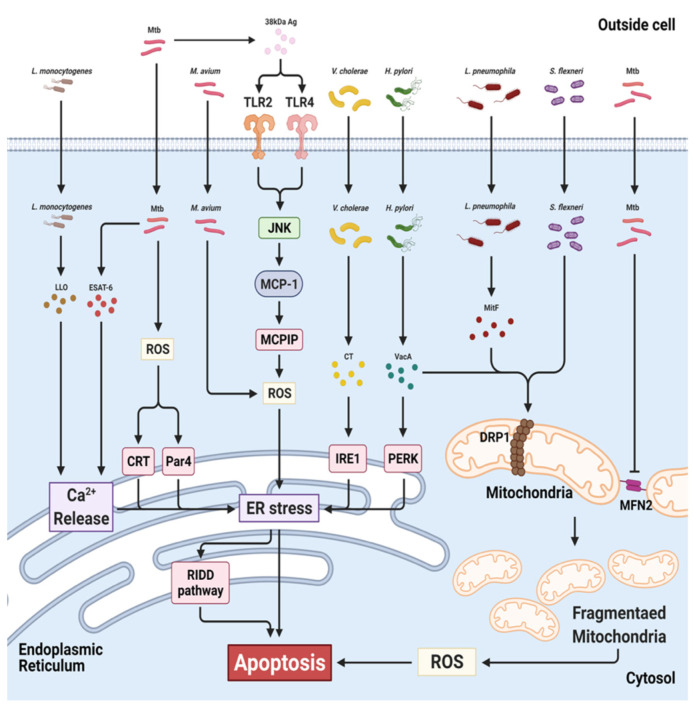
Oxidative stress, particularly reactive oxygen species (ROS), are important for innate immunity against pathogens. ROS directly attack pathogens, regulate and amplify immune signals, induce autophagy and activate inflammation. In addition, production of ROS by pathogens affects the endoplasmic reticulum (ER) and mitochondria, leading to cell death. However, it is unclear how ROS regulate host defense mechanisms. This review outlines the role of ROS during intracellular pathogen infection, mechanisms of ROS production and regulation of host defense mechanisms by ROS. Finally, the interaction between microbial pathogen-induced ROS and the ER and mitochondria is described.
Keywords: ER stress; ROS; bacteria; infection; mitochondria; oxidative stress; pathogen.
Conflict of interest statement
The authors declare no conflict of interest.
Figures
References
Publication types
Grants and funding
LinkOut - more resources
Full Text Sources
