


Application of Nano-Drug Delivery System Based on Cascade Technology in Cancer Treatment
- PMID: 34071794
- PMCID: PMC8199020
- DOI: 10.3390/ijms22115698
Application of Nano-Drug Delivery System Based on Cascade Technology in Cancer Treatment
Abstract
In the current cancer treatment, various combination therapies have been widely used, such as photodynamic therapy (PDT) combined with chemokinetic therapy (CDT). However, due to the complexity of the tumor microenvironment (TME) and the limitations of treatment, the efficacy of current treatment options for some cancers is unsatisfactory. Nowadays, cascade technology has been used in cancer treatment and achieved good therapeutic effect. Cascade technology based on nanotechnology can trigger cascade reactions under specific tumor conditions to achieve precise positioning and controlled release, or amplify the efficacy of each drug to improve anticancer efficacy and reduce side effects. Compared with the traditional treatment, the application of cascade technology has achieved the controllability, specificity, and effectiveness of cancer treatment. This paper reviews the application of cascade technology in drug delivery, targeting, and release via nano-drug delivery systems in recent years, and introduces their application in reactive oxygen species (ROS)-induced cancer treatment. Finally, we briefly describe the current challenges and prospects of cascade technology in cancer treatment in the future.
Keywords: cascade technology; combination therapy; multidrug resistance; tumor microenvironment response.
Conflict of interest statement
There are no conflicts to declare.
Figures
References
-
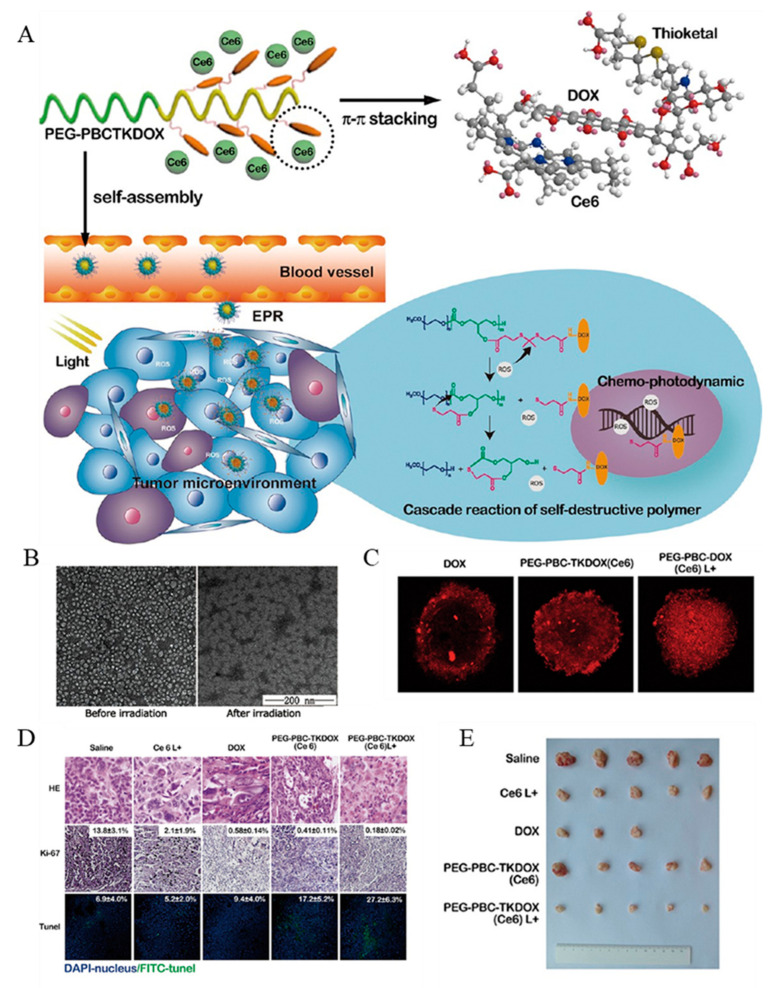
- Wang M., Zhai Y., Ye H., Lv Q., Sun B., Luo C., Jiang Q., Zhang H., Xu Y., Jing Y., et al. High co-loading capacity and stimuli-responsive release based on cascade reaction of self-destructive polymer for improved chemo-photodynamic therapy. ACS Nano. 2019;13:7010–7023. doi: 10.1021/acsnano.9b02096. - DOI - PubMed
Publication types
MeSH terms
Substances
Grants and funding
LinkOut - more resources
Full Text Sources
