


Nigella and Milk Thistle Seed Oils: Potential Cytoprotective Effects against 7β-Hydroxycholesterol-Induced Toxicity on SH-SY5Y Cells
- PMID: 34071950
- PMCID: PMC8229989
- DOI: 10.3390/biom11060797
Nigella and Milk Thistle Seed Oils: Potential Cytoprotective Effects against 7β-Hydroxycholesterol-Induced Toxicity on SH-SY5Y Cells
Abstract
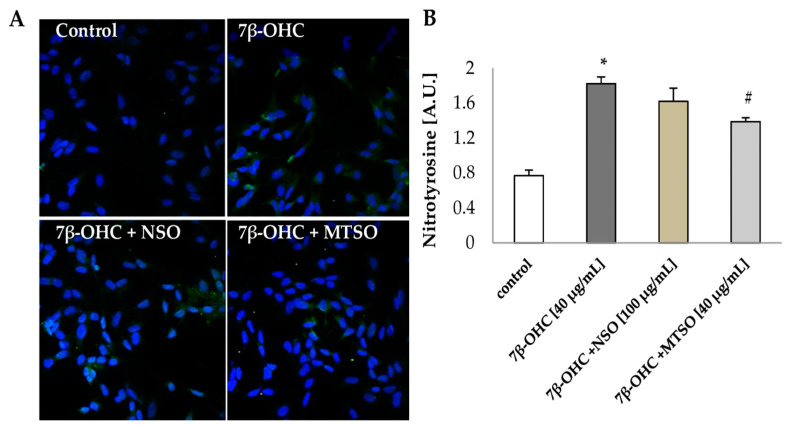
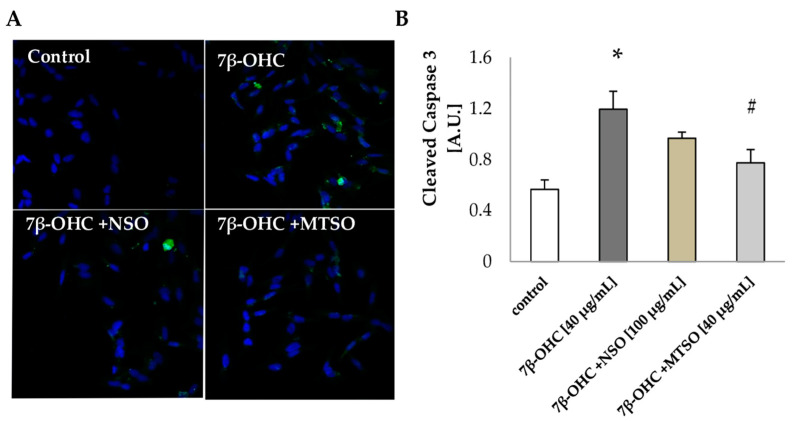
Oxysterols are assumed to be the driving force behind numerous neurodegenerative diseases. In this work, we aimed to study the ability of 7β-hydroxycholesterol (7β-OHC) to trigger oxidative stress and cell death in human neuroblastoma cells (SH-SY5Y) then the capacity of Nigella sativa and Milk thistle seed oils (NSO and MTSO, respectively) to oppose 7β-OHC-induced side effects. The impact of 7β-OHC, associated or not with NSO or MTSO, was studied on different criteria: cell viability; redox status, and apoptosis. Oxidative stress was assessed through the intracellular reactive oxygen species (ROS) production, levels of enzymatic and non-enzymatic antioxidants, lipid, and protein oxidation products. Our results indicate that 7β-OHC (40 µg/mL) exhibit pr-oxidative and pro-apoptotic activities shown by a decrease of the antioxidant enzymatic activities and an increase of ROS production, lipid, and protein oxidation end products as well as nitrotyrosine formation and caspase 3 activation. However, under the pre-treatment with NSO, and especially with MTSO (100 µg/mL), a marked attenuation of oxidative damages was observed. Our study suggests harmful effects of 7β-OHC consisting of pro-oxidative, anti-proliferative, and pro-apoptotic activities that may contribute to neurodegeneration. NSO and especially MTSO showed potential cytoprotection against the cytotoxicity of 7β-OHC.
Keywords: 7β-hydroxycholesterol; antioxidants; antioxidants enzymes; cellular oxidative stress; neuroblastoma cells; neurodegenertion.
Conflict of interest statement
The authors declare no conflict of interest.
Figures
References
-
- Testa G., Staurenghi E., Zerbinati C., Gargiulo S., Iuliano L., Giaccone G., Fantò F., Poli G., Leonarduzzi G., Gamba P. Changes in Brain Oxysterols at Different Stages of Alzheimer’s Disease: Their Involvement in Neuroinflammation. Redox Biol. 2016;10:24–33. doi: 10.1016/j.redox.2016.09.001. - DOI - PMC - PubMed
-
- Hammouda S., Ghzaiel I., Khamlaoui W., Hammami S., Mhenni S.Y., Samet S., Hammami M., Zarrouk A. Genetic variants in FADS1 and ELOVL2 increase level of arachidonic acid and the risk of Alzheimer’s disease in the Tunisian population. Prostaglandins Leukot. Essent. Fatty Acids. 2020;160:102159. doi: 10.1016/j.plefa.2020.102159. - DOI - PubMed
Publication types
MeSH terms
Substances
LinkOut - more resources
Full Text Sources
Research Materials
