


Monitoring Symptoms of Infectious Diseases: Perspectives for Printed Wearable Sensors
- PMID: 34072174
- PMCID: PMC8229808
- DOI: 10.3390/mi12060620
Monitoring Symptoms of Infectious Diseases: Perspectives for Printed Wearable Sensors
Abstract
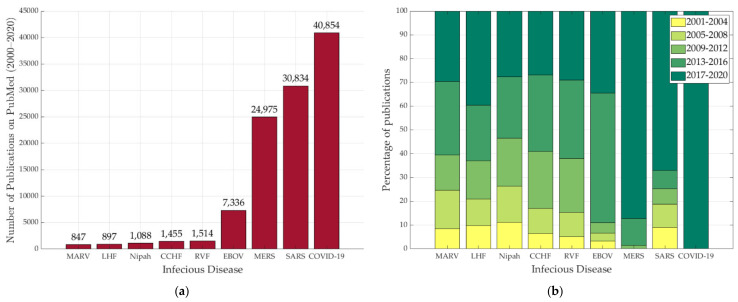
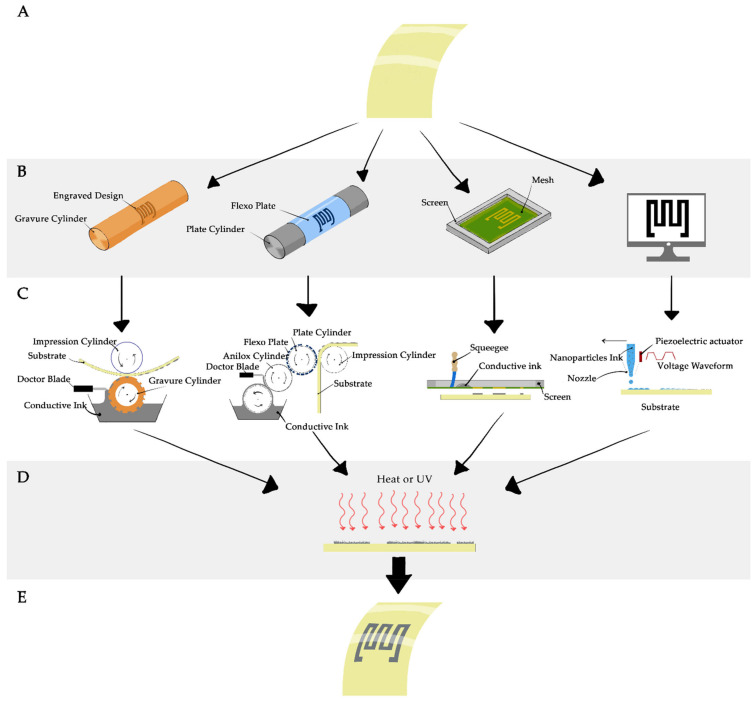
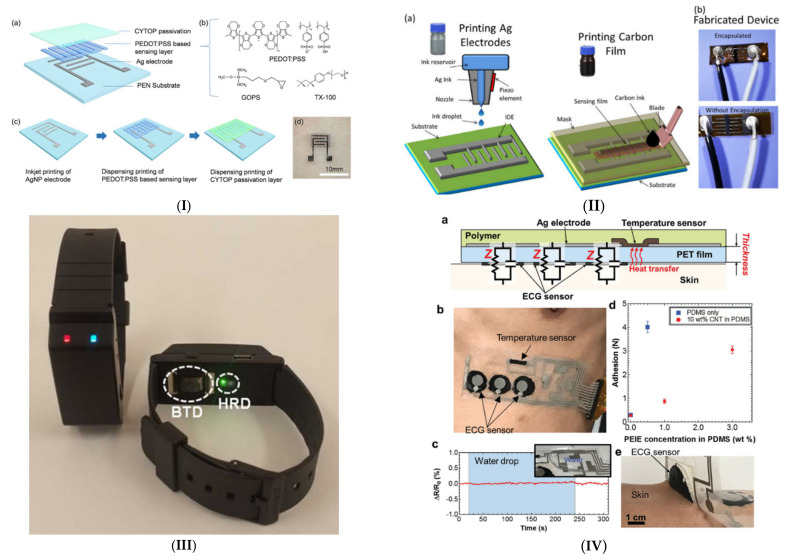
Infectious diseases possess a serious threat to the world's population, economies, and healthcare systems. In this review, we cover the infectious diseases that are most likely to cause a pandemic according to the WHO (World Health Organization). The list includes COVID-19, Crimean-Congo Hemorrhagic Fever (CCHF), Ebola Virus Disease (EBOV), Marburg Virus Disease (MARV), Lassa Hemorrhagic Fever (LHF), Middle East Respiratory Syndrome (MERS), Severe Acute Respiratory Syndrome (SARS), Nipah Virus diseases (NiV), and Rift Valley fever (RVF). This review also investigates research trends in infectious diseases by analyzing published research history on each disease from 2000-2020 in PubMed. A comprehensive review of sensor printing methods including flexographic printing, gravure printing, inkjet printing, and screen printing is conducted to provide guidelines for the best method depending on the printing scale, resolution, design modification ability, and other requirements. Printed sensors for respiratory rate, heart rate, oxygen saturation, body temperature, and blood pressure are reviewed for the possibility of being used for disease symptom monitoring. Printed wearable sensors are of great potential for continuous monitoring of vital signs in patients and the quarantined as tools for epidemiological screening.
Keywords: blood pressure; heart rate; infectious diseases; inkjet printing; pulse oximeter; respiratory rate; screen printing; wearable sensors.
Conflict of interest statement
The authors declare no conflict of interest.
Figures
References
-
- Murray J., Cohen A.L. International Encyclopedia of Public Health. Elsevier Inc.; Amsterdam, The Netherlands: 2016. Infectious Disease Surveillance; pp. 222–229.
-
- Hospital Beds per 1,000 People, 1970 to 2011. [(accessed on 15 December 2020)]; Available online: https://ourworldindata.org/grapher/hospital-beds-per-1000-people?tab=cha....
-
- Najafi B., Khan T., Wrobel J. Laboratory in a box: Wearable sensors and its advantages for gait analysis; Proceedings of the Annual International Conference of the IEEE Engineering in Medicine and Biology Society, EMBS; Boston, MA, USA. 30 August–3 September 2011; pp. 6507–6510. - PubMed
-
- Aminian K., Najafi B. Capturing human motion using body-fixed sensors: Outdoor measurement and clinical applications. Comput. Animat. Virtual Worlds. 2004;15:79–94. doi: 10.1002/cav.2. - DOI
Publication types
LinkOut - more resources
Full Text Sources
Miscellaneous
