


Management of Intrahepatic Cholangiocarcinoma
- PMID: 34072277
- PMCID: PMC8198953
- DOI: 10.3390/jcm10112368
Management of Intrahepatic Cholangiocarcinoma
Abstract
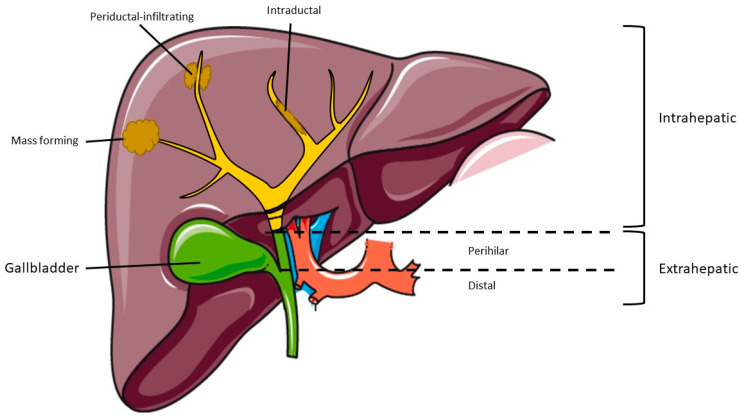
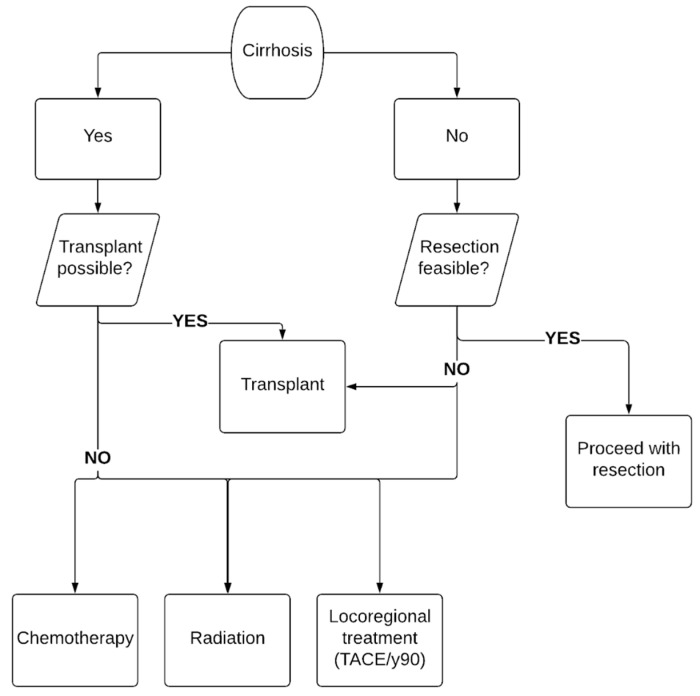
Cholangiocarcinoma is a tumor that arises as a result of differentiation of the cholangiocytes and can develop from anywhere in the biliary tree. Subtypes of cholangiocarcinoma are differentiated based on their location in the biliary tree. If diagnosed early these can be resected, but most cases of intrahepatic cholangiocarcinoma present late in the disease course where surgical resection is not an option. In these patients who are poor candidates for resection, a combination of chemotherapy, locoregional therapies like ablation, transarterial chemo and radioembolization, and in very advanced and metastatic disease, external radiation are the available options. These modalities can improve overall disease-free and progression-free survival chances. In this review, we will discuss the risk factors and clinical presentation of intrahepatic cholangiocarcinoma, diagnosis, available therapeutic options, and future directions for management options.
Keywords: brachytherapy; chemotherapy; cholangiocarcinoma; intrahepatic; proton beam therapy; resection; short-beam external radiation; transarterial chemoembolization (TACE), Yttrium-90 (Y90), chemotherapy; transplantation.
Conflict of interest statement
The authors declare no conflict of interest.
Figures
References
-
- Banales J.M., Cardinale V., Carpino G., Marzioni M., Andersen J.B., Invernizzi P., Lind G.E., Floseraas T., Forbes S.J., Fouassier L., et al. Expert consensus document: Cholangiocarcinoma: Current knowledge and future perspectives consensus statement from the European Network for the Study of Cholangiocarcinoma (ENS-CCA) Nat. Rev. Gastroenterol. Hepatol. 2016;13:261–280. doi: 10.1038/nrgastro.2016.51. - DOI - PubMed
Publication types
LinkOut - more resources
Full Text Sources
Miscellaneous
