


Application and Performance of Artificial Intelligence Technology in Oral Cancer Diagnosis and Prediction of Prognosis: A Systematic Review
- PMID: 34072804
- PMCID: PMC8227647
- DOI: 10.3390/diagnostics11061004
Application and Performance of Artificial Intelligence Technology in Oral Cancer Diagnosis and Prediction of Prognosis: A Systematic Review
Abstract
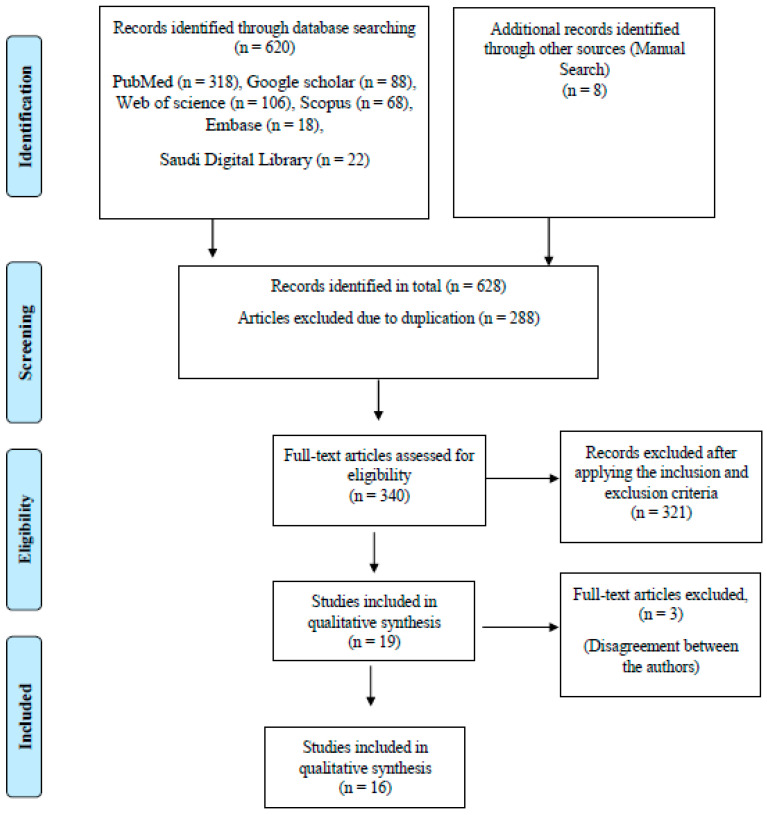
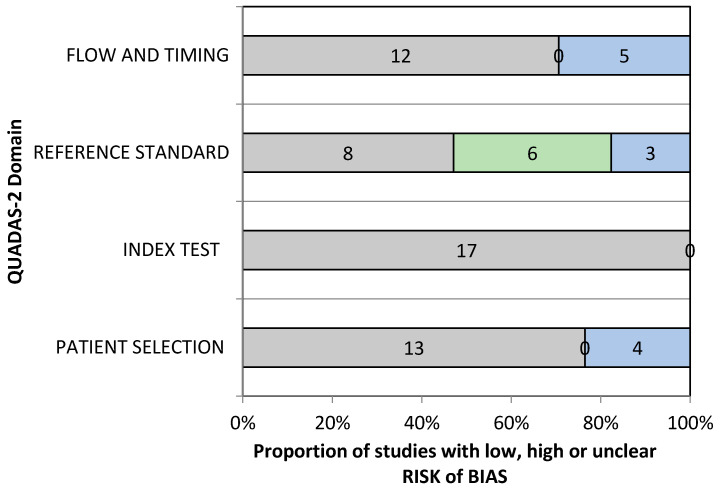
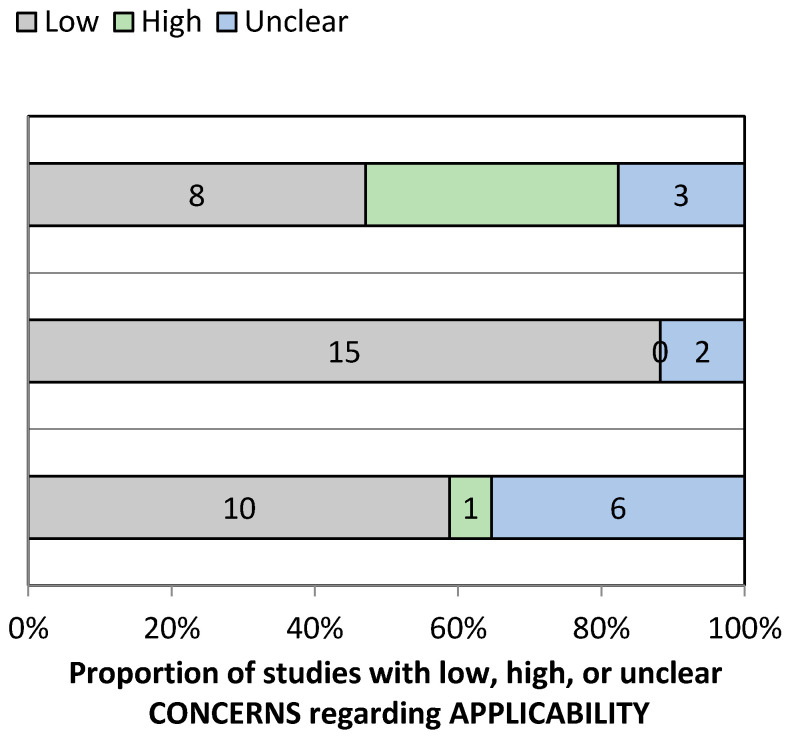
Oral cancer (OC) is a deadly disease with a high mortality and complex etiology. Artificial intelligence (AI) is one of the outstanding innovations in technology used in dental science. This paper intends to report on the application and performance of AI in diagnosis and predicting the occurrence of OC. In this study, we carried out data search through an electronic search in several renowned databases, which mainly included PubMed, Google Scholar, Scopus, Embase, Cochrane, Web of Science, and the Saudi Digital Library for articles that were published between January 2000 to March 2021. We included 16 articles that met the eligibility criteria and were critically analyzed using QUADAS-2. AI can precisely analyze an enormous dataset of images (fluorescent, hyperspectral, cytology, CT images, etc.) to diagnose OC. AI can accurately predict the occurrence of OC, as compared to conventional methods, by analyzing predisposing factors like age, gender, tobacco habits, and bio-markers. The precision and accuracy of AI in diagnosis as well as predicting the occurrence are higher than the current, existing clinical strategies, as well as conventional statistics like cox regression analysis and logistic regression.
Keywords: artificial intelligence; artificial neural networks; machine learning; oral cancer diagnosis; oral cancer prediction.
Conflict of interest statement
The authors declare no conflict of interest.
Figures
References
-
- World Health Organization . WHO Report on Cancer: Setting Priorities, Investing Wisely and Providing Care for All. World Health Organization; Geneva, Switzerland: 2020. Technical Report.
-
- Lewin F., Norell S., Johansson H., Gustavsson P., Wennerberg J., Biörklund A., Rutqvist L. Smoking Tobacco, Oral Snuff, and Alcohol in the Etiology of Squamous Cell Carcinoma of the Head and Neck: A Population-Based Case-Referent Study in Sweden. Cancer. 1998;82:1367–1375. doi: 10.1002/(SICI)1097-0142(19980401)82:7<1367::AID-CNCR21>3.0.CO;2-3. - DOI - PubMed
Publication types
LinkOut - more resources
Full Text Sources
Medical
Miscellaneous
