


Integration of Mesoporous Bioactive Glass Nanoparticles and Curcumin into PHBV Microspheres as Biocompatible Composite for Drug Delivery Applications
- PMID: 34073377
- PMCID: PMC8198669
- DOI: 10.3390/molecules26113177
Integration of Mesoporous Bioactive Glass Nanoparticles and Curcumin into PHBV Microspheres as Biocompatible Composite for Drug Delivery Applications
Abstract
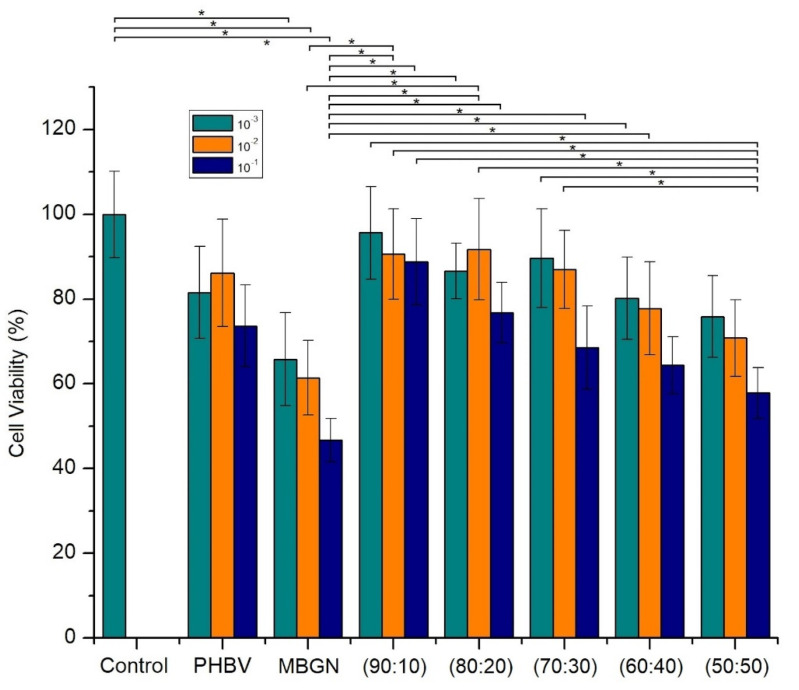
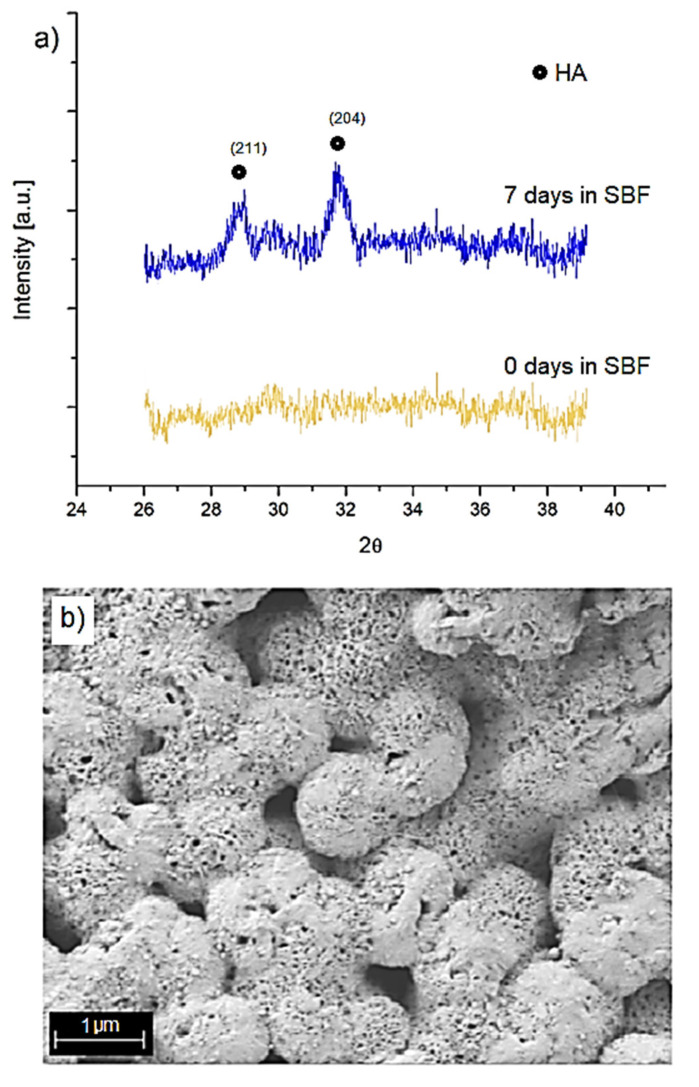
Bioactive glasses (BGs) are being increasingly considered for biomedical applications. One convenient approach to utilize BGs in tissue engineering and drug delivery involves their combination with organic biomaterials in order to form composites with enhanced biocompatibility and biodegradability. In this work, mesoporous bioactive glass nanoparticles (MBGN) have been merged with polyhydroxyalkanoate microspheres with the purpose to develop drug carriers. The composite carriers (microspheres) were loaded with curcumin as a model drug. The toxicity and delivery rate of composite microspheres were tested in vitro, reaching a curcumin loading efficiency of over 90% and an improving of biocompatibility of different concentrations of MBGN due to its administrations through the composite. The composite microspheres were tested in terms of controlled release, biocompatibility and bioactivity. Our results demonstrate that the composite microspheres can be potentially used in biomedicine due to their dual effects: bioactivity (due to the presence of MBGN) and curcumin release capability.
Keywords: PHBV; bioactive glass nanoparticles; composite microspheres; drug delivery systems.
Conflict of interest statement
The authors declare no conflict of interest.
Figures
References
-
- Zafar M.S., Farooq I., Awais M., Najeeb S., Khurshid Z., Zohaib S. Biomedical, Therapeutic and Clinical Applications of Bioactive Glasses. Elsevier; Amsterdam, The Netherlands: 2019. Bioactive Surface Coatings for Enhancing Osseointegration of Dental Implants; pp. 313–329.
-
- Ballarre J., Aydemir T., Liverani L., Roether J., Goldmann W., Boccaccini A. Versatile bioactive and antibacterial coating system based on silica, gentamicin, and chitosan: Improving early stage performance of titanium implants. Surf. Coat. Technol. 2020;381:125138. doi: 10.1016/j.surfcoat.2019.125138. - DOI
-
- Doğrul F., Bernardo E., Boccaccini A.R., Galusek D. FunGlass School 2019/Part 1. Trencin, Slovaki: 2019. [(accessed on 18 May 2021)]. Production of SiOC Based Bioactive Glass for Bone-Tissue Applications. Available online: https://www.funglass.eu/wp-content/uploads/2019/05/FunGlass-School-2019-....
-
- Penide J., Quintero F., del Val J., Comesaña R., Lusquiños F., Riveiro A. Chapter 10-Bioactive glass nanofibers for tissue engineering. In: Grumezescu V., Grumezescu A.M., editors. Materials for Biomedical Engineering. Elsevier; Amsterdam, The Netherlands: 2019. pp. 329–356.
MeSH terms
Substances
Grants and funding
LinkOut - more resources
Full Text Sources
