


High Doses of D-Chiro-Inositol Alone Induce a PCO-Like Syndrome and Other Alterations in Mouse Ovaries
- PMID: 34073634
- PMCID: PMC8198710
- DOI: 10.3390/ijms22115691
High Doses of D-Chiro-Inositol Alone Induce a PCO-Like Syndrome and Other Alterations in Mouse Ovaries
Abstract
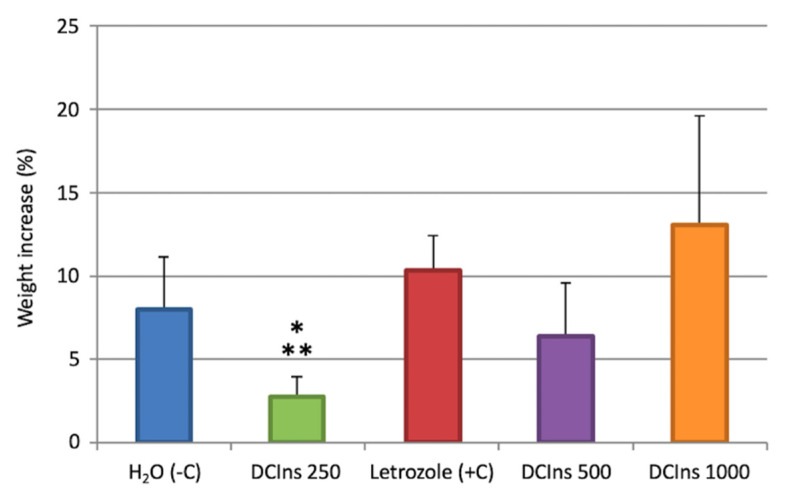
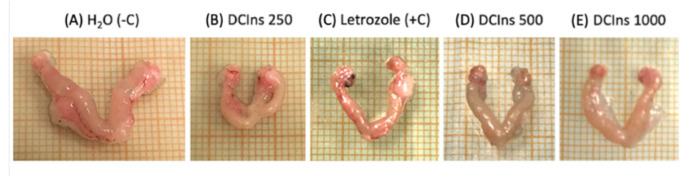
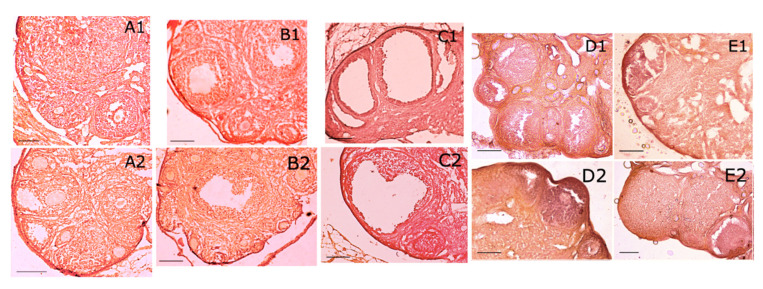
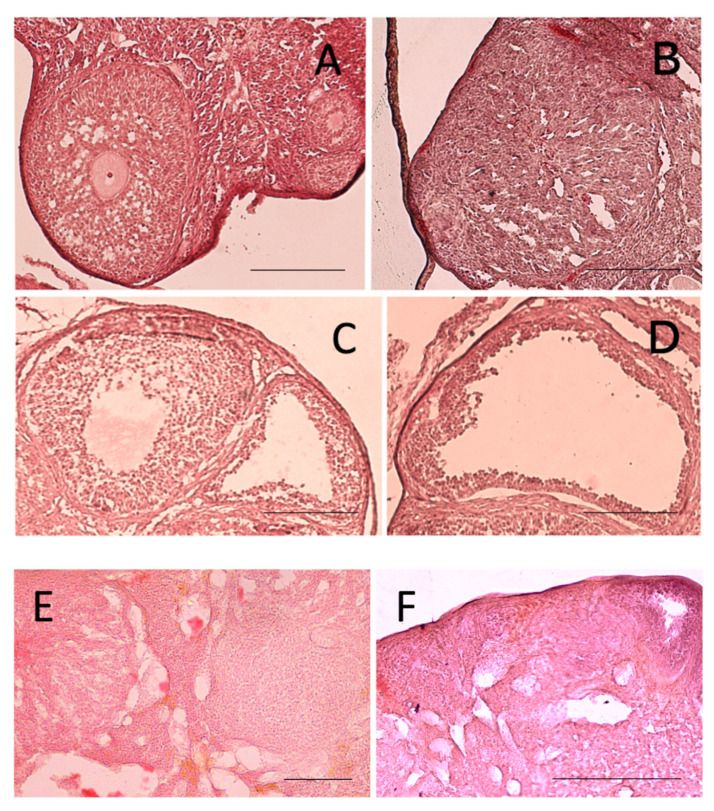
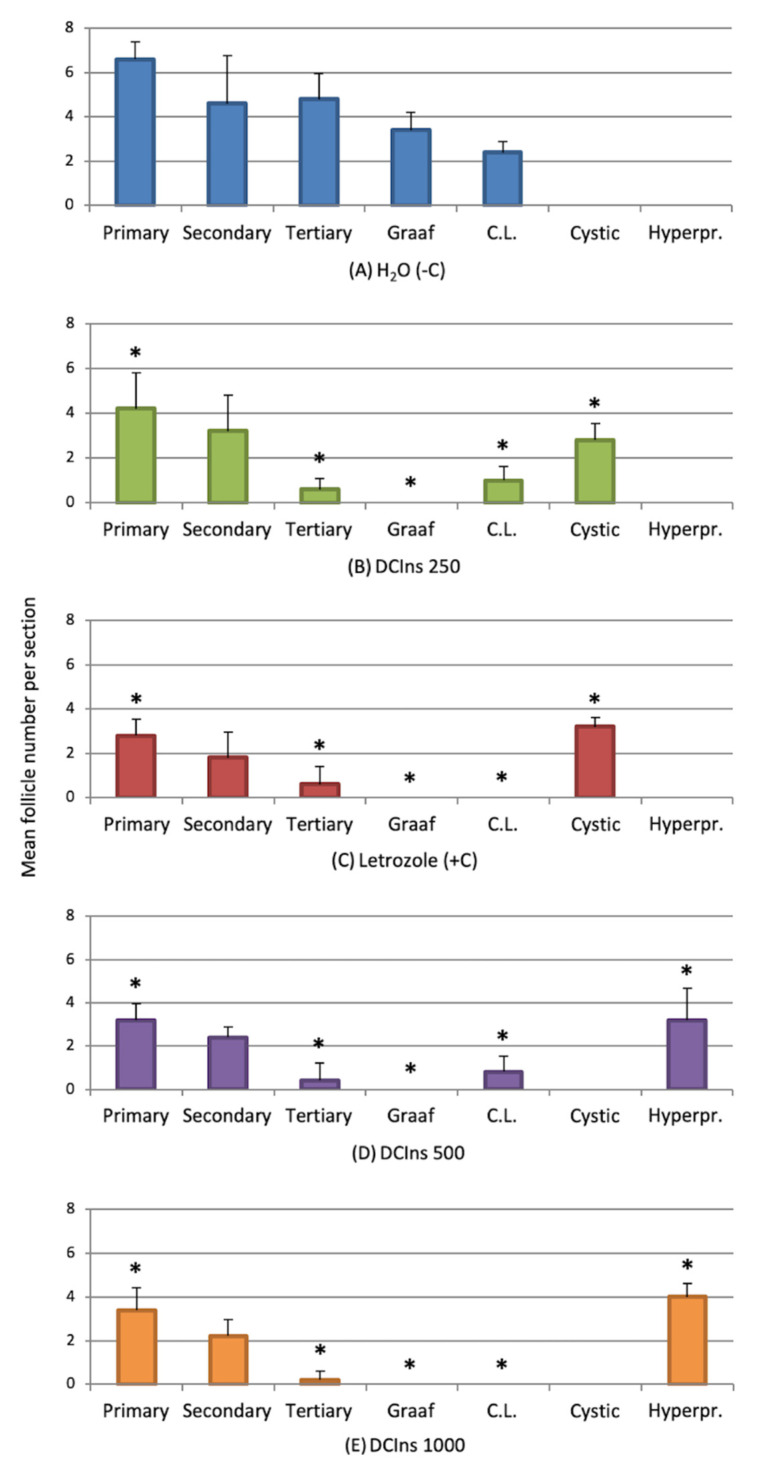
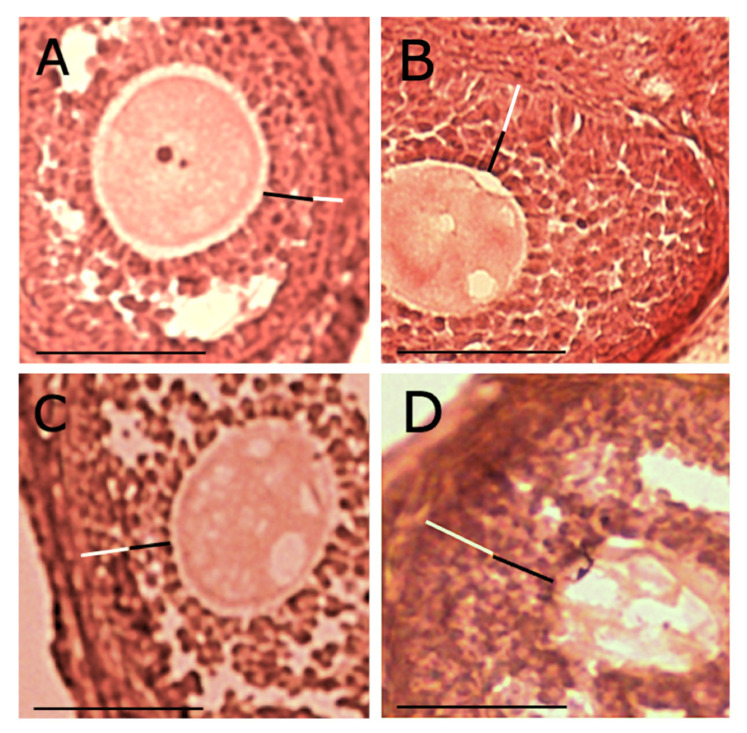
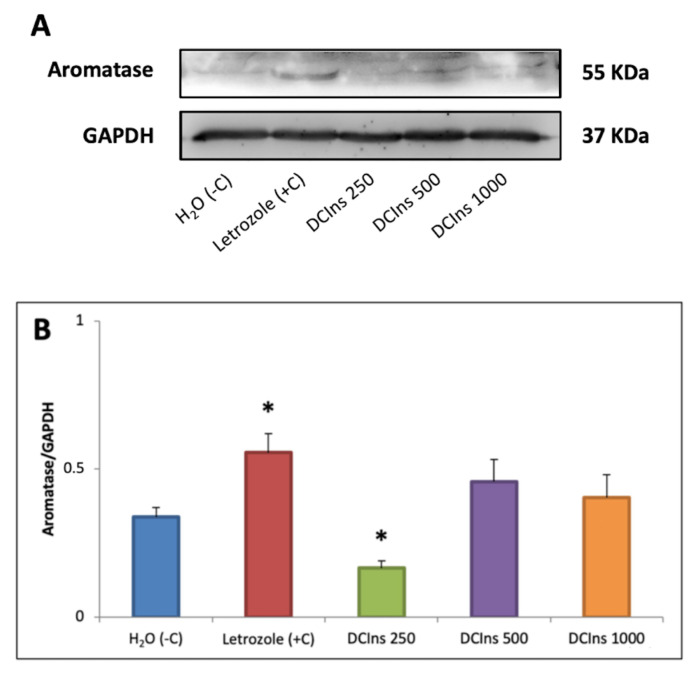
Administration of 1000-1500 mg/day D-Chiro-Inositol (DCIns) or a combination of Myo-Inositol (MyoIns) and DCIns in their plasma molar ratio (40:1) for three or more months are among recommended treatments for metabolic syndrome and/or Polycystic Ovary Syndrome (PCOS). We previously confirmed the efficacy of this formulation (8.2 mg/day MyoIns and 0.2 mg/day DCIns for 10 days) in a mouse PCOS model, but also observed negative effects on ovarian histology and function of formulations containing 0.4-1.6 mg/day DCIns. We therefore analyzed effects of higher doses of DCIns, 5, 10 and 20 mg/day, administered to young adult female mice for 21 days, on ovarian histology, serum testosterone levels and expression of the ovarian enzyme aromatase. Five mg/day DCIns (human correspondence: 1200 mg/day) altered ovarian histology, increased serum testosterone levels and reduced the amount of aromatase of negative controls, suggesting the induction of an androgenic PCOS model. In contrast, 10-20 mg/day DCIns (human correspondence: 2400-4800 mg/day) produced ovarian lesions resembling those typical of aged mice, and reduced serum testosterone levels without affecting aromatase amounts, suggesting a failure in steroidogenic gonadal activity. Notwithstanding physiological/biochemical differences between mice and humans, the observed pictures of toxicity for ovarian histology and function recommend caution when administering DCIns to PCOS patients at high doses and/or for periods spanning several ovulatory cycles.
Keywords: PCOS model; androgenic phenotype; aromatase; inositol; letrozole; menopause; mouse ovary; testosterone.
Conflict of interest statement
The authors declare that there is no conflict of interests.
Figures
References
-
- Oakley O., Lin P.C., Bridges P., Ko C. Animal models for the study of polycystic ovarian syndrome. Endocrinol. Metab. 2011;26:193–202. doi: 10.3803/EnM.2011.26.3.193. - DOI
MeSH terms
Substances
Grants and funding
LinkOut - more resources
Full Text Sources
Medical
