


New Pathological and Clinical Insights in Endometrial Cancer in View of the Updated ESGO/ESTRO/ESP Guidelines
- PMID: 34073635
- PMCID: PMC8198052
- DOI: 10.3390/cancers13112623
New Pathological and Clinical Insights in Endometrial Cancer in View of the Updated ESGO/ESTRO/ESP Guidelines
Abstract
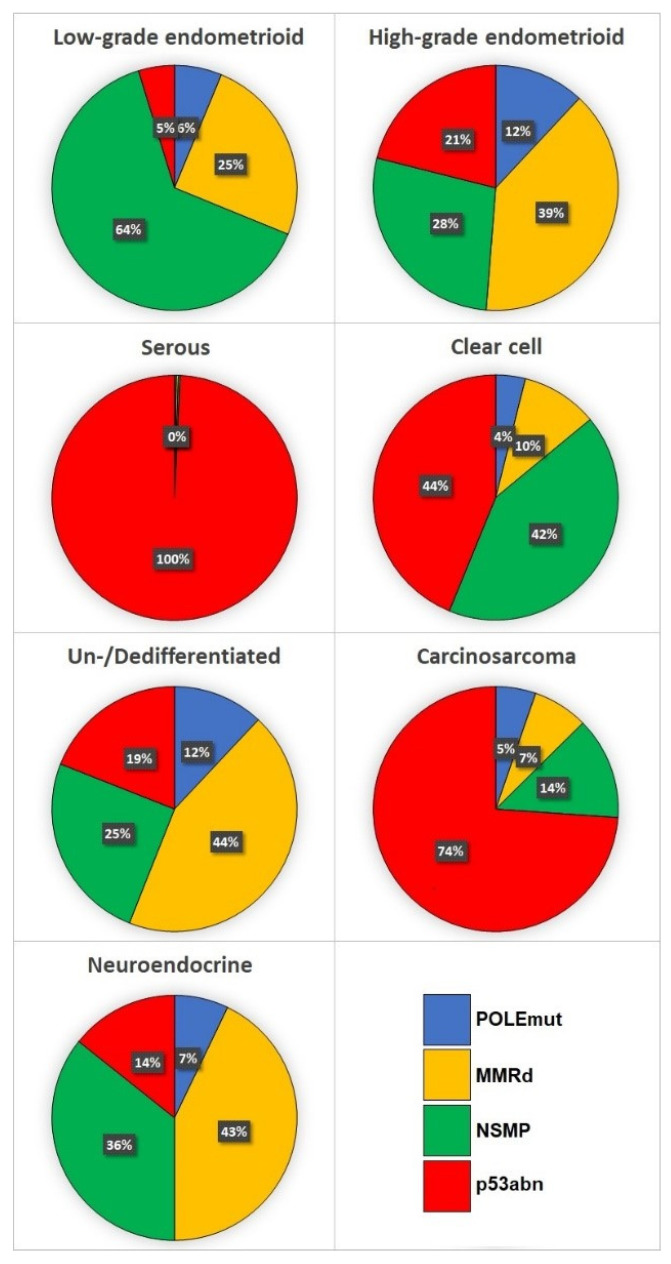
Endometrial carcinoma represents the most common gynecological cancer in Europe and the USA. Histopathological classification based on tumor morphology and tumor grade has played a crucial role in the management of endometrial carcinoma, allowing a prognostic stratification into distinct risk categories, and guiding surgical and adjuvant therapy. In 2013, The Cancer Genome Atlas (TCGA) Research Network reported a large scale molecular analysis of 373 endometrial carcinomas which demonstrated four categories with distinct clinical, pathologic, and molecular features: POLE/ultramutated (7% of cases) microsatellite instability (MSI)/hypermutated (28%), copy-number low/endometrioid (39%), and copy-number high/serous-like (26%). In the present article, we report a detailed histological and molecular review of all endometrial carcinoma histotypes in light of the current ESGO/ESTRO/ESP guidelines. In particular, we focus on the distribution and prognostic value of the TCGA groups in each histotype.
Keywords: CTNNB1; TCGA; clear cell carcinoma; endometrial carcinoma; prognosis; serous carcinoma; undifferentiated carcinoma.
Conflict of interest statement
The authors declare no conflict of interest.
Figures
References
Publication types
LinkOut - more resources
Full Text Sources
Miscellaneous
