


Neural Responses to Fluoxetine in Youths with Disruptive Behavior and Trauma Exposure: A Pilot Study
- PMID: 34076503
- PMCID: PMC8575058
- DOI: 10.1089/cap.2020.0174
Neural Responses to Fluoxetine in Youths with Disruptive Behavior and Trauma Exposure: A Pilot Study
Abstract
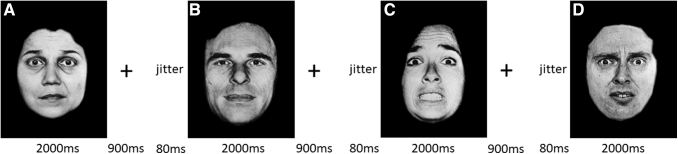
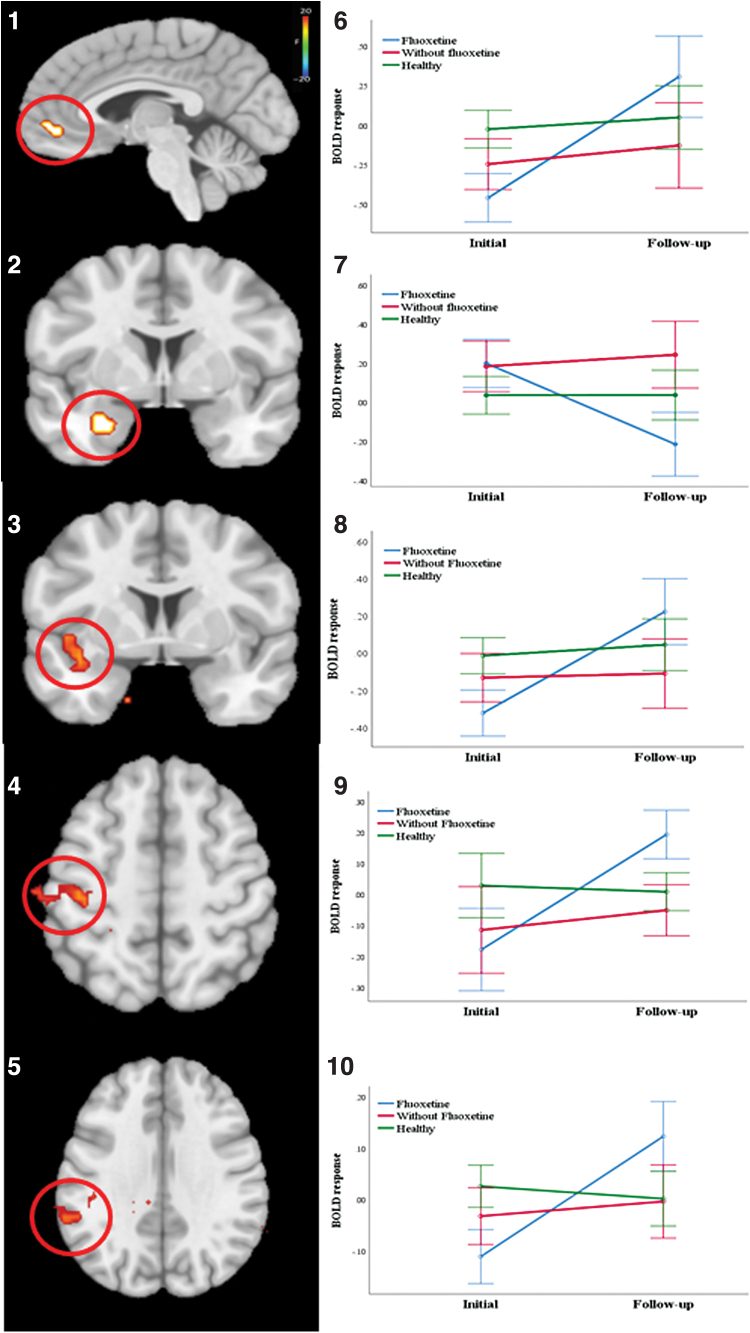
Objective: A preliminary investigation of the impact of a serotonergic agent (fluoxetine) on symptom profile and neural response in youths with disruptive behavior disorders (DBDs) and a history of trauma exposure. Methods: There were three participant groups: (i) Youths with DBDs and trauma exposure who received fluoxetine treatment for 8 weeks (n = 11); (ii) A matched group of youths with DBDs and trauma exposure who received routine regular follow-up in an outpatient clinic (n = 10); and (iii) Typically developing youths (n = 18). All participants conducted an expression processing functional magnetic resonance imaging task twice, 8 weeks apart: (pretreatment and post-treatment for youths with DBDs). Results: Youths with DBDs and trauma exposure who received fluoxetine treatment compared to the other two groups showed: (i) significant improvement in externalizing, oppositional defiant disorder, irritability, anxiety-depression, and trauma-related symptoms; (ii) as a function of fearful expression intensity, significantly decreased amygdala response and increased recruitment of regions implicated in top-down attention control (insula cortex, inferior parietal lobule, and postcentral gyrus) and emotional regulation (ventromedial prefrontal cortex [vmPFC]); and (iii) correlation between DBD/irritability symptom improvement and increased activation of top-down attention control areas (inferior parietal lobule, insula cortex, and postcentral gyrus) and an emotion regulation area (vmPFC). Conclusions: This study provides preliminary evidence that a serotonergic agent (fluoxetine) can reduce disruptive behavior and mood symptoms in youths with DBDs and trauma exposure and that this may be mediated by enhanced activation of top-down attention control and emotion regulation areas (inferior parietal lobule, insula cortex, and vmPFC).
Keywords: disruptive behavior disorder; fluoxetine; insula; trauma; ventromedial prefrontal cortex.
Conflict of interest statement
No competing financial interests exist.
Figures
References
-
- Achenbach TM: Manual for the Child Behavior Checklist/4–18 and 1991 Profile. Burlington, Vermont: University of Vermont; 1997.
-
- American Psychiatric Association. Diagnostic and Statistical Manual of Mental Disorders, 5th ed. Washington, DC: American Psychiatric Association; 2013.
-
- Andrewes DG, Jenkins LM: The role of the amygdala and the ventromedial prefrontal cortex in emotional regulation: Implications for post-traumatic stress disorder. Neuropsychol Rev 29:220–243, 2019. - PubMed
-
- Balia C, Carucci S, Coghill D, Zuddas A: The pharmacological treatment of aggression in children and adolescents with conduct disorder. Do callous—unemotional traits modulate the efficacy of medication? Neurosci Biobehav Rev 91:218–238, 2018. - PubMed
MeSH terms
Substances
Grants and funding
LinkOut - more resources
Full Text Sources
