


Anthrax Surveillance and the Limited Overlap Between Obligate Scavengers and Endemic Anthrax Zones in the United States
- PMID: 34077293
- PMCID: PMC8563459
- DOI: 10.1089/vbz.2020.2747
Anthrax Surveillance and the Limited Overlap Between Obligate Scavengers and Endemic Anthrax Zones in the United States
Abstract
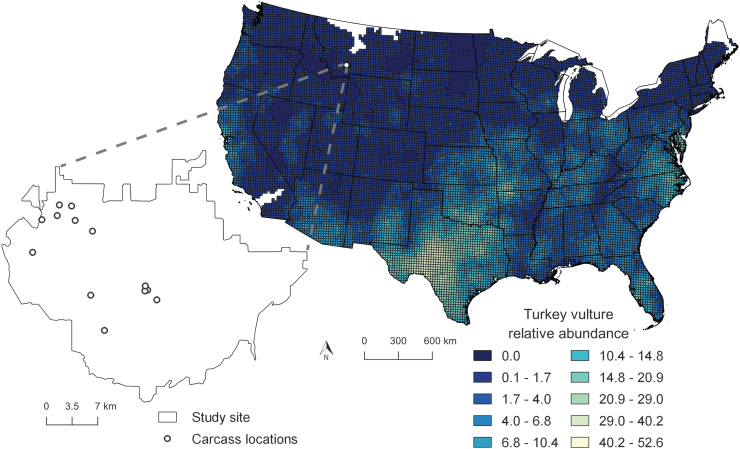
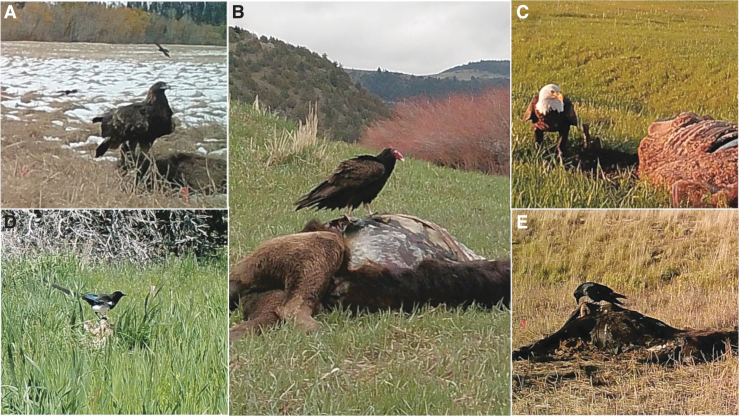
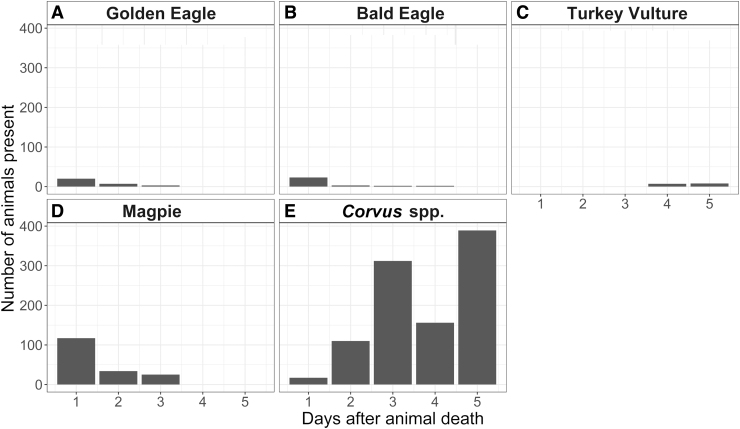
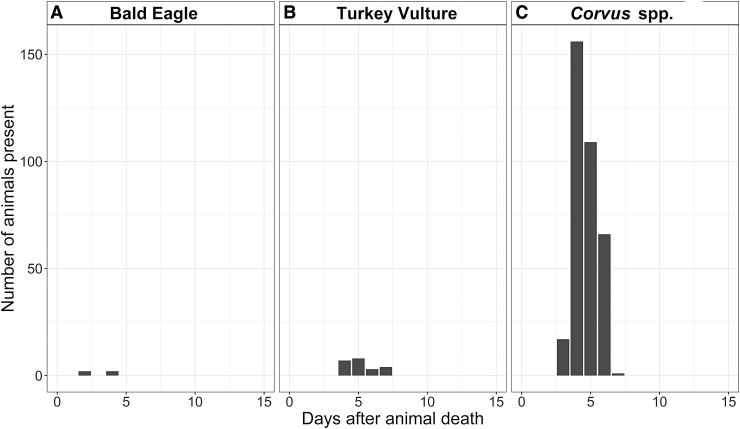
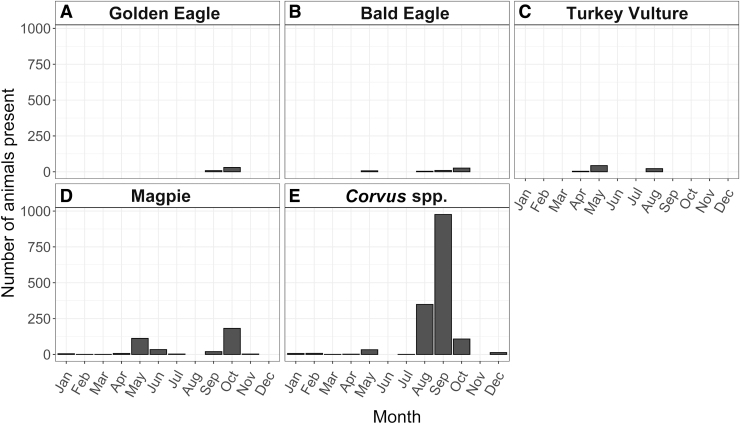
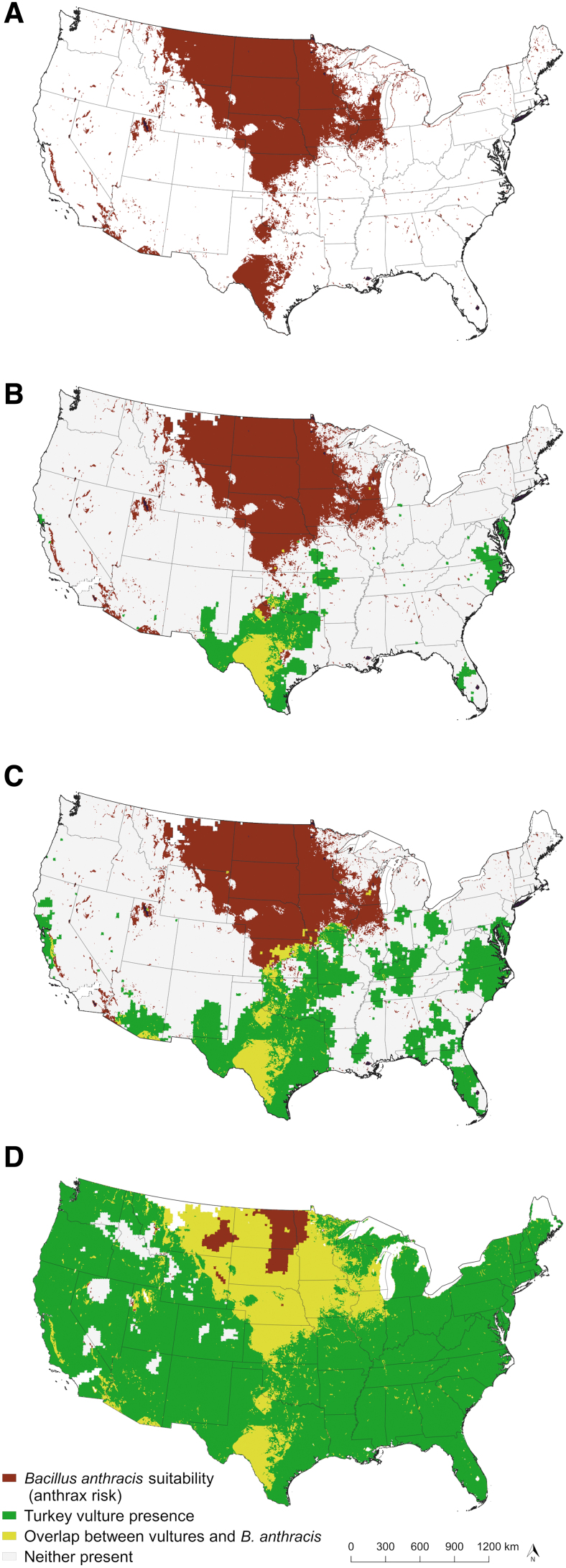
Anthrax is a zoonosis caused by the spore-forming bacterium Bacillus anthracis, with potential for high fatality rate, especially in herbivores. Upon host death, spores can enter the soil surrounding the carcass and be ingested by other animals feeding in the same location. Accordingly, surveillance to quickly identify and decontaminate anthrax carcasses is crucial to outbreak prevention. In endemic anthrax areas such as Texas and Africa, vultures are used as a surveillance tool for identifying presence and location of dead animals. However, many anthrax outbreaks in the United States have occurred in areas outside the ranges of both black and turkey vultures. Here, we used a longitudinal camera trap survey at carcass sites in southwestern Montana to investigate the utility of facultative avian scavengers on disease and carcass surveillance in a reemerging anthrax risk zone. From August 2016 to September 2018, camera traps at 11 carcass sites were triggered 1996 times by avian scavengers. While the majority were facultative avian scavengers such as corvids and eagles, our results suggest that facultative scavengers cannot replace vultures as a surveillance tool in this ecosystem due to their absence during the anthrax risk period (June to August), reduced search efficiency, or low flight patterns. We found that the conditions in Montana likely parallel systems elsewhere in the continental United States. Using ecological niche models of B. anthracis distribution overlaid with relative abundance maps of turkey vultures, we found that much of North Dakota, South Dakota, Minnesota, Wyoming, Nebraska, and Iowa have areas of anthrax risk, but low or absent turkey vulture populations. Without vultures in these areas, surveillance capacity is reduced, and it becomes more difficult to identify anthrax cases, meaning fewer carcasses are decontaminated, and consequently, outbreaks could become more frequent or severe.
Keywords: anthrax; corvids; obligate scavengers; turkey vultures; vultures; zoonosis.
Conflict of interest statement
No conflicting financial interests exist.
Figures
References
-
- Anderson RP, Lew D, Peterson AT. Evaluating predictive models of species' distributions: Criteria for selecting optimal models. Ecol Model 2003; 162:211–232.
-
- Avery ML. Trends in North American vulture populations. Proc Vertebr Pest Conf 2004; 21.
-
- Bagamian KH, Alexander KA, Hadfield TL, Blackburn JK. Ante-and postmortem diagnostic techniques for anthrax: Rethinking pathogen exposure and the geographic extent of the disease in wildlife. J Wildl Dis 2013; 49:786–801. - PubMed
-
- Barandongo ZR, Mfune JKE, Turner WC. Dust-bathing behaviors of african herbivores and the potential risk of inhalational anthrax. J Wildl Dis 2017; 54:34–44. - PubMed
-
- Bellan SE. Applications of Data-Driven Modeling to Infectious Diseases in Africa: Anthrax in Wildlife and HIV in Humans. California, USA: UC Berkeley, 2012.
Publication types
MeSH terms
Grants and funding
LinkOut - more resources
Full Text Sources
Medical
