


An enhanced therapeutic effect of repetitive transcranial magnetic stimulation combined with antibody treatment in a primate model of spinal cord injury
- PMID: 34077429
- PMCID: PMC8172028
- DOI: 10.1371/journal.pone.0252023
An enhanced therapeutic effect of repetitive transcranial magnetic stimulation combined with antibody treatment in a primate model of spinal cord injury
Abstract
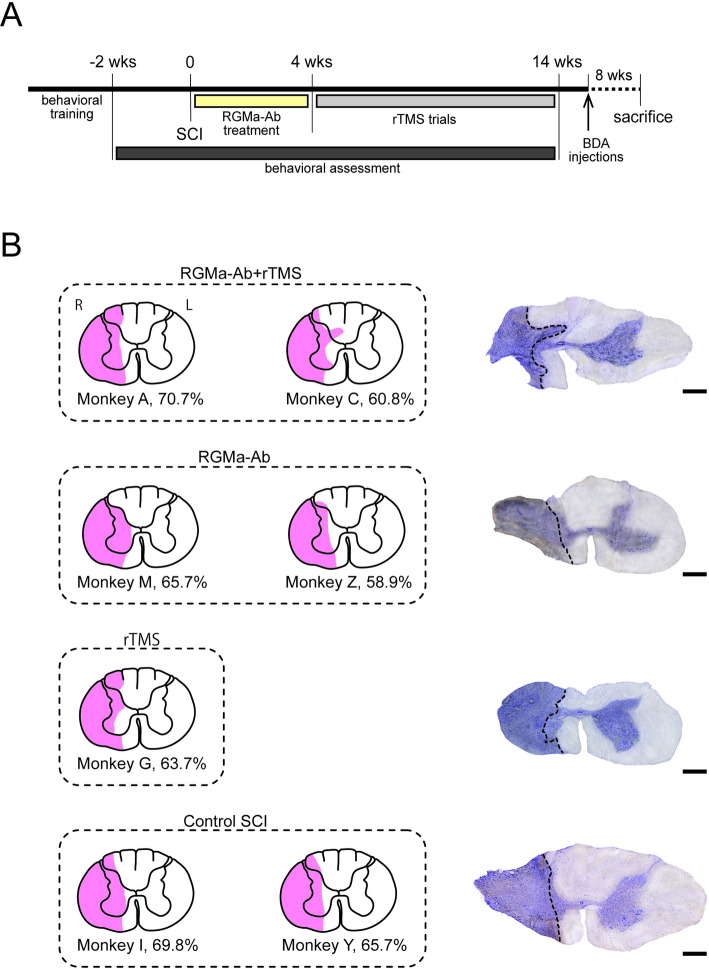
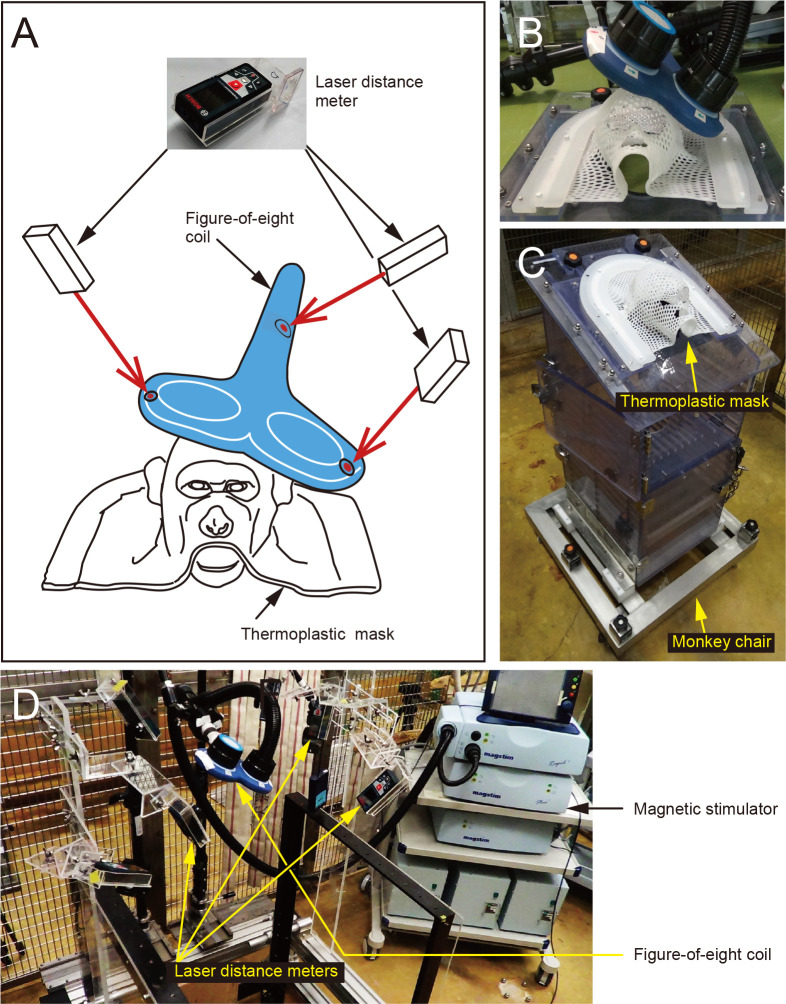
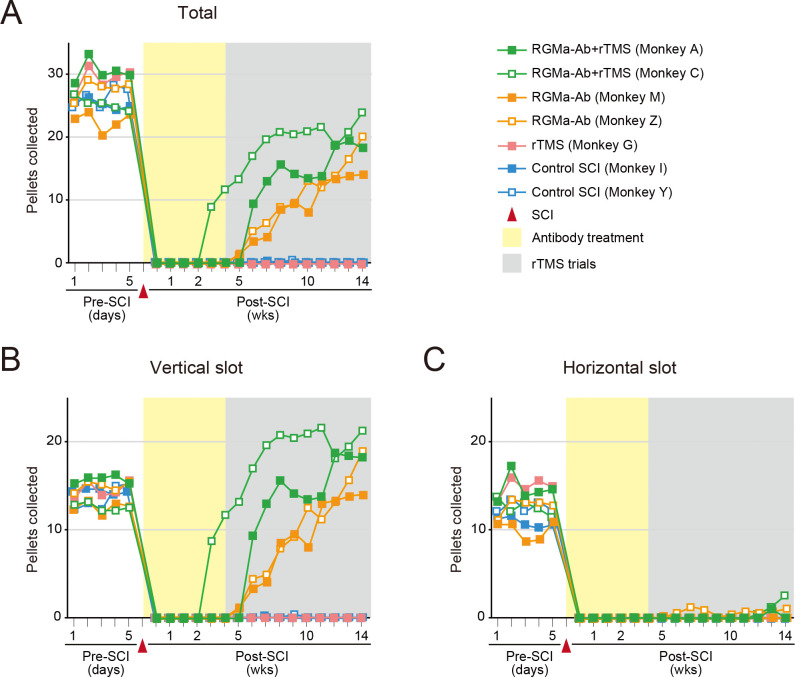
Repetitive transcranial magnetic stimulation (rTMS) targeting the primary motor cortex (MI) is expected to provide a therapeutic impact on spinal cord injury (SCI). On the other hand, treatment with antibody against repulsive guidance molecule-a (RGMa) has been shown to ameliorate motor deficits after SCI in rodents and primates. Facilitating activity of the corticospinal tract (CST) by rTMS following rewiring of CST fibers by anti-RGMa antibody treatment may exert an enhanced effect on motor recovery in a primate model of SCI. To address this issue, we examined whether such a combined therapeutic strategy could contribute to accelerating functional restoration from SCI. In our SCI model, unilateral lesions were made between the C6 and the C7 level. Two macaque monkeys were used for each of the combined therapy and antibody treatment alone, while one monkey was for rTMS alone. The antibody treatment was continuously carried out for four weeks immediately after SCI, and rTMS trials applying a thermoplastic mask and a laser distance meter lasted ten weeks. Behavioral assessment was performed over 14 weeks after SCI to investigate the extent to which motor functions were restored with the antibody treatment and/or rTMS. While rTMS without the preceding antibody treatment produced no discernible sign for functional recovery, a combination of the antibody and rTMS exhibited a greater effect, especially at an early stage of rTMS trials, on restoration of dexterous hand movements. The present results indicate that rTMS combined with anti-RGMa antibody treatment may exert a synergistic effect on motor recovery from SCI.
Conflict of interest statement
The authors have read the journal’s policy and have the following competing interests: Mitsubishi Tanabe Pharma Corporation provided financial support for the study in the form of funding for the expendables and a stipend awarded to HY and MT, as well as material support in the form of the anti-RGMa antibody used in the study. This does not alter our adherence to PLOS ONE policies on sharing data and materials. There are no other patents, products in development or marketed products associated with this research to declare.
Figures
References
Publication types
MeSH terms
Substances
LinkOut - more resources
Full Text Sources
Medical
Miscellaneous
