


Rosmarinic acid represses colitis-associated colon cancer: A pivotal involvement of the TLR4-mediated NF-κB-STAT3 axis
- PMID: 34077834
- PMCID: PMC8180929
- DOI: 10.1016/j.neo.2021.05.002
Rosmarinic acid represses colitis-associated colon cancer: A pivotal involvement of the TLR4-mediated NF-κB-STAT3 axis
Abstract
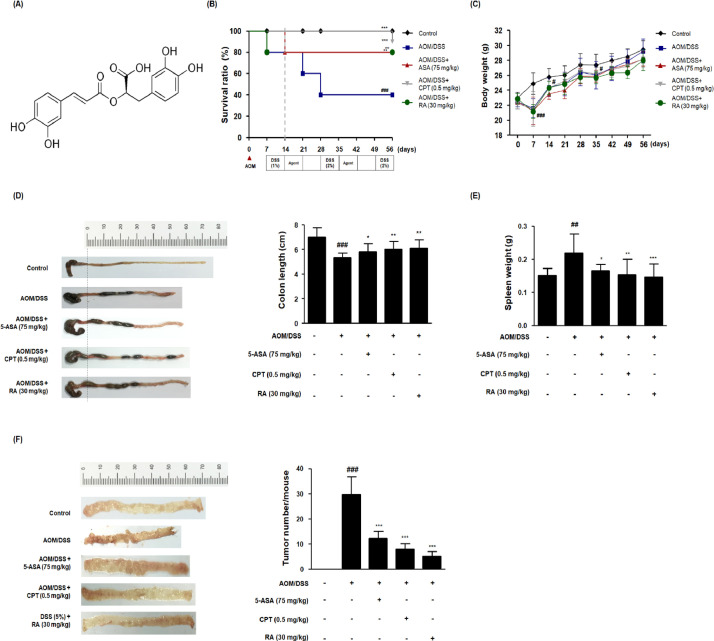
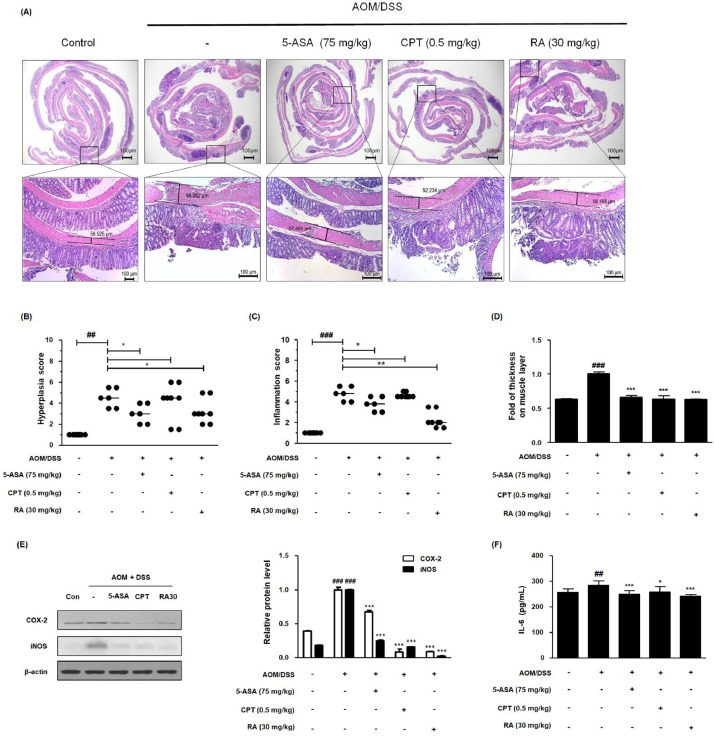
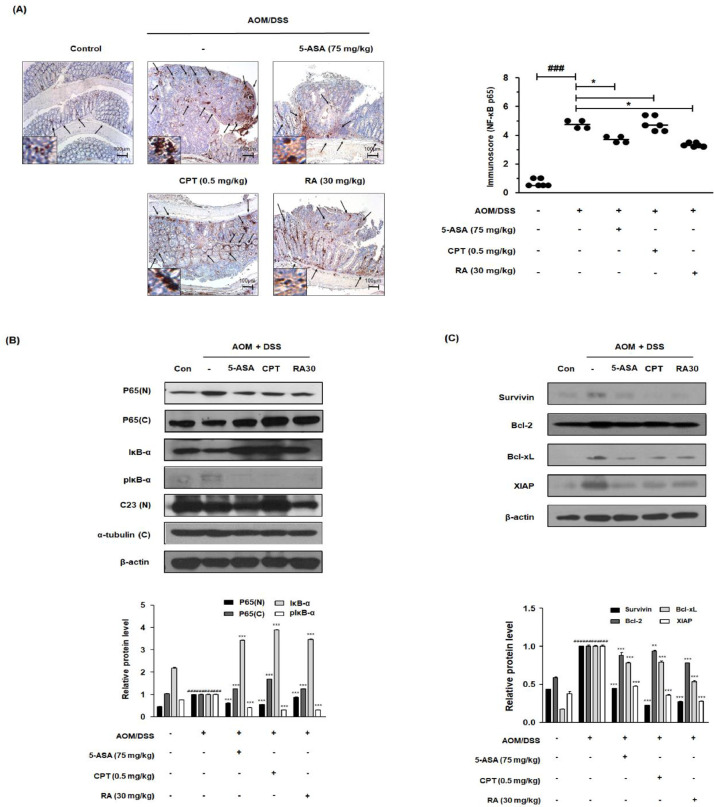
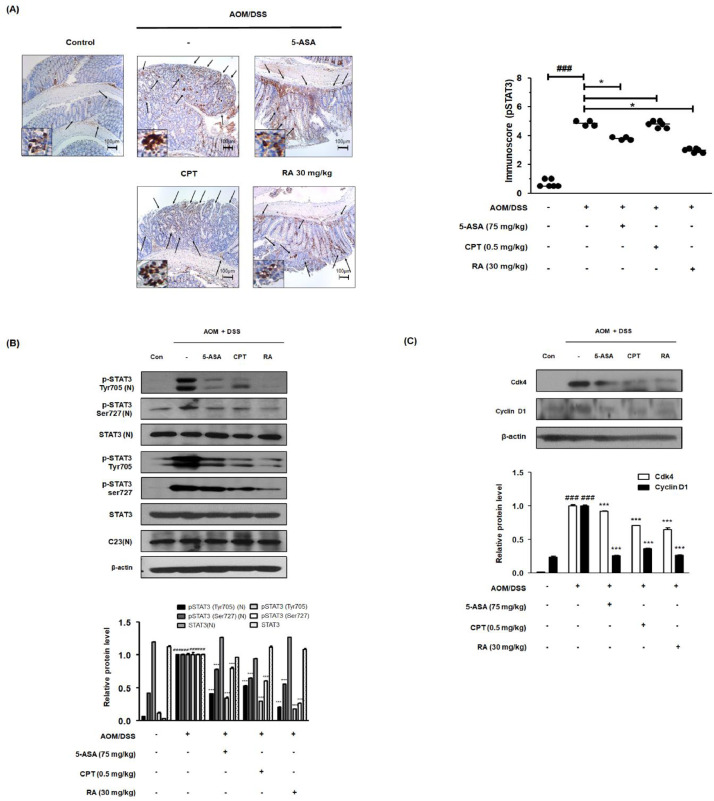
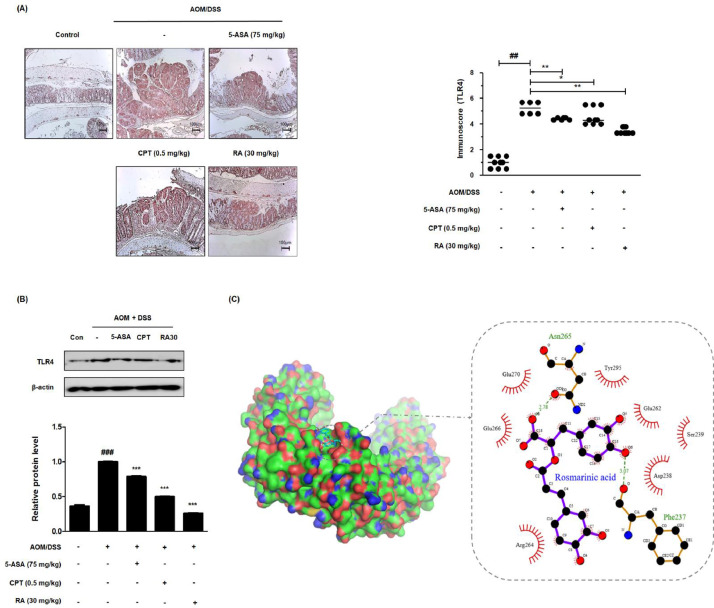
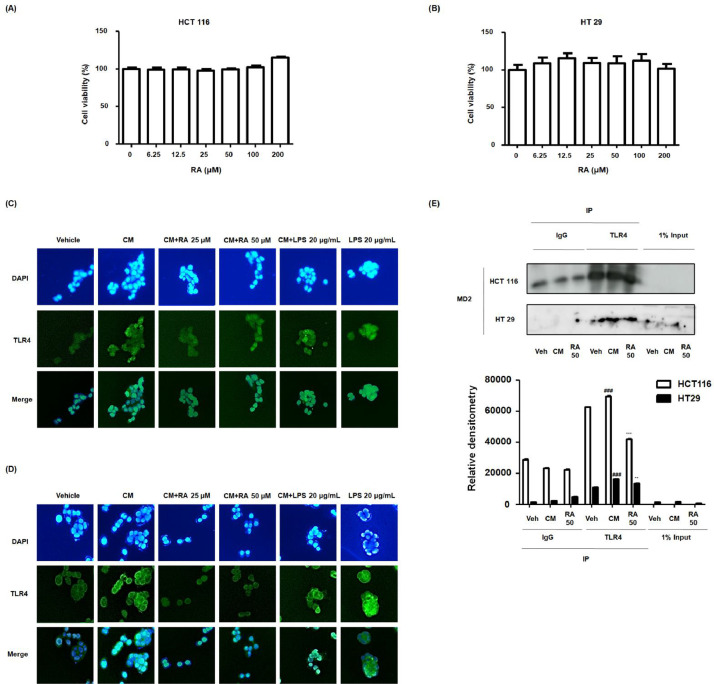
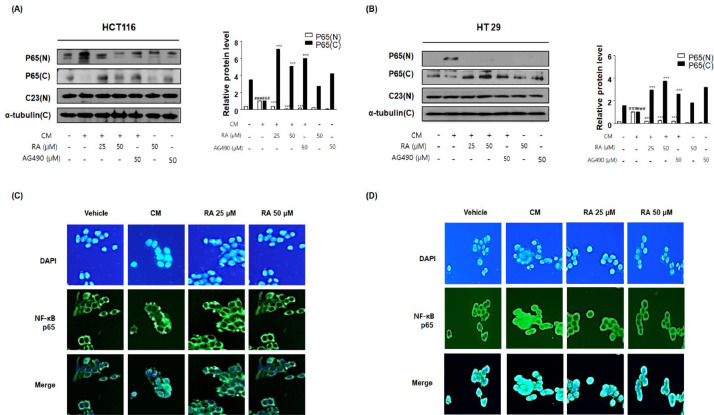
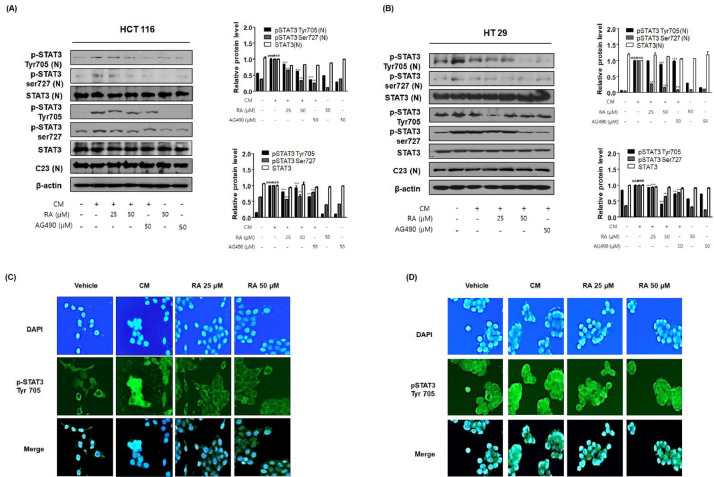
Previously, we found that rosmarinic acid (RA) exerted anti-inflammatory activities in a dextran sulfate sodium (DSS)-induced colitis model. Here, we investigated the anti-tumor effects of RA on colitis-associated colon cancer (CAC) and the underlying molecular mechanisms. We established an azoxymethane (AOM)/DSS-induced CAC murine model for in vivo studies and used a conditioned media (CM) culture system in vitro. H&E staining, immunohistochemistry, western blot assay, enzyme-linked immunosorbent assay, molecular docking, co-immunoprecipitation, and immunofluorescence assay were utilized to investigate how RA prevented colorectal cancer. In the AOM/DSS-induced CAC murine model, RA significantly reduced colitis severity, inflammation-related protein expression, tumor incidence, and colorectal adenoma development. It significantly modulated toll-like receptor-4 (TLR4)-mediated nuclear factor-kappa B (NF-κB) and signal transducer and activator of transcription 3 (STAT3) activation, thus attenuating the expression of anti-apoptotic factors, which mediate transcription factor-dependent tumor growth. In vitro, RA inhibited CM-induced TLR4 overexpression and competitively inhibited TLR4-myeloid differentiation factor 2 complex in an inflammatory microenvironment. Thus, RA suppressed NF-κB and STAT3 activation in colon cancer cells in an inflammatory microenvironment. Therefore, RA suppressed colitis-associated tumorigenesis in the AOM/DSS-induced CAC murine model and abrogated human colon cancer progression in an inflammatory microenvironment by propitiating TLR4-mediated NF-κB and STAT3 activation, pleiotropically.
Keywords: Colitis-associated colon cancer (CAC); Myeloid differentiation factor 2 (MD-2); Nuclear factor-kappa B (NF-κB); Rosmarinic acid (RA); Signal transducer and activator of transcription 3 (STAT3); Toll-like receptor-4 (TLR4).
Copyright © 2021 The Authors. Published by Elsevier Inc. All rights reserved.
Conflict of interest statement
Competing interest The authors declare no conflict of interest.
Figures
References
-
- Siegel RL, Miller KD, Jemal A. Cancer statistics, 2016. CA: a cancer j for clin. 2016;66:7–30. - PubMed
-
- Eaden J, Abrams K, McKay H, Denley H, Mayberry J. Inter-observer variation between general and specialist gastrointestinal pathologists when grading dysplasia in ulcerative colitis. The J pathol. 2001;194:152–157. - PubMed
-
- Nadeem MS, Kumar V, Al-Abbasi FA, Kamal MA, Anwar F. Risk of colorectal cancer in inflammatory bowel diseases. Seminars in cancer biololgy 64, 51–60. - PubMed
-
- Sica A, Allavena P, Mantovani A. Cancer related inflammation: the macrophage connection. Cancer Lett. 2008;267:204–215. - PubMed
-
- Keibel A, Singh V, Sharma MC. Inflammation, microenvironment, and the immune system in cancer progression. Curr Pharm Des. 2009;15:1949–1955. - PubMed
Publication types
MeSH terms
Substances
LinkOut - more resources
Full Text Sources
Miscellaneous
