


Analysis of risk factors and prognosis of 253 lymph node metastasis in colorectal cancer patients
- PMID: 34082744
- PMCID: PMC8176614
- DOI: 10.1186/s12893-021-01276-2
Analysis of risk factors and prognosis of 253 lymph node metastasis in colorectal cancer patients
Abstract
Background: This study aimed to explore potential risk factors for 253 lymph node metastasis, and to identify the prognostic impact of 253 lymph node metastasis in colorectal cancer patients.
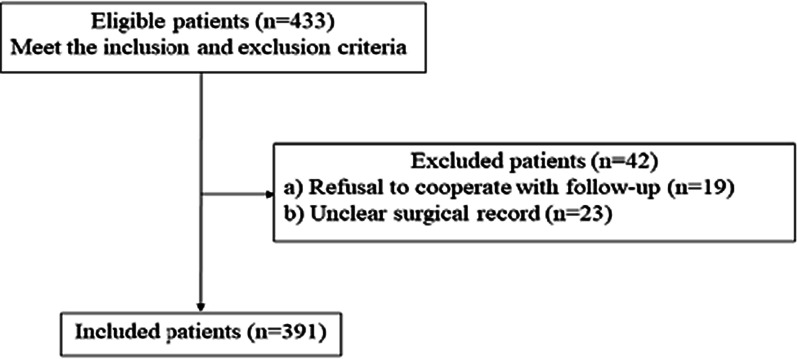
Methods: A retrospective study was conducted of 391 colorectal cancer patients who underwent surgical treatments that included 253 lymph node dissection. Clinicopathological features, molecular indexes and 1-year overall survival rates were analyzed.
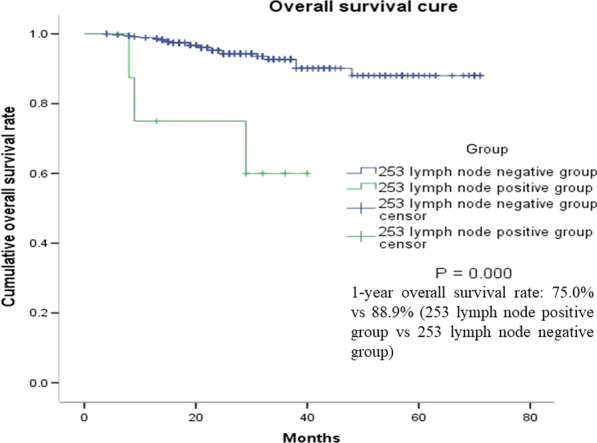
Results: Univariate analyses revealed the following risk factors for 253 lymph node metastasis: high preoperative levels of CEA, large tumour max diameters, and numbers of harvested lymph nodes, presence of vessel carcinoma emboli, low level of MSH6 and MLH1 immunohistochemical staining intensity. Multivariate analysis showed that elevated MLH1 immunohistochemical staining intensity was an independent protective factor for 253 lymph node metastasis (OR: 0.969, 95% CI 0.945, 0.994, P = 0.015). A significant difference was found in 1-year overall survival rate between 253 lymph node-positive and lymph node-negative colorectal cancer patients (88.9% vs.75.0%, P < 0.001).
Conclusions: 253 lymph node-positive colorectal cancer patients had a worse prognosis than the 253 lymph node-negative patients. 253 lymph node dissection may improve the prognosis of colorectal cancer patients with high risk factors for 253 lymph node metastasis.
Keywords: Immunohistochemistry; Lymph node dissection; Molecular indexes.
Conflict of interest statement
The authors declared no competing interests.
Figures
References
-
- Hohenberger W, Weber K, Matzel K, Papadopoulos T, Merkel S. Standardized surgery for colonic cancer: complete mesocolic excision and central ligation–technical notes and outcome. Colorect Dis. 2009;11(4):354–364. - PubMed
MeSH terms
LinkOut - more resources
Full Text Sources
Medical
Miscellaneous
