


Cognitive impairment in patients with moderate to severe chronic kidney disease: the Salford kidney cohort study
- PMID: 34084459
- PMCID: PMC8162857
- DOI: 10.1093/ckj/sfaa178
Cognitive impairment in patients with moderate to severe chronic kidney disease: the Salford kidney cohort study
Abstract
Background: Cognitive impairment in chronic kidney disease (CKD) is common and underrecognized [1, 2]. Determining risk factors for cognitive impairment and whether speed of CKD progression is an important consideration may help identify cognitive impairment by nephrologists. Vascular disease is thought to underpin cognitive impairment in CKD and by segregating CKD patients with proven vascular disease, we may also be able to discover other important associations with cognitive impairment in CKD patients.
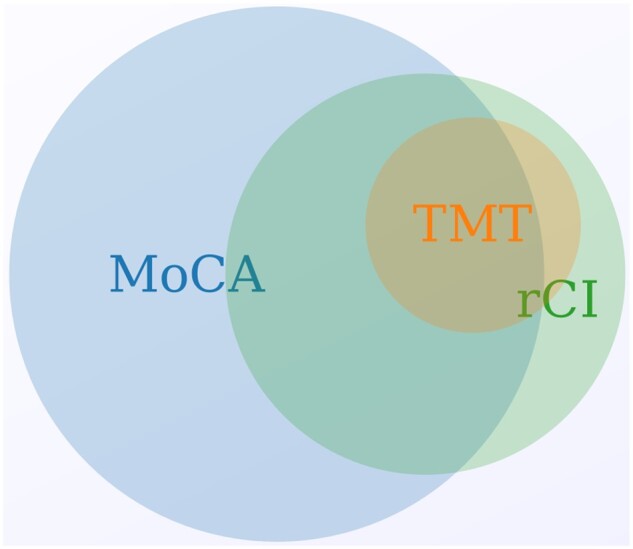
Method: A total of 250 patients in a UK prospective cohort of CKD patients underwent two cognitive assessments: Montreal Cognitive Assessment test and Trail Making Test. Cognitive impairment was defined using validated population cut-offs (cognitive impairment) and relative cognitive impairment. Relative cognitive impairment was defined by <1 standard deviation below the mean Z-score on any completed test. Two multivariable logistical regression models identified variables associated with cognitive impairment and realtive cognitive impairment.
Results: About 44 and 24.8% of patients suffered cognitive impairment and relative cognitive impairment, respectively. Depression, previous stroke and older age were significantly associated with cognitive impairment. Older age was significantly associated with relative cognitive impairment (P ≤ 0.05) and higher proteinuria and the use of psychodynamic medications were also significantly associated with relative cognitive impairment (P = 0.05). Delta estimated glomerular filtration rate (eGFR) in patients with cognitive impairment and relative cognitive impairment compared with those having normal cognition was similar (-0.77 versus -1.35 mL/min/1.73 m2/year, P = 0.34 for cognitive impairment and -1.12 versus -1.02 mL/min/1.73 m2/year, P = 0.89 for relative cognitive impairment).
Conclusion: Risk factors for cognitive impairment in CKD include previous stroke, depression or anxiety, higher proteinuria and prescription of psychodynamic medications. Patients with a faster eGFR decline do not represent a group of patients at increased risk of cognitive impairment.
Keywords: CKD; GFR; age; depression; elderly; proteinuria; quality of life.
© The Author(s) 2020. Published by Oxford University Press on behalf of ERA-EDTA.
Figures
References
-
- Murray AM, Tupper DE, Knopman DS. et al. Cognitive impairment in hemodialysis patients is common. Neurology 2006; 67: 216–223 - PubMed
-
- Etgen T, Chonchol M, Förstl H. et al. Chronic kidney disease and cognitive impairment: a systematic review and meta-analysis. Am J Nephrol 2012; 35: 474–482 - PubMed
LinkOut - more resources
Full Text Sources
Research Materials
Miscellaneous
