Examining ethical leadership in health care organizations and its impacts on employee work attitudes: an empirical analysis from Austria
- PMID: 34085804
- PMCID: PMC8939467
- DOI: 10.1108/LHS-06-2020-0034
Examining ethical leadership in health care organizations and its impacts on employee work attitudes: an empirical analysis from Austria
Abstract
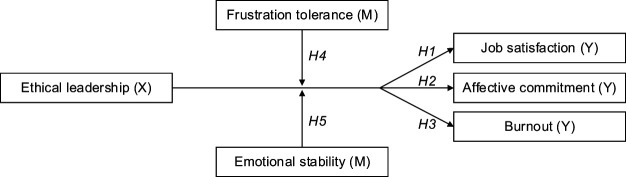
Purpose: This study aims to examine the effects of ethical leadership on job satisfaction, affective commitment and burnout of health care employees, considering frustration tolerance and emotional stability as moderating variables.
Design/methodology/approach: A questionnaire was used to survey health care professionals working in private and public Austrian health-care organizations (hospitals, nursing homes, rehabilitation centers and sanatoriums). The questionnaire consisted of items from well-established scales. The collected data (n = 458) was analyzed using correlation and regression analyzes.
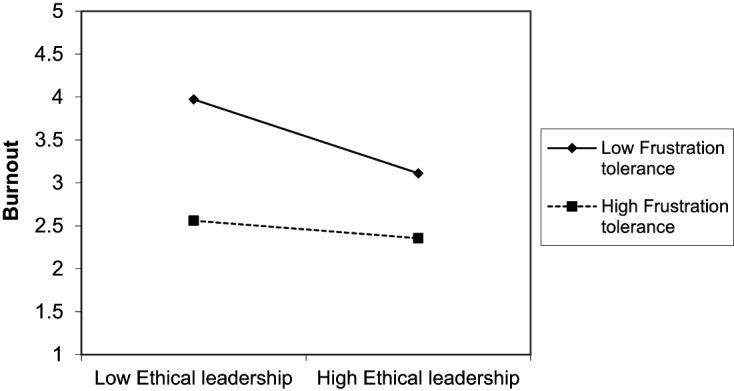
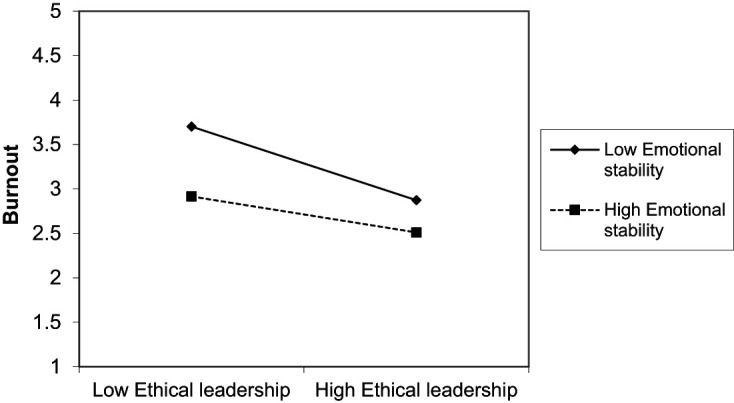
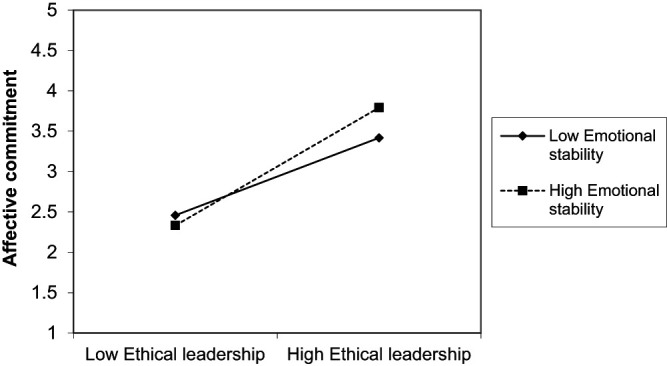
Findings: Findings indicated that ethical leadership is significantly positively related to job satisfaction (r = 0.485, p < 0.01) and affective commitment (r = 0.461, p < 0.01) and is significantly negatively related to burnout (r = -0.347, p < 0.01). The results also suggest that frustration tolerance (ß = 0.101, p < 0.1) and emotional stability (ß = 0.093, p < 0.1) moderate the relationship between ethical leadership and burnout. Furthermore, a moderation effect of emotional stability in the ethical leadership and affective commitment relation was indicated. No moderation effect was found for frustration tolerance or emotional stability for the relationship between ethical leadership and job satisfaction.
Practical implications: Ethical leadership emphasizes the socio-emotional dimension in a leader-employee relationship, which can easily be neglected in times of staff cuts and work overload. Leadership training should include the development of skills in how to visibly act as a moral person, as well as how to set clear ethical standards and communicate them to employees.
Originality/value: This study adds value to the limited evidence on the beneficial role of ethical leadership in health care settings. In addition, frustration tolerance and emotional stability have not before been investigated as moderators.
Keywords: Affective commitment; Austria; Burnout; Emotional stability; Ethical leadership; Frustration tolerance; Health-care; Job satisfaction.
© Arleta Anna Franczukowska, Eva Krczal, Christine Knapp and Martina Baumgartner.
Figures
References
-
- Allen, N.J. and Meyer, J.P. (1990), “The measurement and antecedents of affective, continuance and normative commitment”, Journal of Occupational Psychology, Vol. 63 No. 1, pp. 1-18.
-
- Avey, J.B., Wernsing, T. and Palanski, M. (2012), “Exploring the process of ethical leadership: the mediating role of employee voice and psychological ownership”, Journal of Business Ethics, Vol. 107 No. 1, pp. 21-34.
-
- Barbaranelli, C. and Caprara, V.G. (2000), “Measuring the big five in self report and other ratings: a multitrait-multimethod study”, European Journal of Psychological Assessment, Vol. 16 No. 1, pp. 31-43.
-
- Barrick, M.R. and Mount, M.K. (1991), “The big five personality dimensions and job performance: a meta-analysis”, Personnel Psychology, Vol. 44 No. 1, pp. 1-26.
-
- Blau, P. (1964), Exchange and Power in Social Life, John Wiley, New York, NY.
MeSH terms
LinkOut - more resources
Full Text Sources