. 2021 Jun 4:10:e69866.
doi: 10.7554/eLife.69866.

Convalescent plasma use in the USA was inversely correlated with COVID-19 mortality

Affiliations

Convalescent plasma use in the USA was inversely correlated with COVID-19 mortality

Arturo Casadevall et al. Elife. .

Abstract

Background: The US Food and Drug Administration authorized COVID-19 convalescent plasma (CCP) therapy for hospitalized COVID-19 patients via the Expanded Access Program (EAP) and the Emergency Use Authorization (EUA), leading to use in about 500,000 patients during the first year of the pandemic for the USA.

Methods: We tracked the number of CCP units dispensed to hospitals by blood banking organizations and correlated that usage with hospital admission and mortality data.

Results: CCP usage per admission peaked in Fall 2020, with more than 40% of inpatients estimated to have received CCP between late September and early November 2020. However, after randomized controlled trials failed to show a reduction in mortality, CCP usage per admission declined steadily to a nadir of less than 10% in March 2021. We found a strong inverse correlation (r = -0.52, p=0.002) between CCP usage per hospital admission and deaths occurring 2 weeks after admission, and this finding was robust to examination of deaths taking place 1, 2, or 3 weeks after admission. Changes in the number of hospital admissions, SARS-CoV-2 variants, and age of patients could not explain these findings. The retreat from CCP usage might have resulted in as many as 29,000 excess deaths from mid-November 2020 to February 2021.

Conclusions: A strong inverse correlation between CCP use and mortality per admission in the USA provides population-level evidence consistent with the notion that CCP reduces mortality in COVID-19 and suggests that the recent decline in usage could have resulted in excess deaths.

Funding: There was no specific funding for this study. AC was supported in part by RO1 HL059842 and R01 AI1520789; MJJ was supported in part by 5R35HL139854. This project has been funded in whole or in part with Federal funds from the Department of Health and Human Services; Office of the Assistant Secretary for Preparedness and Response; Biomedical Advanced Research and Development Authority under Contract No. 75A50120C00096.

Keywords: COVID; convalescent plasma; epidemiology; global health; human; virus infection.


Conflict of interest statement

AC, QD, PJ, JS, SK, RW, MJ, NP, RC No competing interests declared

Figures
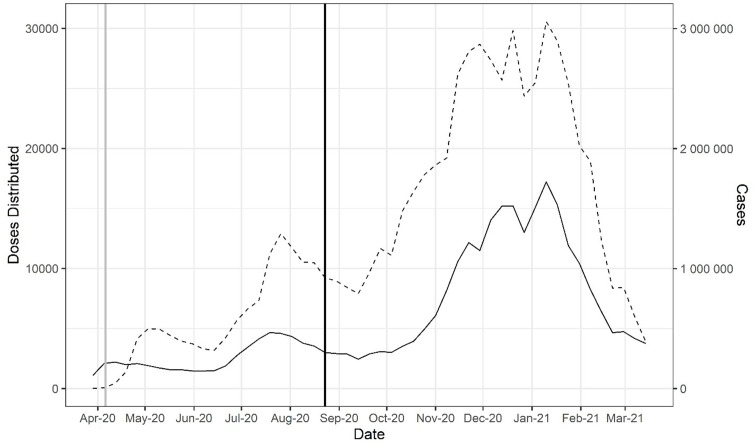
Figure 1.
Figure 1.. Doses of COVID-19 convalescent plasma (CCP) distributed in the USA by the American Red Cross and American Blood Centers (dashed) and total COVID-19 cases in the USA reported in Our World in Data (OWID) database (solid).
The vertical black line marks August 23, 2020, when the US Food and Drug Administration (FDA) announced that Emergency Use Authorization for CCP in the USA. The vertical gray line marks April 4, 2020, as the start of the Emergency Access Program.
Figure 1—figure supplement 1.
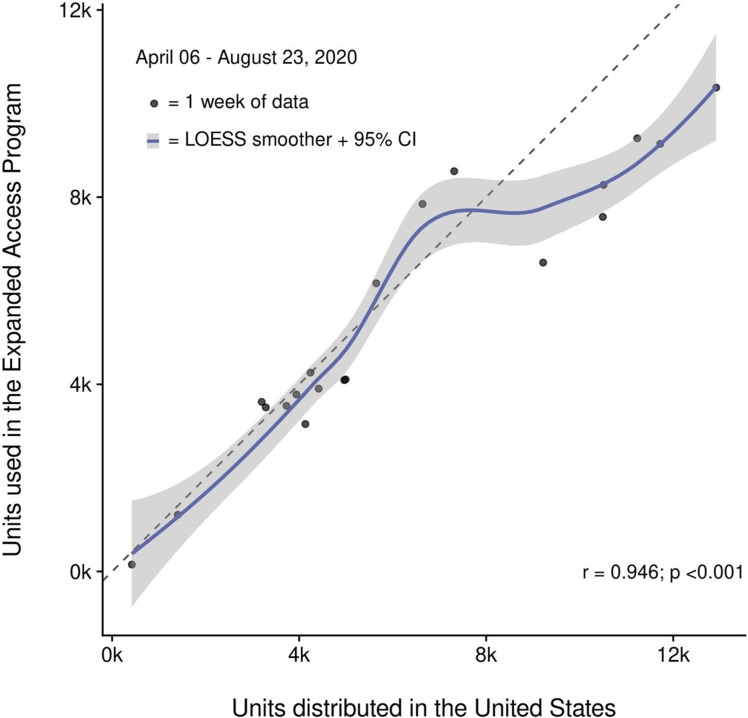
Figure 1—figure supplement 1.. Correlation of convalescent plasma distribution and usage within the Expanded Access Program (EAP).
Shown is the progressive increase in the number of convalescent plasma units distributed in the USA and convalescent plasma units used in the EAP. Data between April 6 and August 23, 2020, are pooled in weekly intervals and represented as filled circles. The Pearson’s correlation coefficient was used to assess correlation (r = 0.946, p<0.001) and a LOESS smoother with a 95% confidence interval (CI) and a reference line were overlayed. Points below the reference line represent weeks where more convalescent plasma was distributed than used within the EAP. Conversely, points above the reference line are indicative of more convalescent plasma being used in the EAP than distributed.
Figure 2.
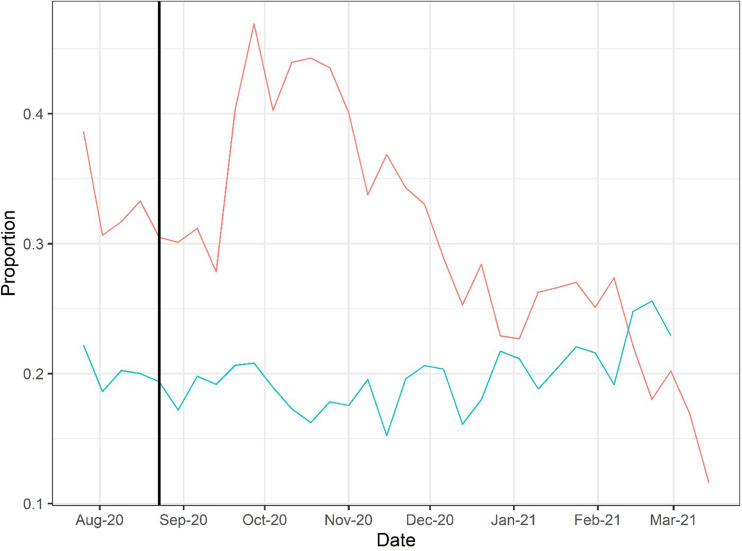
Figure 2.. Doses of COVID-19 convalescent plasma (CCP) per hospital admission (red) and mortality calculated as deaths per hospital admission (green) using Our World in Data (OWID) database.
To account for time between admission to death, deaths from 2 weeks after admission are used to calculate mortality. The vertical line marks August 23, 2020, when the US Food and Drug Administration (FDA) announced that Emergency Use Authorization for CCP in the USA.
Figure 3.
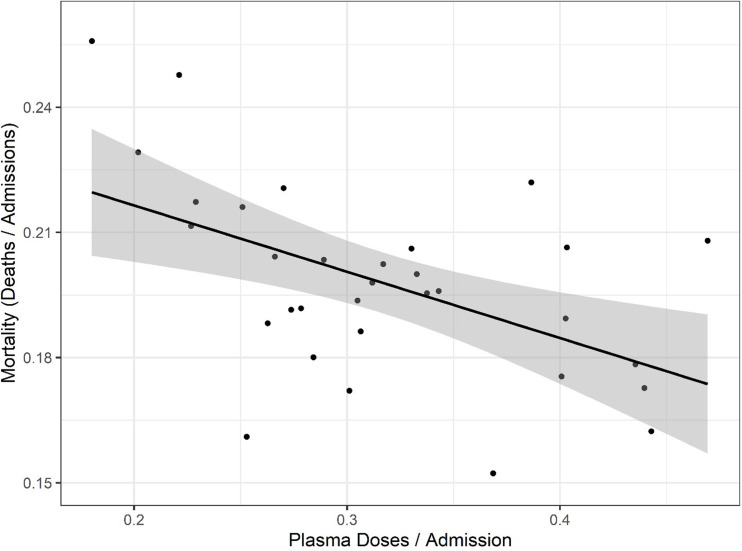
Figure 3.. Correlation of mortality (death per admission) and COVID-19 convalescent plasma (CCP) doses per admitted patients using the Our World in Data (OWID) database.
Correlation analysis yields a Pearson’s correlation coefficient of −0.518 (p=0.0024). The black line represents a linear model regression with an R squared of 0.268.
Figure 3—figure supplement 1.
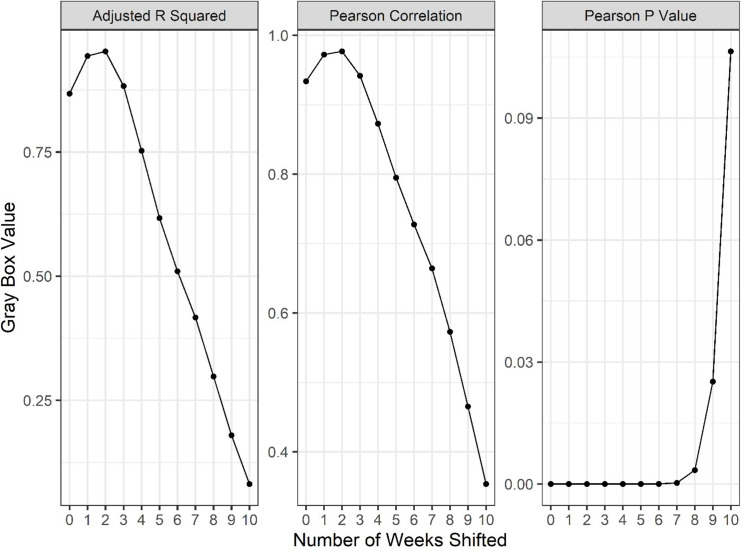
Figure 3—figure supplement 1.. A series of linear regressions and Pearson’s correlation tests comparing weekly reported deaths to new weekly hospital admissions, offset by various numbers of weeks to identify the length of lag between admission and death of patients using Our World in Data (OWID) database.
y-Axis values reflect the parameter of each gray box throughout the shifted weeks. Correlations peak at 2–3 weeks shifted, suggesting the lag time between admission and reported death is roughly 2 weeks.
Figure 3—figure supplement 2.
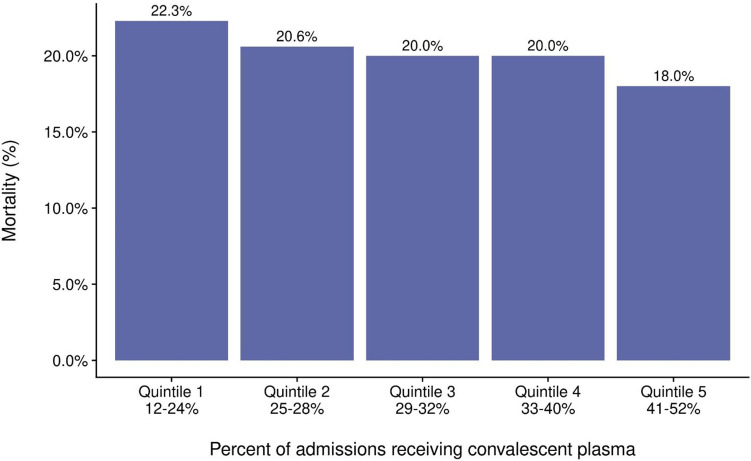
Figure 3—figure supplement 2.. Mortality from COVID-19 by quintile of percent of admissions receiving COVID-19 convalescent plasma (CCP).
Regression analysis for the quintiles revealed R = 0.5 and p=0.03.
Figure 3—figure supplement 3.
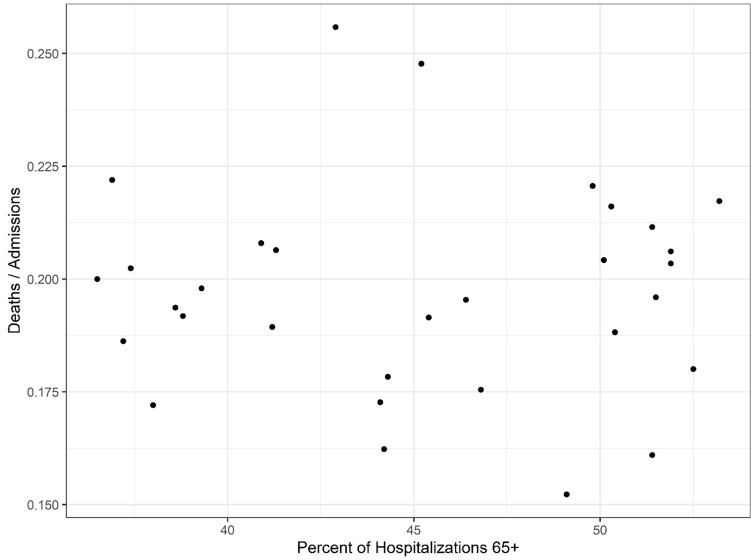
Figure 3—figure supplement 3.. Investigation of high age group mortality.
The shifted mortality is compared to the percent of hospitalized patients 65+ each week as reported by the Centers for Disease Control (CDC). There is no significant correlation between the two variables, suggesting changes in mortality are not explainable by an increase in hospitalized high-risk patients.
Figure 4.
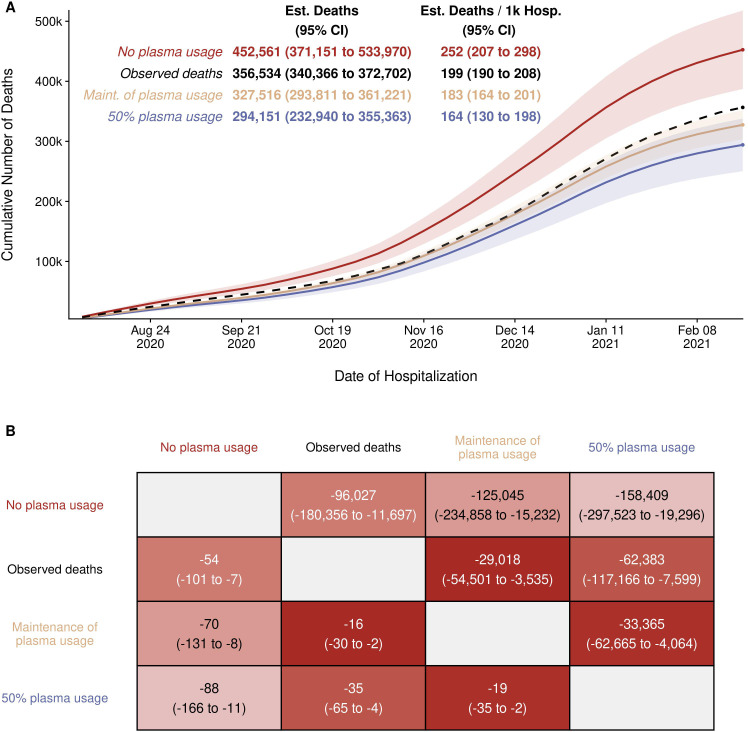
Figure 4.. Estimated (Est.) deaths under modeled scenarios of COVID-19 convalescent plasma (CCP) using Centers for Disease Control (CDC) database.
Panel A presents the longitudinal observed (dashed line) and modeled number of deaths under three scenarios for CCP over the study period (August 3, 2020 to February 22, 2021) that included 356,534 deaths in 1,793,502 hospitalized patients. Over the entire study period, the CCP utilization ratio was 29.1%. In the scenario labeled maintenance (Maint.) of plasma, the CCP utilization ratio was set to 39.5%. With the no plasma and 50% plasma usage scenarios, the CCP utilization ratio was set at 0% and 50%, respectively. Panel B provides the pairwise comparisons of these scenarios to estimate the difference in expected number of deaths among the scenarios for the entire hospitalized patients (upper right triangle) and re-indexed to events per 1000 patients (lower left triangle). The rows represent the comparator or reference scenario, columns indicate the altered CCP use scenario. For example, the cell that intersects the observed deaths and the maintenance of plasma column shows that 29,018 fewer deaths would result had plasma use remained at the 39.5% level.
Figure 4—figure supplement 1.
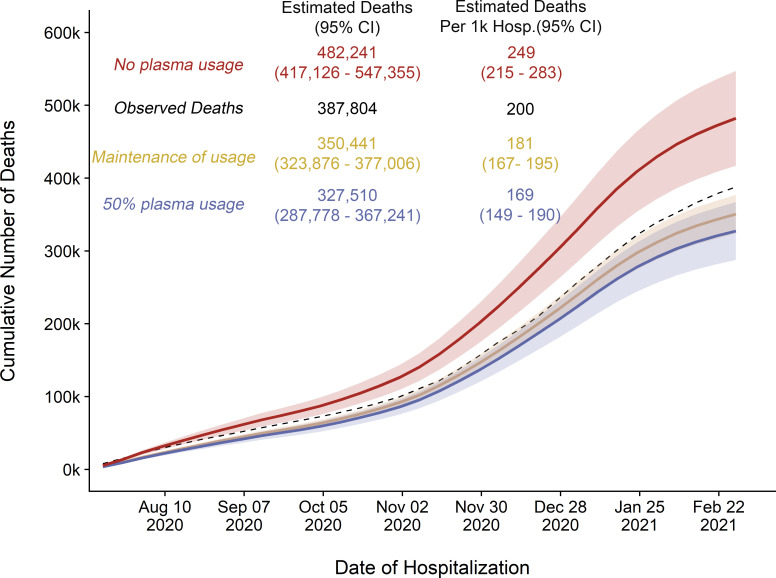
Figure 4—figure supplement 1.. Replicated cumulative excess deaths analysis per Our World in Data (OWID) database for scenario 1 (orange).
Maintained plasma transfusion rate from October to November throughout period, scenario 2 (blue): 50% transfusion rate throughout period, and scenario 3 (red): 0% transfusion rate throughout period. Black dashed line represents observed cumulative deaths per OWID reporting.

Update of

References

    1. Acosta-Ampudia Y, Monsalve DM, Rojas M, Rodríguez Y, Gallo JE, Salazar-Uribe JC, Santander MJ, Cala MP, Zapata W, Zapata MI, Manrique R, Pardo-Oviedo JM, Camacho B, Ramírez-Santana C, Anaya JM, CP-COVID-19 group COVID-19 convalescent plasma composition and immunological effects in severe patients. Journal of Autoimmunity. 2021;118:102598. doi: 10.1016/j.jaut.2021.102598. - DOI - PMC - PubMed
    1. Agarwal A, Mukherjee A, Kumar G, Chatterjee P, Bhatnagar T, Malhotra P, PLACID Trial Collaborators Convalescent plasma in the management of moderate covid-19 in adults in India: open label phase II multicentre randomised controlled trial (PLACID trial) BMJ. 2020;371:m3939. doi: 10.1136/bmj.m3939. - DOI - PMC - PubMed
    1. Anonymous AABB survey: ccp usage reevaluation march. 2021a. [April 1, 2021]. https://www.aabb.org/docs/default-source/default-document-library/resour...
    1. Anonymous Investigational COVID-19 convalescent plasma, Guidance for Industry. 2021b. [April 1, 2021]. https://www.fda.gov/regulatory-information/search-fda-guidance-documents...
    1. Anonymous Variant proportions in the united states. 2021c. [April 1, 2021]. https://www.cdc.gov/coronavirus/2019-ncov/cases-updates/variant-proporti...

Publication types