


A longitudinal study of perceived stress and cortisol responses in an undergraduate student population from India
- PMID: 34086754
- PMCID: PMC8177861
- DOI: 10.1371/journal.pone.0252579
A longitudinal study of perceived stress and cortisol responses in an undergraduate student population from India
Abstract
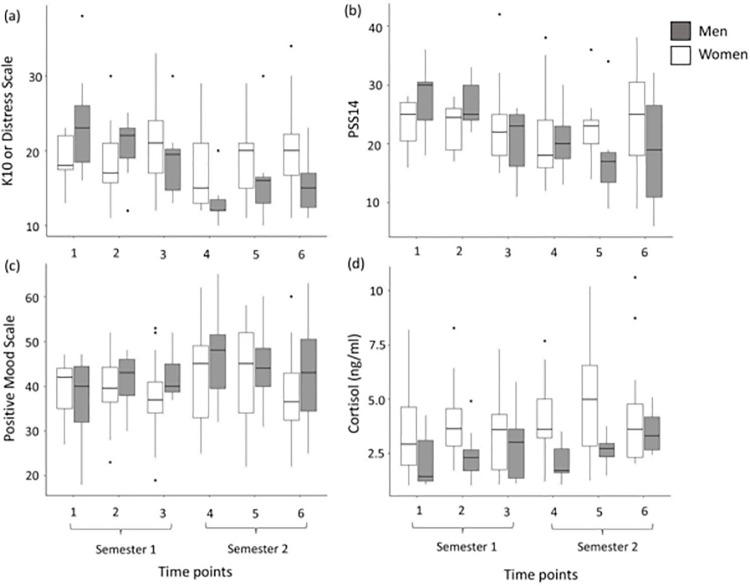
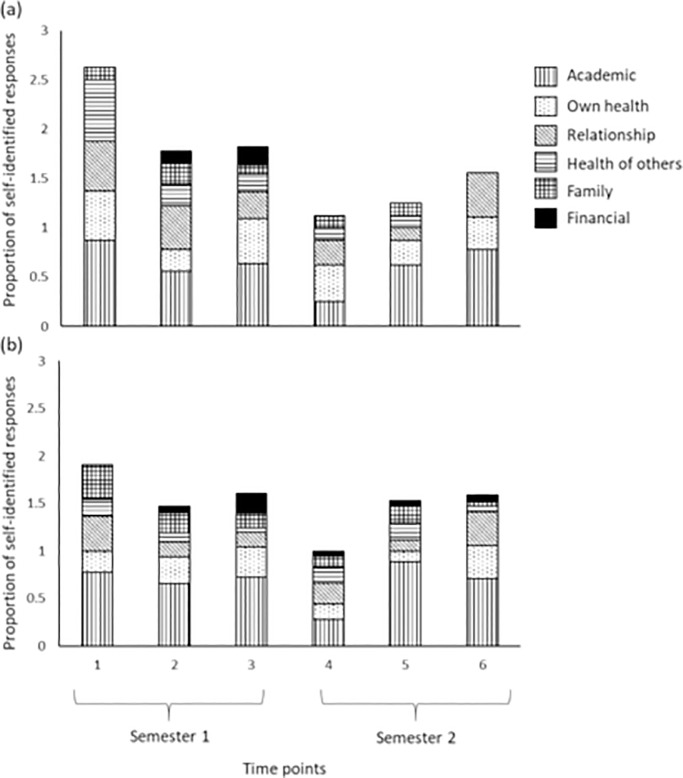
Young adults entering college experience immense shifts in personal and professional environments. Such a potentially stressful event may trigger multiple psychological and physiological effects. In a repeated-measures longitudinal survey (N = 6 time-points) of first year cohort of residential undergraduate students in India, this study evaluates multiple psychological parameters: PSS14 (Perceived Stress Scale), K10 (distress scale) and positive mood measures, along with salivary cortisol levels. We find that compared to women, men showed significantly lower levels of salivary cortisol and also a decrease in perceived stress (PSS14) and distress (K10) with time. By contrast, women reported similar perceived stress and distress levels over time but had higher cortisol levels at the end of the academic year. Academic stress was reported by the students to be the most important stressor. This study highlights notable gender-/sex-differences in psychological and physiological stress responses and adds a valuable longitudinal dataset from the Indian undergraduate student cohort which is lacking in literature.
Conflict of interest statement
The authors have declared that no competing interests exist.
Figures
References
Publication types
MeSH terms
Substances
LinkOut - more resources
Full Text Sources
Medical
Research Materials
