


Depression, health comorbidities, cognitive symptoms and their functional impact: Not just a geriatric problem
- PMID: 34087515
- PMCID: PMC8253546
- DOI: 10.1016/j.jpsychires.2021.05.013
Depression, health comorbidities, cognitive symptoms and their functional impact: Not just a geriatric problem
Abstract
Objective: To compare the prevalence of cognitive symptoms and their functional impact by age group accounting for depression and number of other health conditions.
Methods: We analyzed data from the 2011 Behavioral Risk Factor Surveillance System, a population-based, cross-sectional telephone survey of US adults. Twenty-one US states asked participants (n = 131, 273) about cognitive symptoms (worsening confusion or memory loss in the past year) and their functional impact (interference with activities and need for assistance). We analyzed the association between age, depression history and cognitive symptoms and their functional impact using logistic regression and adjusted for demographic characteristics and other health condition count.
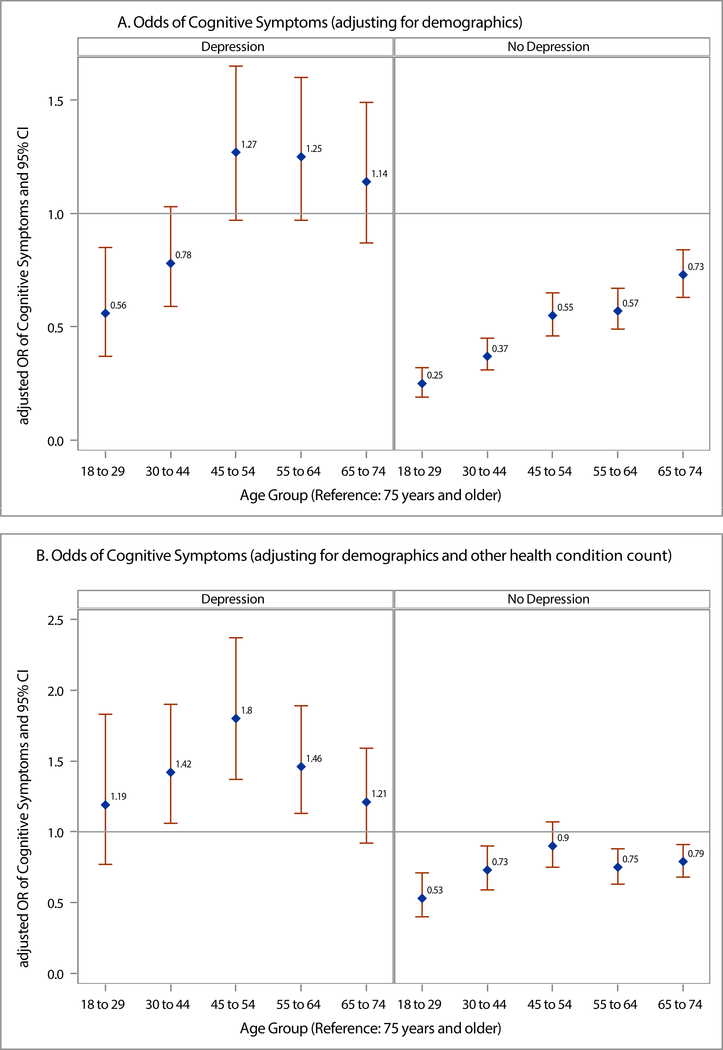
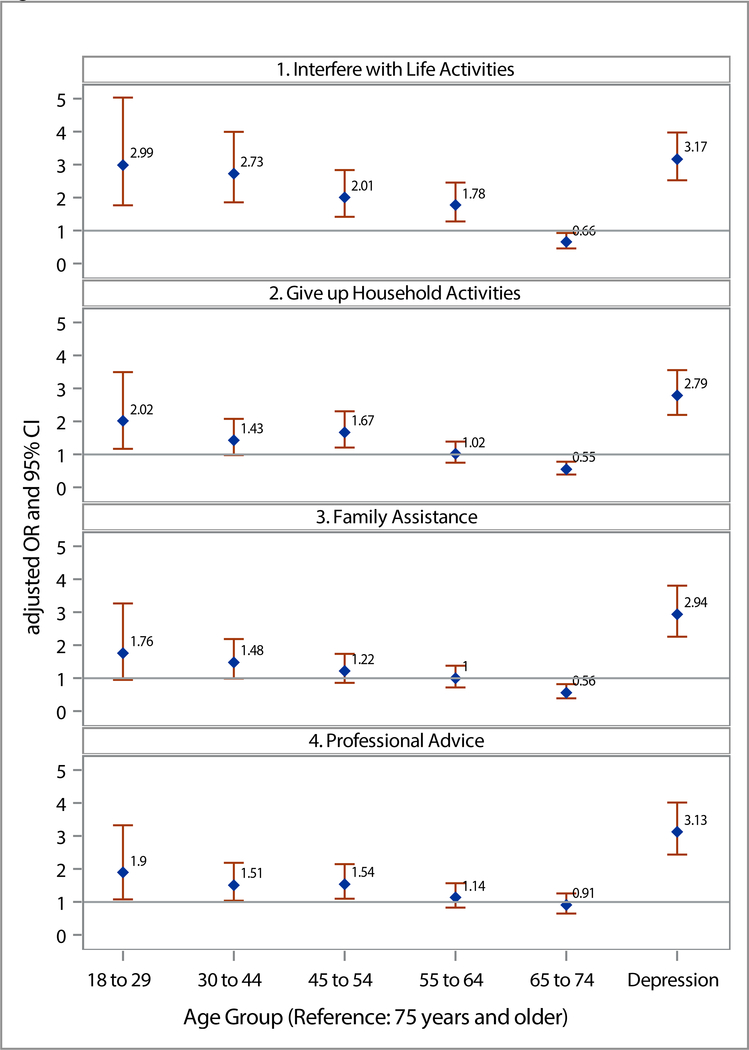
Results: There was a significant interaction between age and depression (p < 0.0001). In adults reporting depression, the adjusted odds of cognitive symptoms in younger age groups (<75 years) were comparable or greater to those in the oldest age group (≥75 years) with a peak in the middle age (45-54 years) group (OR 1.9 (95% Confidence Interval: 1.4-2.5). In adults without depression, adults <75 years had a significantly lower adjusted odds of cognitive symptoms compared to the oldest age group with the exception of the middle-aged group where the difference was not statistically significant. Over half of adults under age 65 with depression reported that cognitive symptoms interfered with life activities compared to 35.7% of adults ≥65 years.
Conclusions: Cognitive symptoms are not universally higher in older adults; middle-aged adults are also particularly vulnerable. Given the adverse functional impact associated with cognitive symptoms in younger adults, clinicians should assess cognitive symptoms and their functional impact in adults of all ages and consider treatments that impact both cognition and functional domains.
Keywords: Age; Behavioral risk factor surveillance system (BRFSS); Cognitive symptoms; Comorbid health conditions; Depression; Functional impact.
Copyright © 2021 Elsevier Ltd. All rights reserved.
Conflict of interest statement
Conflict of Interest
Dr. Bott discloses a commercial interest in Neurotrack. Dr. Gould received research support from Meru Health, Inc, for an investigator-initiated trial. All other authors report no financial relationships with commercial interests.
Figures
References
-
- American Psychiatric Association, 2013. Diagnostic and Statistical Manual of Mental Disorders (DSM-5®). American Psychiatric Pub.
-
- Arve S, Tilvis RS, Lehtonen A, Valvanne J, Sairanen S, 1999. Coexistence of lowered mood and cognitive impairment of elderly people in five birth cohorts. Aging 11, 90–95. - PubMed
-
- Brailean A, Steptoe A, Batty GD, Zaninotto P, Llewellyn DJ, 2019. Are subjective memory complaints indicative of objective cognitive decline or depressive symptoms? Findings from the English Longitudinal Study of Ageing. J. Psychiatr. Res. 110, 143–151. - PubMed
-
- Centers for Disease Control and Prevention, 2013. Behavioral Risk Factor Surveillance System 2011 Summary Data Quality Report [WWW Document]. URL http://www.cdc.gov/brfss/annual_data/2011/pdf/2011_summary_data_quality_... (accessed 8.3.15).
Publication types
MeSH terms
Grants and funding
LinkOut - more resources
Full Text Sources
Medical
Miscellaneous
