


Short-term health-related quality of life, physical function and psychological consequences of severe COVID-19
- PMID: 34089104
- PMCID: PMC8177269
- DOI: 10.1186/s13613-021-00881-x
Short-term health-related quality of life, physical function and psychological consequences of severe COVID-19
Abstract
Background: Survivors of severe COVID-19 are at risk of impaired health-related quality of life (HRQoL) and persistent physical and psychological disability after ICU and hospital discharge. The subsequent social burden is a major concern. We aimed to assess the short-term HRQoL, physical function and prevalence of post-traumatic stress symptoms of invasively mechanically ventilated COVID-19 patients treated in our ICU.
Methods: Prospective, observational cohort study in a follow-up clinic. Patients completed a 6-min walking test (6MWT) to assess their cardio-pulmonary function around 2 months (early follow-up) from hospital discharge, the EQ-5D-5L questionnaire for quality of life assessment around 2 months and at 6 months from hospital discharge and an anonymous web-based Impact of Event Scale-Revised (IES-R) questionnaire for Post-Traumatic Stress symptoms at 2 months.
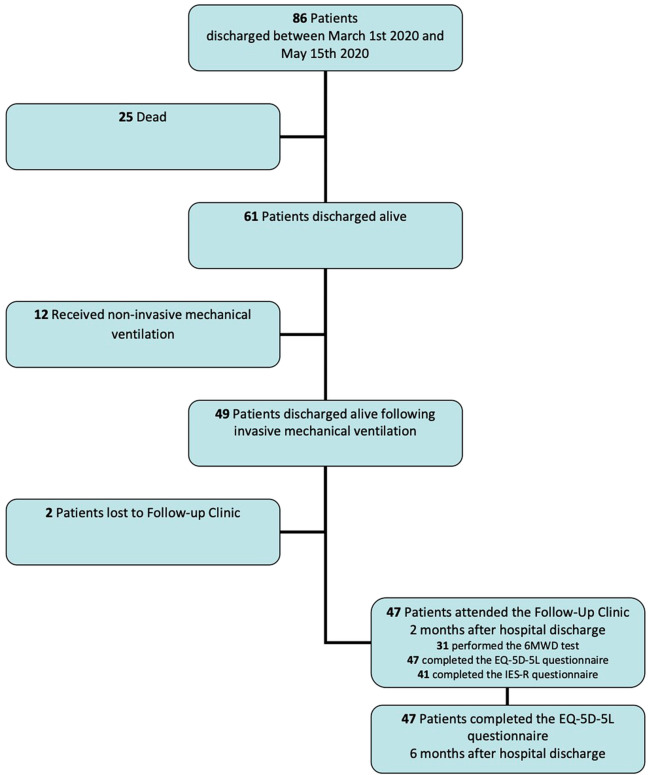
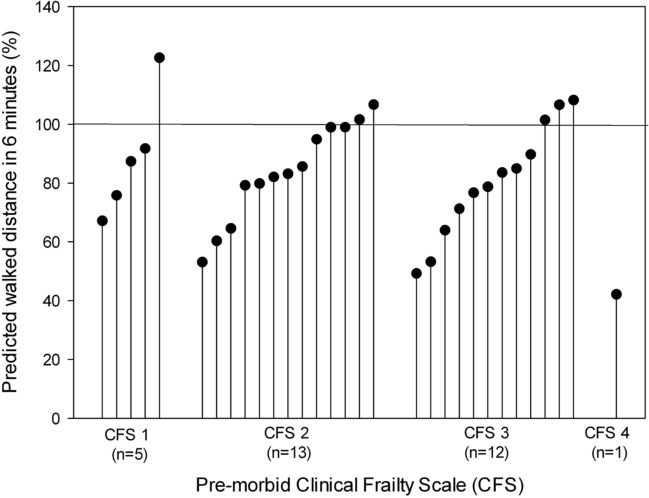
Results: 47 patients attended our follow-up program, mean age 59 ± 10 years, median pre-morbid Clinical Frailty Scale (CFS) 2 [2-3]. The median distance walked in 6 min was 470 [406-516] m, 83 [67-99]% of the predicted value. Overall 1 out 3 patients and 4/18 (22%) among those with a good functional baseline prior to COVID-19 (CFS of 1 or 2) had lower (84%) than predicted 6MWT. EQ-5D-5L quality of life VAS was 80 [70-90] out of 100 at early follow-up with a slight improvement to 85 [77.5-90] at 6 months. Mobility, self-care and usual activities improved between the two timepoints, while pain/discomfort and depression/anxiety did not improve or got worse. The IES-R total score was greater than the threshold for concern of 1.6 in 27/41(66%) respondents.
Conclusions: Patients recovering from severe COVID-19 requiring invasive mechanical ventilation surviving hospital discharge present with early mild to moderate functional impairment, mildly reduced quality of life from hospital discharge with an overall improvement of mobility, self-care and the ability of performing usual activities, while a worsening of pain and depression/anxiety symptoms at 6 months and a large proportion of symptoms of post-traumatic distress soon after hospital discharge.
Keywords: 6-min walking test; COVID-19; Follow-up; Health Related Quality of Life; Post-Traumatic Stress Disorder.
Conflict of interest statement
The authors declare that they have no competing interests.
Figures
References
LinkOut - more resources
Full Text Sources
