


Effect of aging on clinical features and metabolic complications of women with polycystic ovary syndrome
- PMID: 34089497
- PMCID: PMC8572193
- DOI: 10.1007/s40618-021-01594-5
Effect of aging on clinical features and metabolic complications of women with polycystic ovary syndrome
Abstract
Purpose: To assess the distribution of clinical features and metabolic abnormalities of polycystic ovary syndrome (PCOS) women according to their age.
Methods: Retrospective study on 602 women (mean age 23.9 ± 6.2 years), diagnosed according to International PCOS Network Guidelines criteria as having PCOS in a University-based Hospital. Anthropometric features, hormonal and metabolic parameters were measured and compared between the different age groups (group A ≤ 20 years; group B 21-30 years; group C > 30 years).
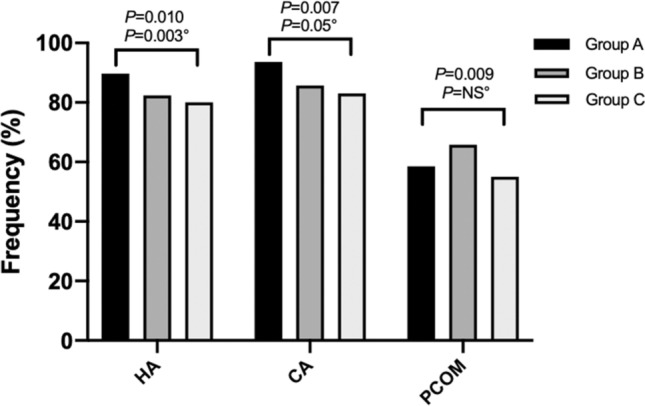
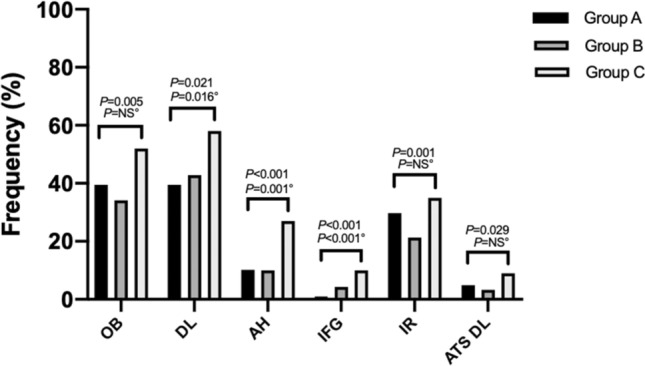
Results: Patients in group A were more often hyperandrogenic, while in group C hypertension, dyslipidemia, obesity, impaired fasting glucose, and insulin resistance (IR) were more prevalent. After adjusting for BMI, age correlated positively with sex hormone-binding globulin (SHBG), IR, total- and LDL-cholesterol, and negatively with DHEAS, insulin, and free androgen index (FAI). SHBG was significantly associated with IR and atherogenic dyslipidemia, while FAI levels were linked to hypertension, independently of other factors considered. Furthermore, the regression analysis showed a stronger relationship between BMI and metabolic outcomes, regardless of age.
Conclusion: Polycystic ovarian syndrome (PCOS) phenotype changes with age. Clinical and biochemical hyperandrogenism are a major concern in young PCOS women, while metabolic burden tends to increase with aging. Some of the cardiovascular risk factors are dependent on FAI and SHBG levels, whereas BMI confirms its key role in the genesis of most of the metabolic sequelae in PCOS, independently of age.
Keywords: Aging; Hyperandrogenism; Insulin resistance; Metabolic syndrome; Phenotype; Polycystic ovary syndrome.
© 2021. The Author(s).
Conflict of interest statement
The authors have nothing to disclose.
Figures
References
MeSH terms
Substances
LinkOut - more resources
Full Text Sources
Medical
Miscellaneous
