Review
. 2021 Sep;58(9):4535-4563.
doi: 10.1007/s12035-021-02399-6. Epub 2021 Jun 5.

A Review on SARS-CoV-2-Induced Neuroinflammation, Neurodevelopmental Complications, and Recent Updates on the Vaccine Development

Affiliations
Review

A Review on SARS-CoV-2-Induced Neuroinflammation, Neurodevelopmental Complications, and Recent Updates on the Vaccine Development

Medha Karnik et al. Mol Neurobiol. 2021 Sep.

Abstract

Coronavirus disease 2019 (COVID-19) is a devastating viral infection caused by severe acute respiratory syndrome coronavirus 2 (SARS-CoV-2). The incidence and mortality of COVID-19 patients have been increasing at an alarming rate. The mortality is much higher in older individuals, especially the ones suffering from respiratory distress, cardiac abnormalities, renal diseases, diabetes, and hypertension. Existing evidence demonstrated that SARS-CoV-2 makes its entry into human cells through angiotensin-converting enzyme 2 (ACE-2) followed by the uptake of virions through cathepsin L or transmembrane protease serine 2 (TMPRSS2). SARS-CoV-2-mediated abnormalities in particular cardiovascular and neurological ones and the damaged coagulation systems require extensive research to develop better therapeutic modalities. As SARS-CoV-2 uses its S-protein to enter into the host cells of several organs, the S-protein of the virus is considered as the ideal target to develop a potential vaccine. In this review, we have attempted to highlight the landmark discoveries that lead to the development of various vaccines that are currently under different stages of clinical progression. Besides, a brief account of various drug candidates that are being tested to mitigate the burden of COVID-19 was also covered. Further, in a dedicated section, the impact of SARS-CoV-2 infection on neuronal inflammation and neuronal disorders was discussed. In summary, it is expected that the content covered in this article help to understand the pathophysiology of COVID-19 and the impact on neuronal complications induced by SARS-CoV-2 infection while providing an update on the vaccine development.

Keywords: ACE-2; Coagulation; Neurological damage; S-protein; SARS-CoV-2; Vaccine.


Conflict of interest statement

The authors declare no competing interests.

Figures
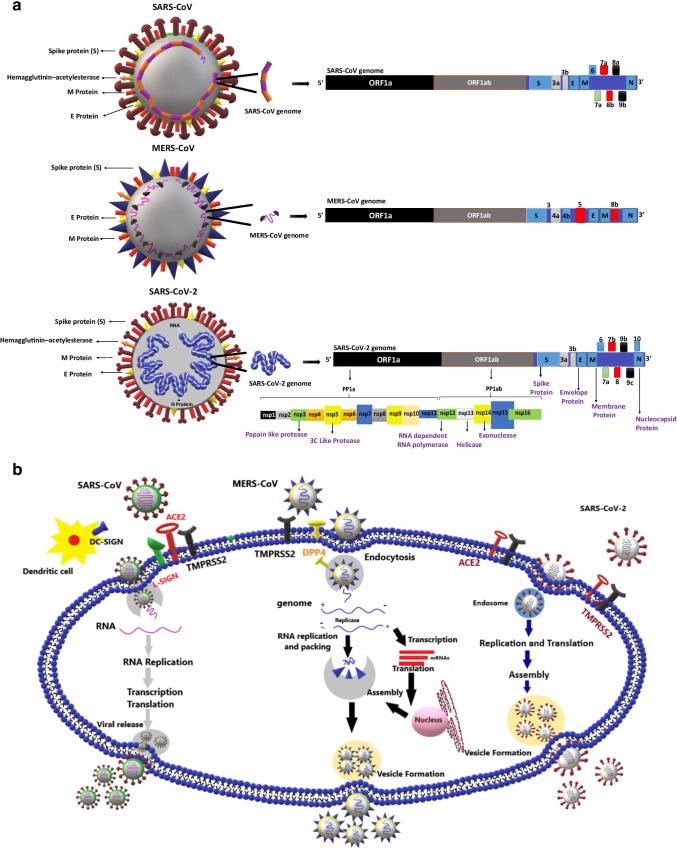
Fig. 1
Fig. 1
Genome organization of coronaviruses and variations in their mode of entry into human cells: a Structural representation and genome organization of SARS-CoV, MERS-CoV, and SARS-CoV-2: SARS-CoV-2 genome encodes four major proteins viz., spike (S) protein, the nucleocapsid (N) protein, the membrane (M) protein, and the envelope (E) protein. Total six open reading frames (ORFs), ORF3a, ORF6, ORF7a, ORF7b, ORF8, ORF10, and the polyprotein ORF1ab encodes several enzymatic proteins for the effective viral invasion of the host cells. b Host cell receptors and replication mechanism of SARS-CoV, MERS-CoV, and SARS-COV-2: the spike protein of the CoVs interacts with receptors on the host cell to make its entry. ACE-2 serves as a receptor for SARS-CoV and SARS-CoV-2. DC-SIGN and L-SIGN serve as co-receptors for SARS-CoV. DPP4 serves as a receptor for MERS-CoV. CoVs replicate in the host causing cellular damage leading to further complications
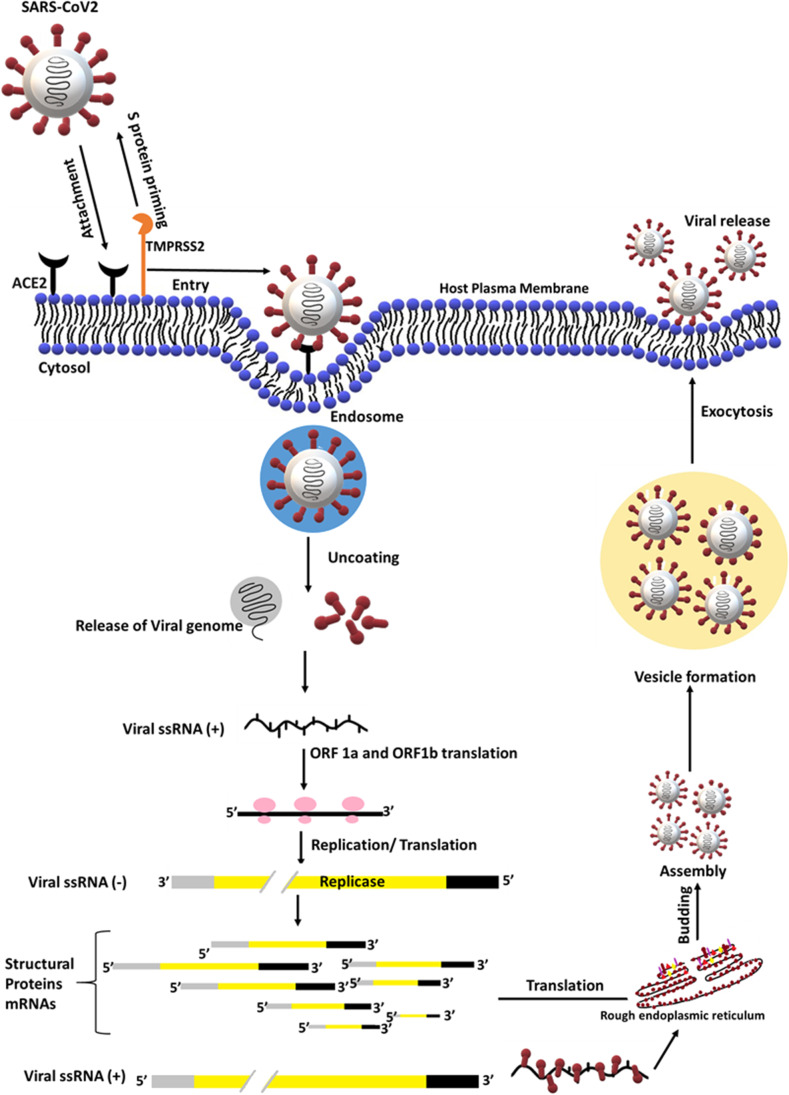
Fig. 2
Fig. 2
Interaction of SARS-CoV-2 with ACE-2 receptors in lungs: the lysosomal proteases, such as elastase, and cell surface proteases TMPRSS2 could induce activation of SARS-CoV-2 S-protein for membrane fusion through ACE-2 receptors, which consequently causes lung tropism through endosome formation, multiple virion replication, and exocytosis
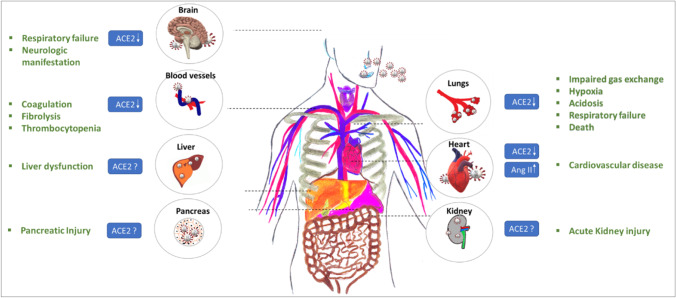
Fig. 3
Fig. 3
Multiple organ dysfunctions induced by the interaction of SARS-CoV-2 with host cell ACE-2 receptors. The figure represents multi-organ dysfunction which is characterized by acute kidney injury, respiratory failure, liver failure, neurological complications, and cardiovascular disease upon SARS-CoV-2 infection
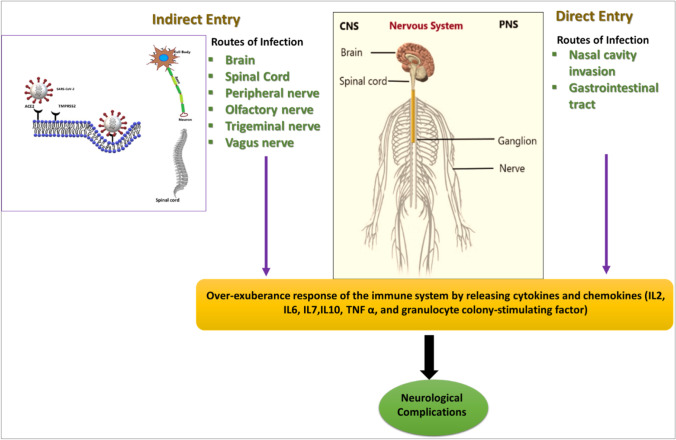
Fig. 4
Fig. 4
Overview of SARS-CoV-2 entry in the nervous system. SARS-CoV-2 virus is reported to infect CNS and PNS by direct and indirect pathways. This results in the generation of cytokines and chemokines by elevating the immune response and causing severe neurological complications
Fig. 5
Fig. 5
Structural motifs of S-protein: the S-protein of SARS-CoV-2 is composed of S1 and S2 subunits. Whereas the S1 domain is composed of N-terminal domain (NTD), receptor-binding domain (RBD), receptor-binding motif (RBM), the S2 domain is composed of fusion peptide, heptad repeat 1 (HR1), heptad repeat 2 (HR2), transmembrane domain (TM), and a cytoplasmic domain (CP)
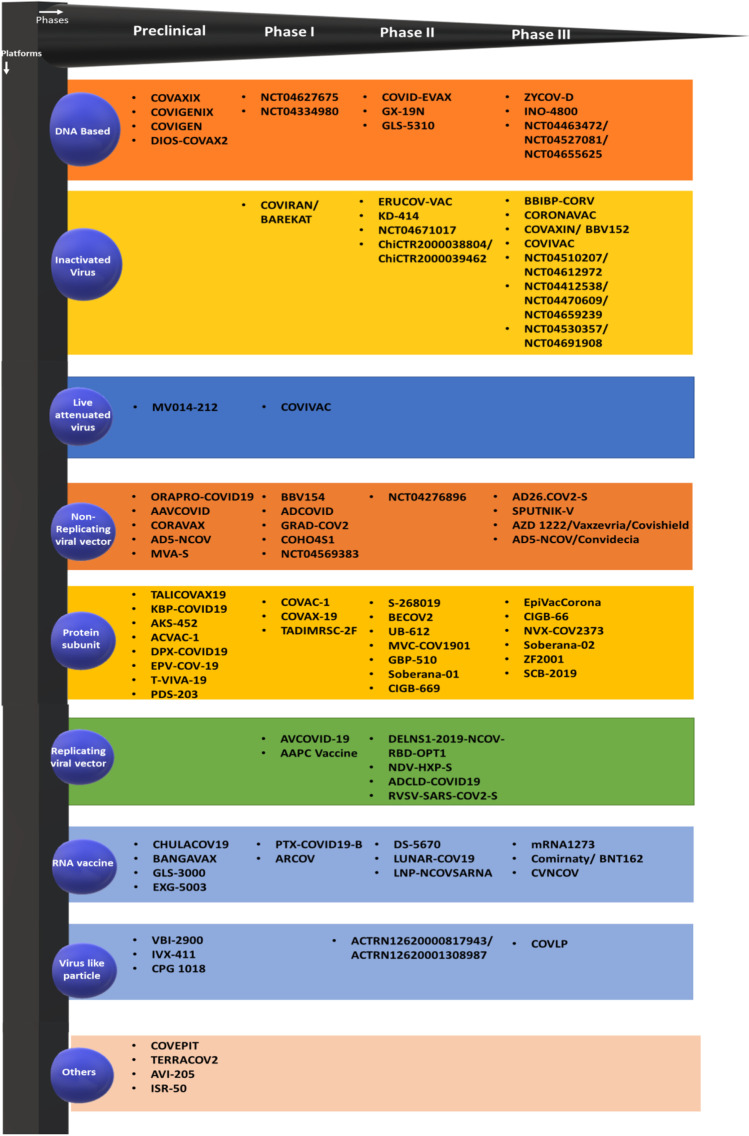
Fig. 6
Fig. 6
List of vaccines in various stages of clinical trials: current SARS-CoV-2 vaccine candidates targeting various biomolecules of the virus. Viral biomolecules targeting vaccine candidates include DNA-based vaccines, inactivated virus, live attenuated virus, non-replicating viral vector, protein subunit, replicating viral vector, RNA-based, and virus-like particle-based vaccines

References

    1. Chan JF-W, Kok K-H, Zhu Z, Chu H, To KK-W, Yuan S, Yuen K-Y. Genomic characterization of the 2019 novel human-pathogenic coronavirus isolated from a patient with atypical pneumonia after visiting Wuhan. Emerging microbes & infections. 2020;9(1):221–236. doi: 10.1080/22221751.2020.1719902. - DOI - PMC - PubMed
    1. Lu R, Zhao X, Li J, Niu P, Yang B, Wu H, Wang W, Song H, Huang B, Zhu N. Genomic characterisation and epidemiology of 2019 novel coronavirus: implications for virus origins and receptor binding. The Lancet. 2020;395(10224):565–574. doi: 10.1016/S0140-6736(20)30251-8. - DOI - PMC - PubMed
    1. Wang Q, Zhang Y, Wu L, Niu S, Song C, Zhang Z, Lu G, Qiao C, Hu Y, Yuen K-Y. Structural and functional basis of SARS-CoV-2 entry by using human ACE2. Cell. 2020;181(4):894–904.e899. doi: 10.1016/j.cell.2020.03.045. - DOI - PMC - PubMed
    1. Tyrrell D, Bynoe M. Cultivation of a novel type of common-cold virus in organ cultures. BMJ. 1965;1(5448):1467. doi: 10.1136/bmj.1.5448.1467. - DOI - PMC - PubMed
    1. Lechien JR, Chiesa-Estomba CM, De Siati DR, Horoi M, Le Bon SD, Rodriguez A, Dequanter D, Blecic S, El Afia F, Distinguin L. Olfactory and gustatory dysfunctions as a clinical presentation of mild-to-moderate forms of the coronavirus disease (COVID-19): a multicenter European study. Eur Arch Otorhinolaryngol. 2020;277(8):2251–2261. doi: 10.1007/s00405-020-05965-1. - DOI - PMC - PubMed

MeSH terms