


One-to-one innervation of vocal muscles allows precise control of birdsong
- PMID: 34089645
- PMCID: PMC8319070
- DOI: 10.1016/j.cub.2021.05.008
One-to-one innervation of vocal muscles allows precise control of birdsong
Abstract
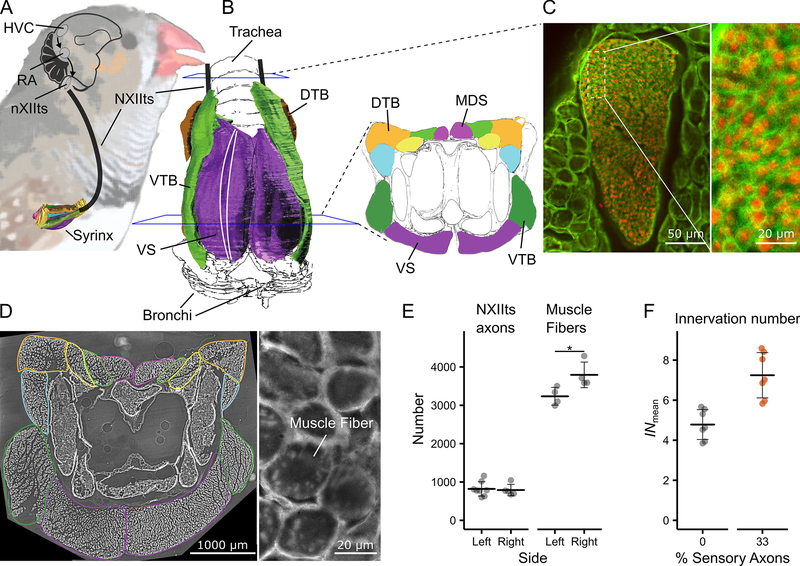
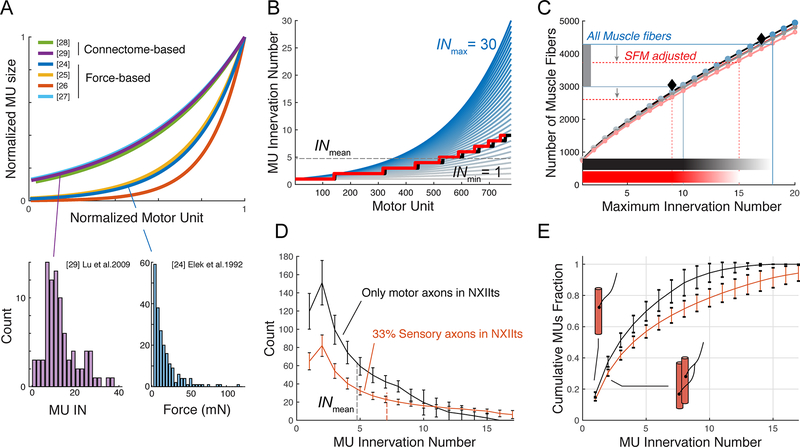
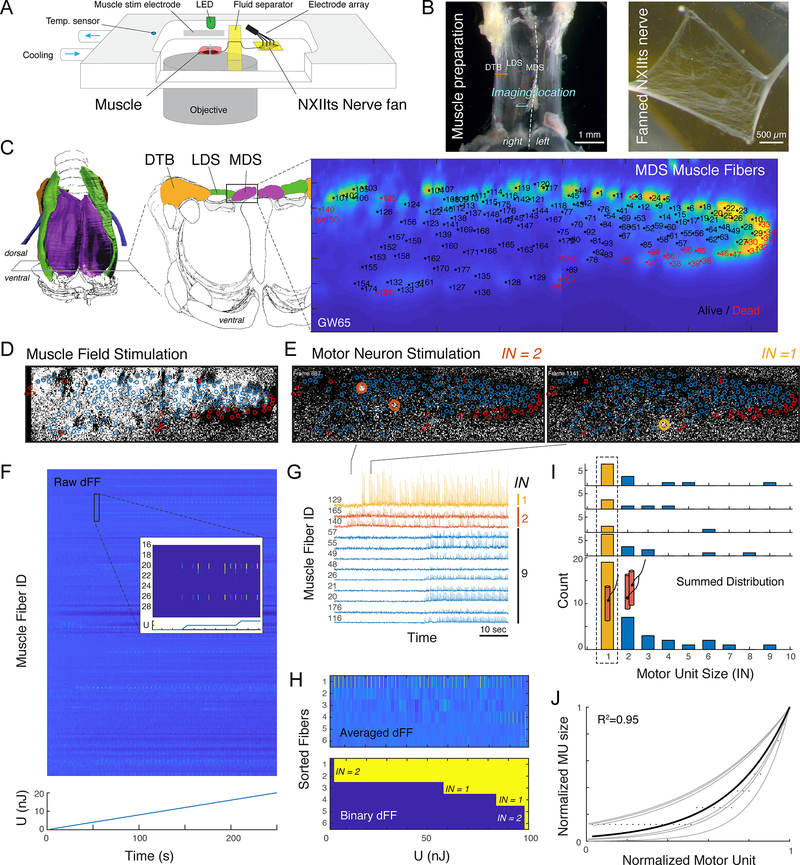
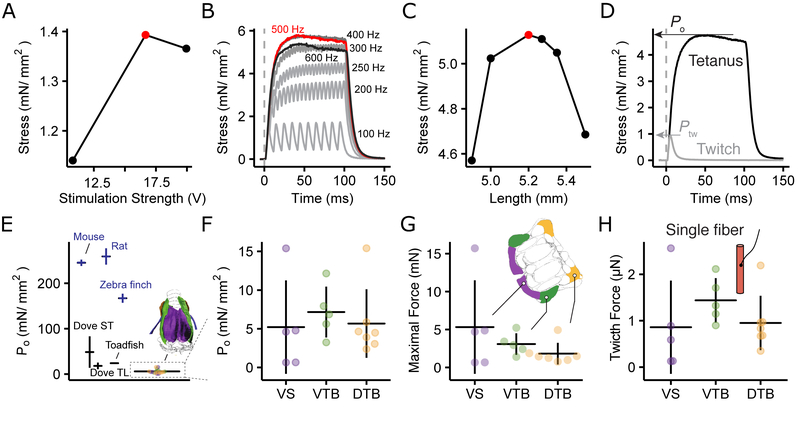
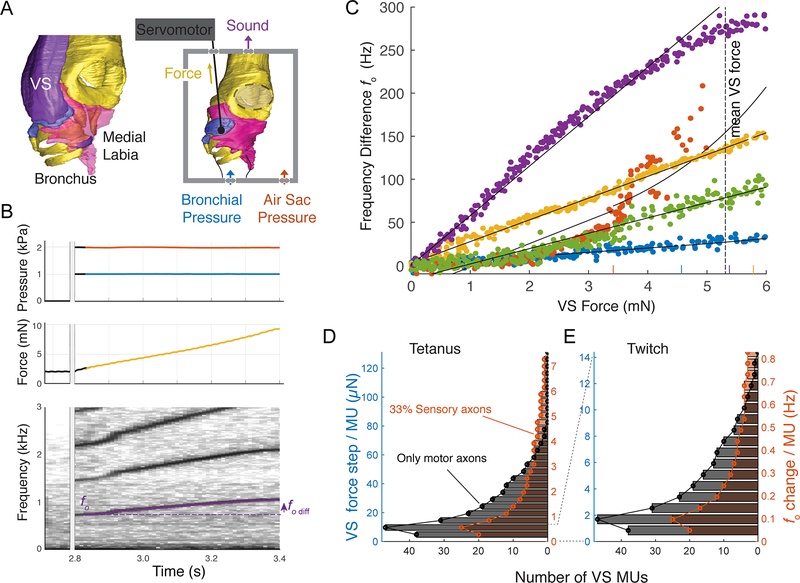
The motor control resolution of any animal behavior is limited to the minimal force step available when activating muscles, which is set by the number and size distribution of motor units (MUs) and muscle-specific force. Birdsong is an excellent model system for understanding acquisition and maintenance of complex fine motor skills, but we know surprisingly little about how the motor pool controlling the syrinx is organized and how MU recruitment drives changes in vocal output. Here we developed an experimental paradigm to measure MU size distribution using spatiotemporal imaging of intracellular calcium concentration in cross-sections of living intact syrinx muscles. We combined these measurements with muscle stress and an in vitro syrinx preparation to determine the control resolution of fundamental frequency (fo), a key vocal parameter, in zebra finches. We show that syringeal muscles have extremely small MUs, with 40%-50% innervating ≤3 and 13%-17% innervating a single muscle fiber. Combined with the lowest specific stress (5 mN/mm2) known to skeletal vertebrate muscle, small force steps by the major fo controlling muscle provide control of 50-mHz to 7.3-Hz steps per MU. We show that the song system has the highest motor control resolution possible in the vertebrate nervous system and suggest this evolved due to strong selection on fine gradation of vocal output. Furthermore, we propose that high-resolution motor control was a key feature contributing to the radiation of songbirds that allowed diversification of song and speciation by vocal space expansion.
Keywords: birdsong; motor control; motor unit; songbird; sound production; vocal communication; voice.
Copyright © 2021 Elsevier Inc. All rights reserved.
Conflict of interest statement
Declaration of interests The authors declare no competing interests.
Figures
References
-
- Price T (1998). Sexual selection and natural selection in bird speciation. Philos T R Soc B 353, 251–260.
-
- Uy JAC, Irwin DE, and Webster MS (2018). Behavioral Isolation and Incipient Speciation in Birds. Annu Rev Ecol Evol S 49, 1–24.
-
- Janik VM, and Slater PJ (2000). The different roles of social learning in vocal communication. Anim Behav 60, 1–11. - PubMed
-
- Gaunt AS (1983). An Hypothesis Concerning the Relationship of Syringeal Structure to Vocal Abilities. Auk 100, 853–862.
Publication types
MeSH terms
Grants and funding
LinkOut - more resources
Full Text Sources
Research Materials
