


Changes in arachidonic acid (AA)- and linoleic acid (LA)-derived hydroxy metabolites and their interplay with inflammatory biomarkers in response to drastic changes in air pollution exposure
- PMID: 34089746
- PMCID: PMC11483949
- DOI: 10.1016/j.envres.2021.111401
Changes in arachidonic acid (AA)- and linoleic acid (LA)-derived hydroxy metabolites and their interplay with inflammatory biomarkers in response to drastic changes in air pollution exposure
Abstract
Background: Untargeted metabolomics analyses have indicated that fatty acids and their hydroxy derivatives may be important metabolites in the mechanism through which air pollution potentiates diseases. This study aimed to use targeted analysis to investigate how metabolites in arachidonic acid (AA) and linoleic acid (LA) pathways respond to short-term changes in air pollution exposure. We further explored how they might interact with markers of antioxidant enzymes and systemic inflammation.
Methods: This study included a subset of participants (n = 53) from the Beijing Olympics Air Pollution (BoaP) study in which blood samples were collected before, during, and after the Beijing Olympics. Hydroxy fatty acids were measured by liquid chromatography/mass spectrometry (LC/MS). Native total fatty acids were measured as fatty acid methyl esters (FAMEs) using gas chromatography. A set of chemokines were measured by ELISA-based chemiluminescent assay and antioxidant enzyme activities were analyzed by kinetic enzyme assays. Changes in levels of metabolites over the three time points were examined using linear mixed-effects models, adjusting for age, sex, body mass index (BMI), and smoking status. Pearson correlation and repeated measures correlation coefficients were calculated to explore the relationships of metabolites with levels of serum chemokines and antioxidant enzymes.
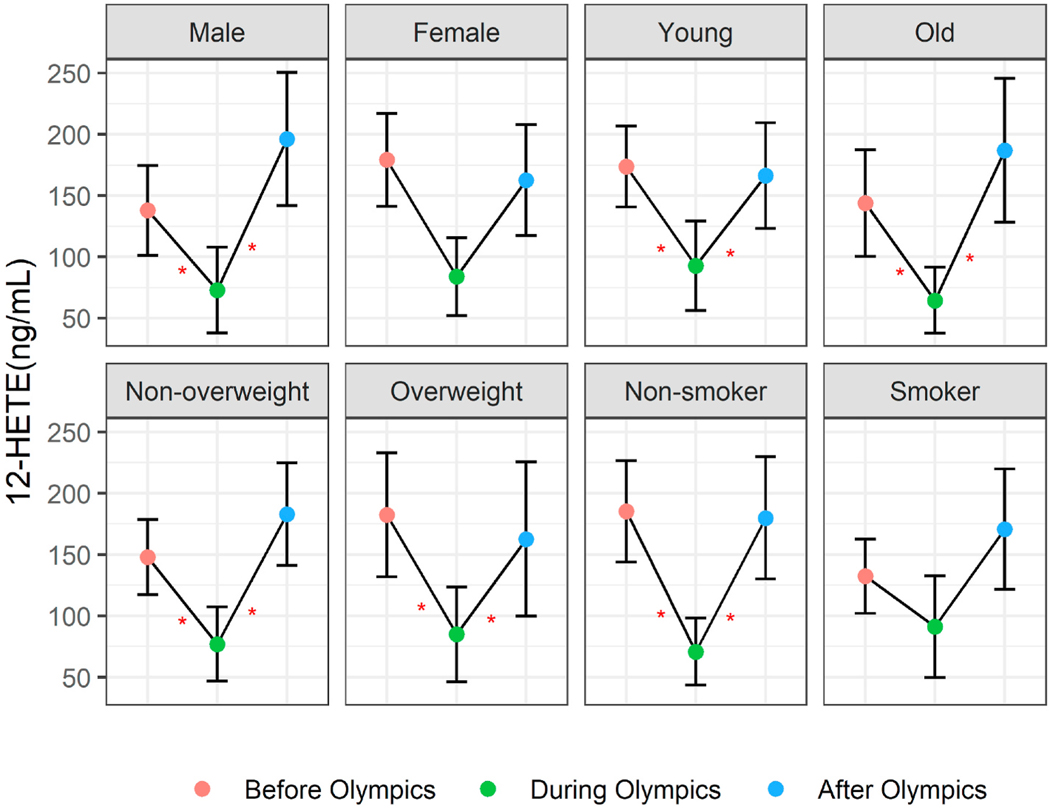
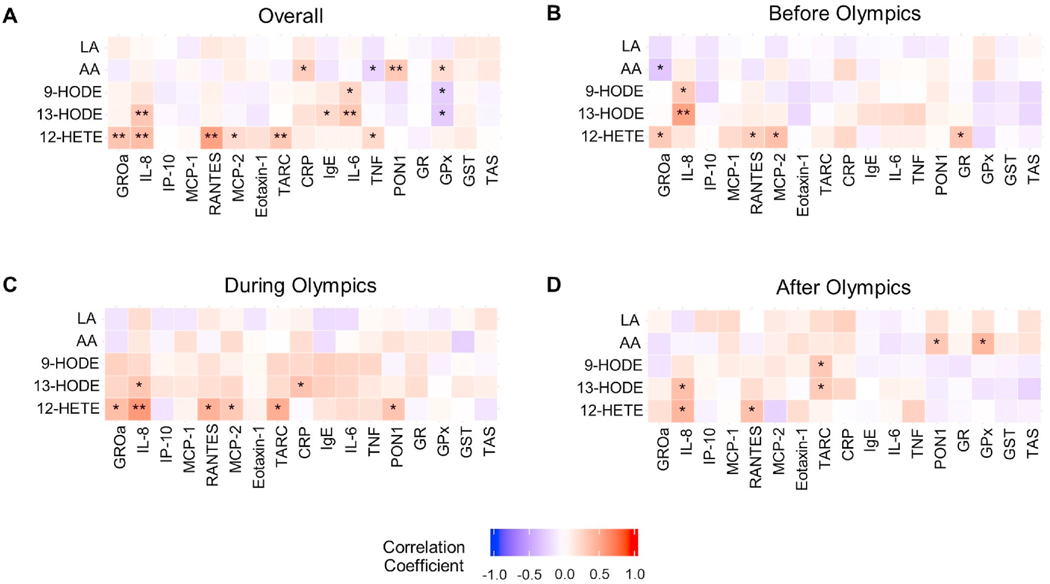
Results: 12-hydroxyeicosatetraenoic acid (12-HETE) decreased by 50.5% (95% CI: -66.5, -34.5; p < 0.0001) when air pollution dropped during the Olympics and increased by 119.4% (95% CI: 36.4, 202.3; p < 0.0001) when air pollution returned to high levels after the Olympics. In contrast, 13-hydroxyoctadecadienoic acid (13-HODE) elevated significantly (p = 0.023) during the Olympics and decreased nonsignificantly after the games (p = 0.104). Interleukin 8 (IL-8) correlated with 12-HETE (r = 0.399, BH-adjusted p = 0.004) and 13-HODE (r = 0.342, BH-adjusted p = 0.014) over the three points; it presented a positive and moderate correlation with 12-HETE during the Olympics (r = 0.583, BH-adjusted p = 0.002) and with 13-HODE before the Olympics (r = 0.543, BH-adjusted p = 0.008).
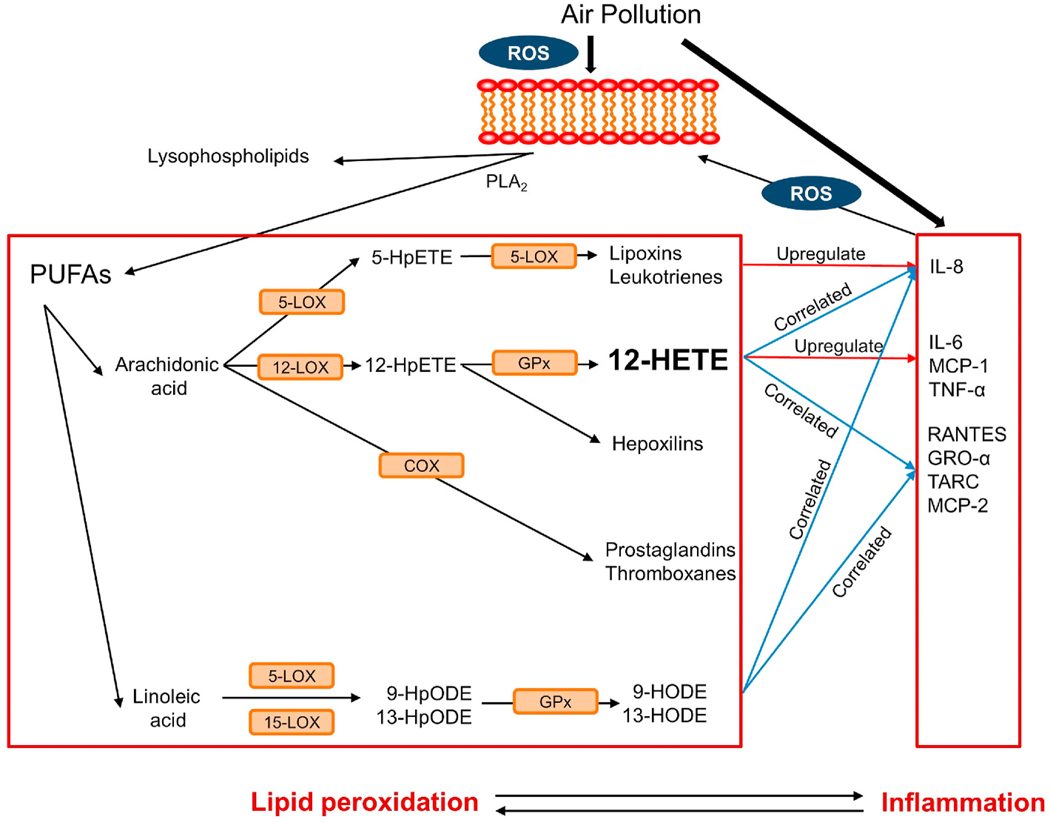
Conclusion: AA- and LA-derived hydroxy metabolites are associated with air pollution and might interact with systemic inflammation in response to air pollution exposure.
Keywords: 12-Hydroxyeicosatetraenoic acid; Air pollution; Inflammation; Lipid peroxidation; Oxidative stress.
Copyright © 2021 Elsevier Inc. All rights reserved.
Figures
References
-
- Alberg AJ, 2002. The influence of cigarette smoking on circulating concentrations of antioxidant micronutrients. Toxicology 180, 121–137. - PubMed
-
- Ambroz A, Vlkova V, Rossner P, Rossnerova A, Svecova V, Milcova A, et al. , 2016. Impact of air pollution on oxidative DNA damage and lipid peroxidation in mothers and their newborns. Int. J. Hyg Environ. Health 219, 545–556. - PubMed
-
- Boemi M, Sirolla C, Testa R, Cenerelli S, Fumelli P, James R, 2004. Smoking is associated with reduced serum levels of the antioxidant enzyme, paraoxonase, in type 2 diabetic patients. Diabet. Med. 21, 423–427. - PubMed
Publication types
MeSH terms
Substances
Grants and funding
LinkOut - more resources
Full Text Sources
Medical
