


Characterization of poultry house dust using chemometrics and scanning electron microscopy imaging
- PMID: 34089932
- PMCID: PMC8182433
- DOI: 10.1016/j.psj.2021.101188
Characterization of poultry house dust using chemometrics and scanning electron microscopy imaging
Abstract
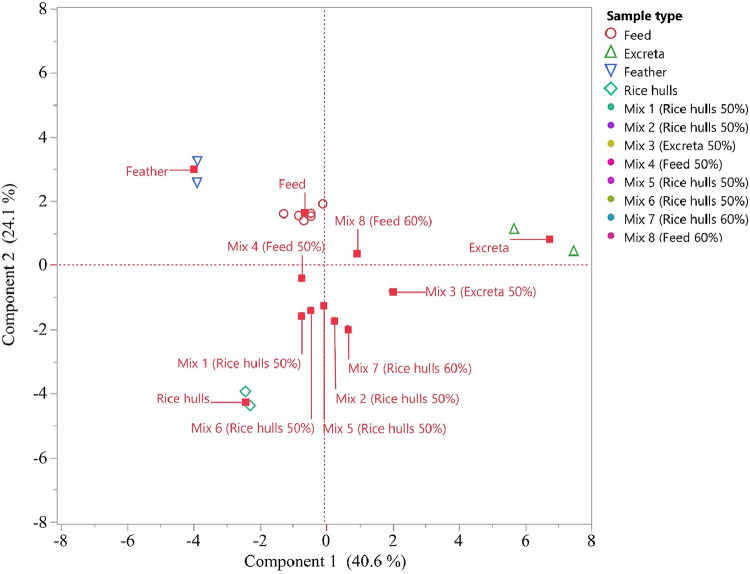
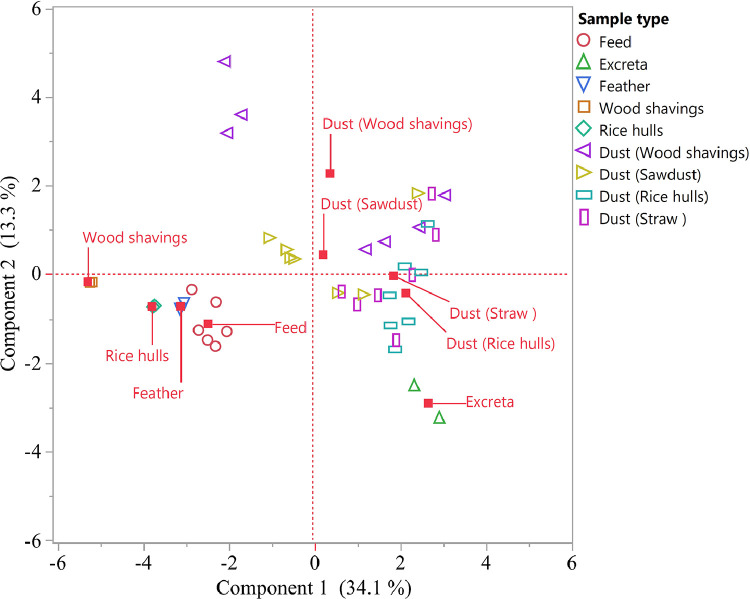
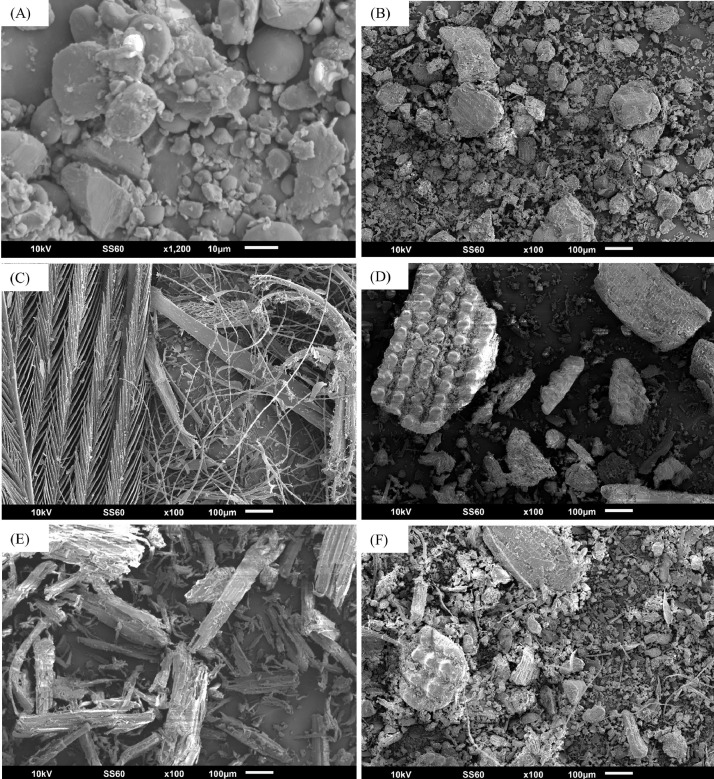
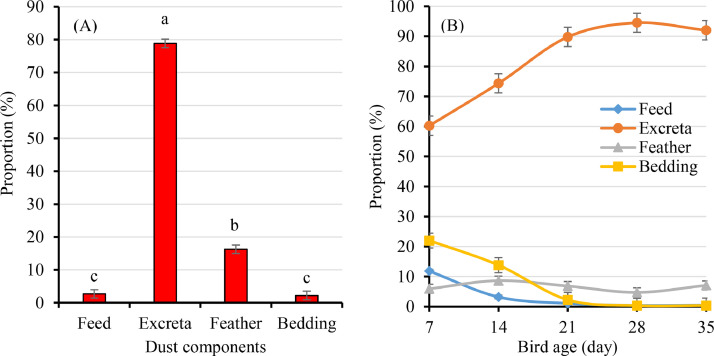
Poultry house dust is composed of fine particles which likely originate from a diverse range of materials such as feed, litter, excreta, and feathers. Little is known about the contribution of these sources to broiler house airborne dust so the present study was designed to identify the relative contributions of these sources. Samples of feed, excreta, feather, and bedding, known mixtures of these and settled dust from 28 broiler chicken flocks were tested for the concentration of 18 chemical elements. A chemometrics approach (the application of multivariate statistical techniques to chemical analysis data) was used to identify the primary source material in broiler chicken house dust samples. Scanning electron microscopy (SEM) was also used to analyze dust sample particulates based on examination of source materials. Excreta was found to be the main component of broiler chicken house dust, both by SEM and chemometric analysis. SEM of experimental flock dust between 7 and 35 days of age (d) revealed that the contribution of excreta to dust increased with age from 60% at 7 d to 95% at 28 d (P < 0.001). The proportion of bedding and feed in dust declined with age while the contribution of feather material remained low throughout. This study demonstrates that excreta provides the bulk of the material in poultry dust samples with bedding material, feed and feather material providing lower proportions. The relative contributions of these materials to dust varies with age of birds at dust collection. Additional research is required to determine the health and diagnostic implications of this variation.
Keywords: chemistry; chemometric; poultry dust; scanning electron microscopy; source.
Copyright © 2021 The Authors. Published by Elsevier Inc. All rights reserved.
Figures

References
-
- Aarnink A., Roelofs P., Ellen H., Gunnink H. Dust sources in animal houses. Proc. Intl. Symp. Dust Ctrl. Anim. Prod. Facs. 1999:34–40. (Abstr.)
-
- Ahaduzzaman M., Groves P.J., Sharpe S.M., Williamson S.L., Gao Y.K., Nguyen T.V., Gerber P.F., Walkden-Brown S.W. A practical method for assessing infectious laryngotracheitis vaccine take in broilers following mass administration in water: spatial and temporal variation in viral genome content of poultry dust after vaccination. Vet. Microbiol. 2020 - PubMed
-
- Ahaduzzaman M., Keerqin C., Kumar A., Musigwa S., Morgan N., Kheravii S., Sharpe S., Williamson S., Wu S., Walkden-Brown S., Gerber P. Detection and quantification of Clostridium perfringens and netB toxin gene from poultry dust using real-time PCR. Avian Dis. 2020;65:75–85. - PubMed
-
- Azid A., Juahir H., Toriman M.E., Kamarudin M.K.A., Saudi A.S.M., Hasnam C.N.C., Aziz N.A.A., Azaman F., Latif M.T., Zainuddin S.F.M. Prediction of the level of air pollution using principal component analysis and artificial neural network techniques: a case study in Malaysia. Water Air Soil Pollut. 2014;225:2063.
-
- Azimi A., Bakhtiari A.R., Tauler R. Chemometrics analysis of petroleum hydrocarbons sources in the street dust, runoff and sediment of urban rivers in Anzali port-South of Caspian Sea. Environ. Pollut. 2018;243:374–382. - PubMed
MeSH terms
Substances
LinkOut - more resources
Full Text Sources
