


Genome-wide association studies reveal candidate genes associated to bacteraemia caused by ST93-IV CA-MRSA
- PMID: 34090342
- PMCID: PMC8180019
- DOI: 10.1186/s12864-021-07738-4
Genome-wide association studies reveal candidate genes associated to bacteraemia caused by ST93-IV CA-MRSA
Abstract
Background: The global emergence of community-associated methicillin-resistant Staphylococcus aureus (CA-MRSA) has seen the dominance of specific clones in different regions around the world with the PVL-positive ST93-IV as the predominant CA-MRSA clone in Australia. In this study we applied a genome-wide association study (GWAS) approach on a collection of Australian ST93-IV MRSA genomes to screen for genetic traits that might have assisted the ongoing transmission of ST93-IV in Australia. We also compared the genomes of ST93-IV bacteraemia and non-bacteraemia isolates to search for potential virulence genes associated with bacteraemia.
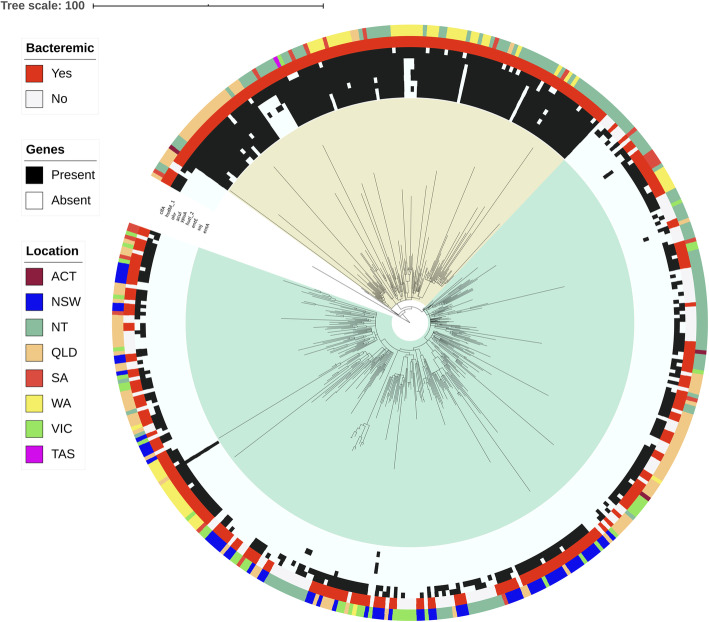
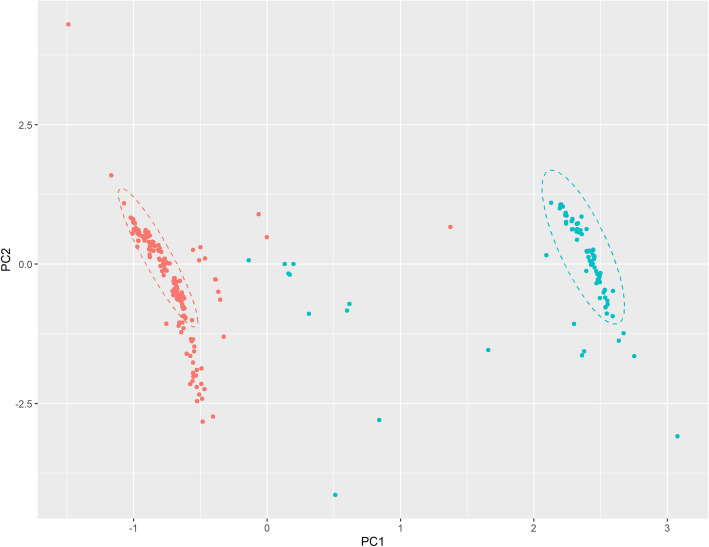
Results: Based on single nucleotide polymorphism phylogenetics we revealed two distinct ST93-IV clades circulating concurrently in Australia. One of the clades contained isolates primarily isolated in the northern regions of Australia whilst isolates in the second clade were distributed across the country. Analyses of the ST93-IV genome plasticity over a 15-year period (2002-2017) revealed an observed gain in accessory genes amongst the clone's population. GWAS analysis on the bacteraemia isolates identified two gene candidates that have previously been associated to this kind of infection.
Conclusions: Although this hypothesis was not tested here, it is possible that the emergence of a ST93-IV clade containing additional virulence genes might be related to the high prevalence of ST93-IV infections amongst the indigenous population living in the northern regions of Australia. More importantly, our data also demonstrated that GWAS can reveal candidate genes for further investigations on the pathogenesis and evolution of MRSA strains within a same lineage.
Keywords: Australia; Bacteraemia; GWAS; Phylogenomics; Staphylococcus aureus.
Conflict of interest statement
The authors declare that they have no competing interests.
Figures
References
-
- Coombs GW, Daley DA, Mowlaboccus S, Lee YT, Pang S. Australian Group on Antimicrobial R. Australian Group on Antimicrobial Resistance (AGAR) Australian Staphylococcus aureus Sepsis Outcome Programme (ASSOP) Annual Report 2018. Commun Dis Intell (2018). 2020;44. - PubMed
-
- van Hal SJ, Steinig EJ, Andersson P, Holden MTG, Harris SR, Nimmo GR, et al. Global Scale Dissemination of ST93: A Divergent Staphylococcus aureus Epidemic Lineage That Has Recently Emerged From Remote Northern Australia. Front Microbiol. 2018;9:1453. doi: 10.3389/fmicb.2018.01453. - DOI - PMC - PubMed
MeSH terms
LinkOut - more resources
Full Text Sources
Medical
