


Stressors in Indoor and Field Brazilian Soccer: Are They Perceived as a Distress or Eustress?
- PMID: 34093309
- PMCID: PMC8173184
- DOI: 10.3389/fpsyg.2021.623719
Stressors in Indoor and Field Brazilian Soccer: Are They Perceived as a Distress or Eustress?
Abstract
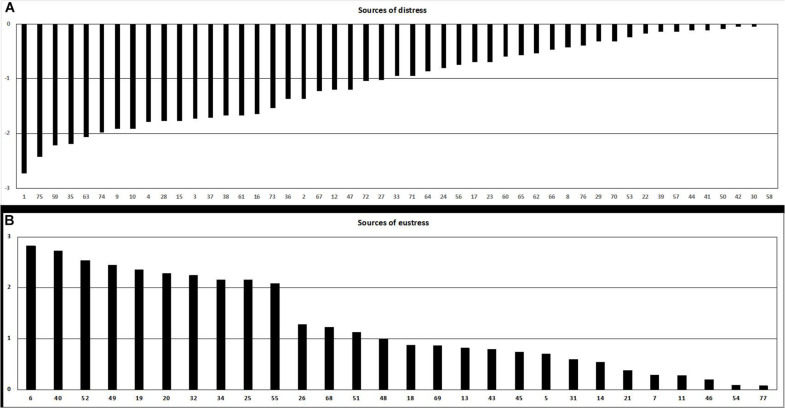
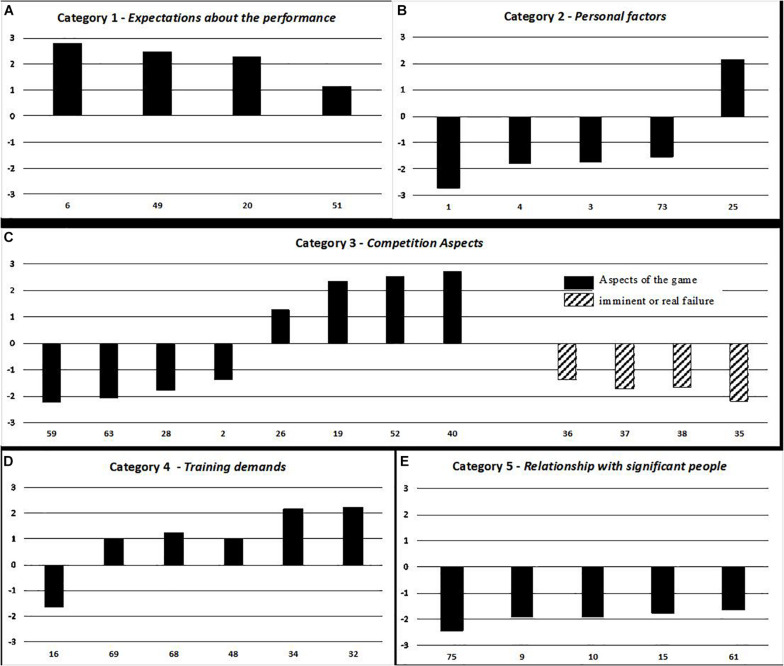
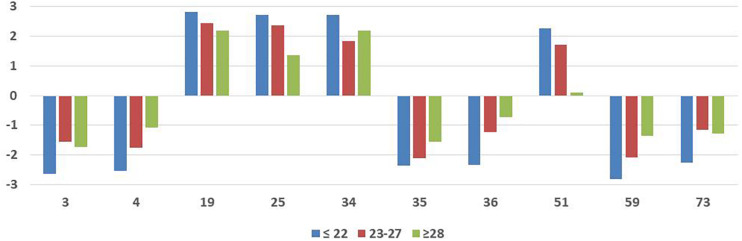
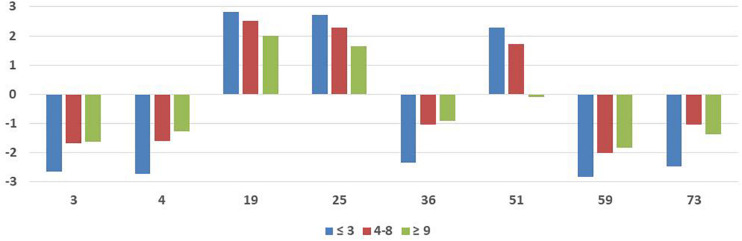
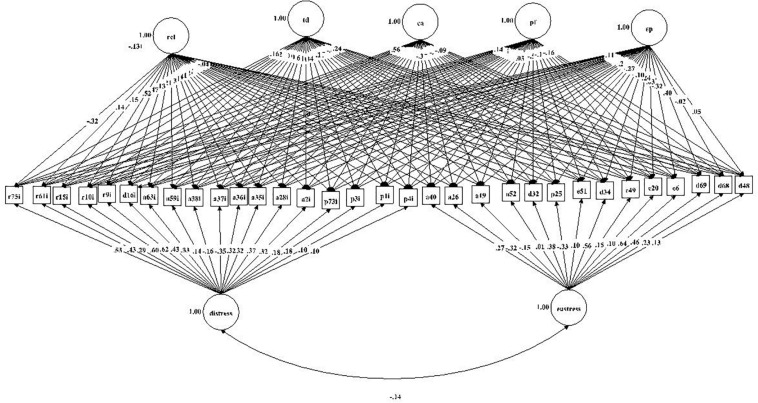
Soccer players inescapably live under stress during the sportive career, and many real-life aspects of soccer situations operate in the ongoing performance. This study's main objective was to elaborate the List of Stressors in Professional Indoor and Field Soccer, a self-report instrument designed to measure the impact of 77 soccer situations upon the sport performance. Participants were 138 indoor and field soccer players from the Brazilian Premier League. Each situation was evaluated on a 7-point scale, ranging from the most negative (-3) to the most positive (+3). Data were analyzed according to the players' perception of the items: distress or eustress and its intensity, and after that, situations perceived as plus -1 and +1 were compared by time in which they were experienced and distributed among five categories established by the literature: Expectations about the Performance, Personal Factors, Competition Aspects, Training Demands, and Relationship with Significant People. Narratives of athletes' experiences were also used to discuss the results. An Exploratory Structural Equation Modeling using Bi-factorial (BI-ESEM) was employed to assess the factor structure. For the total participants, 49 situations were perceived as distress and 28 as eustress. Using the criteria established a priori, the distribution was among the five categories in the remaining 32 situations. Differences in perception between less and more experienced players were found in 11 situations. The results revealed that Brazilian professional soccer players experience various stressful situations. These events are important representations of environmental demands and could predict the performance as they are perceived as eustress or distress. Some of these stressful situations are inherent in sport and others adjacent to the sports system or environment. Coach pressure to win and conflicts with teammates are examples of stressors in-sport, family problems and disputes with press or fans are examples of stressors external to the team, also called peripheral opponents, and showed the relative social influence of significant others in soccer performance. We can conclude that the knowledge of the direction of a given stress situation has important practical implications in preparing athletes and helping them face the performance stressors that are part of soccer daily life.
Keywords: eustress and distress; perception; performance; soccer (football); stress.
Copyright © 2021 Brandão, Polito, Hernandes, Correa, Mastrocola, Oliveira, Oliveira, Moura, Junior and Angelo.
Conflict of interest statement
The authors declare that the research was conducted in the absence of any commercial or financial relationships that could be construed as a potential conflict of interest.
Figures
References
-
- Abernethy B. (1993). “Attention,” in Handbook of Research on Sport Psychology, eds Singer R. N., Murphey M., Tennant L. K. (New York, NY: Macmillan; ).
-
- Anshel M. H. (1990). Toward validation of a model for coping with acute stress in sport. Int. J. Sports Psychol. 21 58–83.
-
- Apitzsch E. (1994). La personalidad del jugador de fútbol de élite. Rev. Psicol. Deporte 3 89–99.
-
- Apitzsch E. (1995). “Psychodynamic theory of personality and sport performance,” in European Perspectives on Exercise and Sport Psychology, ed. Biddle S. J. H. (Wallingford: CABI; ), 111–127.
-
- Arboix Alió J., Aguilera-Castells J., Trabal Taña G., Sánchez-Lopez M. J. (2020). Comparison of home advantage in men’s and women’s Portuguese roller hockey league. Cuad. Psicol. Deporte 20 181–189. 10.6018/cpd.363041 - DOI
LinkOut - more resources
Full Text Sources
Miscellaneous
