


Lifestyle and Non-muscle Invasive Bladder Cancer Recurrence, Progression, and Mortality: Available Research and Future Directions
- PMID: 34095407
- PMCID: PMC8174672
- DOI: 10.3233/blc-190249
Lifestyle and Non-muscle Invasive Bladder Cancer Recurrence, Progression, and Mortality: Available Research and Future Directions
Abstract
Background: A broad, comprehensive review of studies exploring associations between lifestyle factors and non-muscle invasive bladder cancer (NMIBC) outcomes is warranted to consolidate recommendations and identify gaps in research.
Objective: To summarize the literature on associations between lifestyle factors and clinical outcomes among patients with NMIBC.
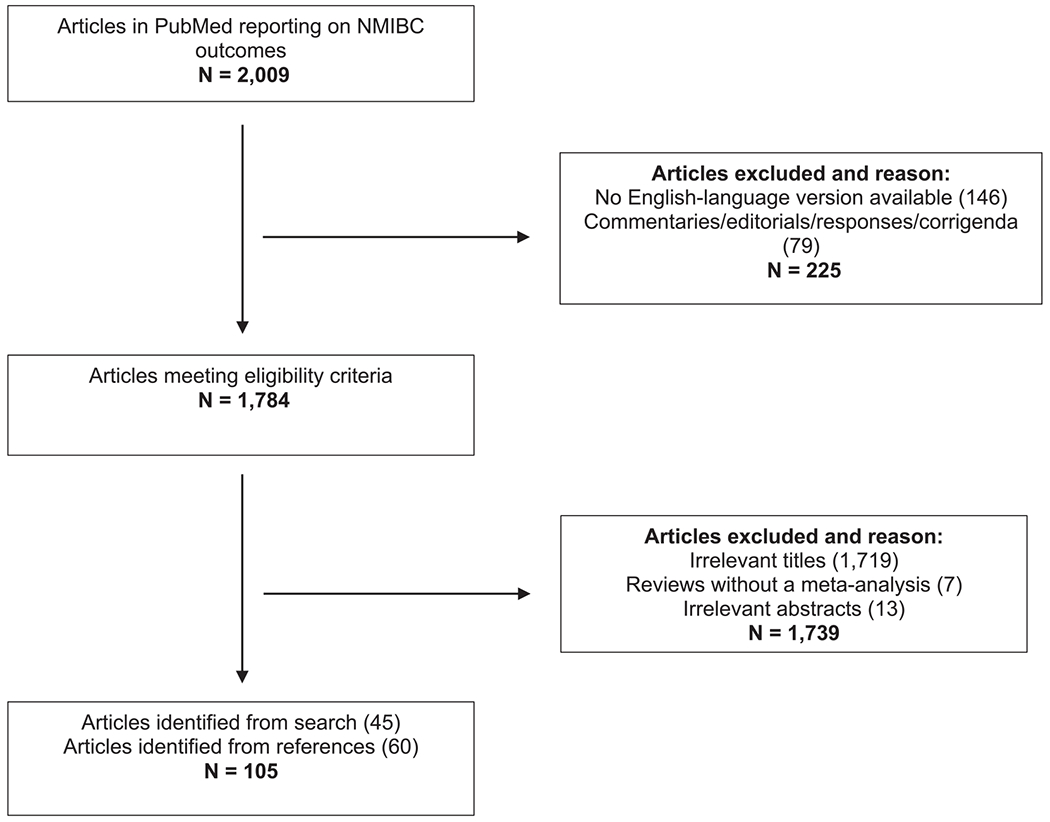
Methods: PubMed was systematically queried for articles published through March 2019 regarding lifestyle factors and recurrence, progression, cancer-specific mortality, and all-cause mortality among patients with NMIBC.
Results: Notwithstanding many ambiguities, there is good-quality evidence suggesting a benefit of smoking avoidance/cessation, healthy body mass index (BMI), and type II diabetes mellitus prevention and treatment. Lactobacillus casei probiotic supplementation may reduce recurrence. There have been individual studies suggesting a benefit for uncooked broccoli and supplemental vitamin E as well as avoidance of supplemental vitamin B9, areca nut chewing, and a "Western diet" pattern high in fried foods and red meat. Additional studies do not suggest associations between NMIBC outcomes and use of fibrin clot inhibitors; insulin and other oral hypoglycemics; statins; supplemental selenium, vitamin A, vitamin C, and vitamin B6; fluid intake and intake of specific beverages (e.g., alcohol, coffee, green tea, cola); various dietary patterns (e.g., Tex-Mex, high fruit and vegetable, low-fat); and occupational and chemical exposures.
Conclusions: Despite a myriad of publications on lifestyle factors and NMIBC, a need remains for research on unexplored associations (e.g., physical activity) and further studies that can elucidate causal effects. This would inform future implementation strategies for healthy lifestyle change in NMIBC patients.
Keywords: Urinary bladder neoplasms; body mass index; diabetes mellitus; diet; dietary supplements; lifestyle; non-invasive; prognosis; recurrence; smoking.
Conflict of interest statement
CONFLICT OF INTEREST SPP is on the advisory board for BMS; consultant for Photocure. SAK is on the advisory board and is a consultant for Mojo Enterprises Inc. The other authors have no conflicts of interest to disclose.
Figures
References
-
- Siegel RL, Miller KD, Jemal A. Cancer statistics, 2019. CA: A Cancer Journal for Clinicians. 2019;69(1):7–34. - PubMed
-
- Kirkali Z, Chan T, Manoharan M, Algaba F, Busch C, Cheng L, et al. Bladder cancer: Epidemiology, staging and grading, and diagnosis. Urology. 2005;66(6, Supplement 1):4–34. - PubMed
-
- Cookson MS, Herr HW, Zhang ZF, Soloway S, Sogani PC, Fair WR. The treated natural history of high risk superficial bladder cancer: 15-year outcome. The Journal of Urology. 1997;158(1):62–7. - PubMed
-
- Palou J, Sylvester RJ, Faba OR, Parada R, Pena JA, Algaba F, et al. Female gender and carcinoma in situ in the prostatic urethra are prognostic factors for recurrence, progression, and disease-specific mortality in T1G3 bladder cancer patients treated with bacillus Calmette-Guerin. European Urology. 2012;62(1):118–25. - PubMed
-
- Sylvester RJ, van der Meijden APM, Oosterlinck W, Witjes JA, Bouffioux C, Denis L, et al. Predicting Recurrence and Progression in Individual Patients with Stage Ta T1 Bladder Cancer Using EORTC Risk Tables: A Combined Analysis of 2596 Patients from Seven EORTC Trials. European Urology. 2006;49(3):466–77. - PubMed
