


Plastic microfibre pollution: how important is clothes' laundering?
- PMID: 34095591
- PMCID: PMC8167216
- DOI: 10.1016/j.heliyon.2021.e07105
Plastic microfibre pollution: how important is clothes' laundering?
Abstract
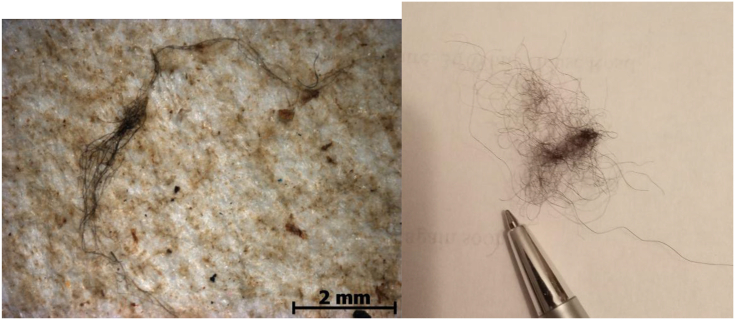
Plastic microfibre pollution produced by domestic and commercial laundering of synthetic textiles has recently been incriminated in the press and the scientific literature as the main source (up to 90%) of primary microplastics in the oceans. Polyethylene terephthalate (PET) is the most common microfibre encountered. This review aims to provide updated information on worldwide plastic microfibre pollution caused by textile laundering and some possibilities for its control. Release of microfibres during domestic washing and tumble drying, their fate in wastewater treatment plants (WWTPs) and the oceans, and their environmental effects on the aquatic biota are discussed, as well as potential control methods at the levels of textile modification and laundry procedures. Environmental effects on aquatic biota are important; as a result of their small size and length-to-diameter ratio, microfibers are more effectively incorporated by organisms than other plastic particle groups. Simulation laundering studies may be useful in the development of a Standard Test Method and modification of WWTPs may reduce microfibre release into aquatic systems. However, improvements will be necessary in textile design and appliance design, and recommendations should be made to consumers about reducing their personal impact on the environment through their laundering choices, which can include appliances, fabric care products and washing conditions. Official regulation, such as that introduced recently by the French government, may be necessary to reduce plastic microfibre release from clothes' laundering.
Keywords: Ecotoxicity; Laundry effluent; Microfibres; Microplastics; PET; Waste treatment plants.
© 2021 The Author(s).
Conflict of interest statement
The authors declare no conflict of interest.
Figures

References
-
- Acharya S., Rumi S.S., Hu Y. Microfibers from synthetic textiles as a major source of microplastics in the environment: a review. Textil. Res. J. 2021
-
- Adams J.K., Dean B.Y., Athey S.N. Anthropogenic particles (including microfibers and microplastics) in marine sediments of the Canadian Arctic. Sci. Total Environ. 2021;784:147155. - PubMed
-
- Akanyange S.N., Lyu X., Zhao X. Does microplastic really represent a threat? A review of the atmospheric contamination sources and potential impacts. Sci. Total Environ. 2021;777:146020. - PubMed
-
- Ali S.S., Elsamahy T., Koutra E. Degradation of conventional plastic wastes in the environment: a review on current status of knowledge and future perspectives of disposal. Sci. Total Environ. 2021;771:144719. - PubMed
-
- Allen S., Allen D., Phoenix V.R. Atmospheric transport and deposition of microplastics in a remote mountain catchment. Nat. Geosci. 2019;12:339–344.
Publication types
LinkOut - more resources
Full Text Sources
Other Literature Sources
