


β-sitosterol reduces anxiety and synergizes with established anxiolytic drugs in mice
- PMID: 34095883
- PMCID: PMC8149471
- DOI: 10.1016/j.xcrm.2021.100281
β-sitosterol reduces anxiety and synergizes with established anxiolytic drugs in mice
Abstract
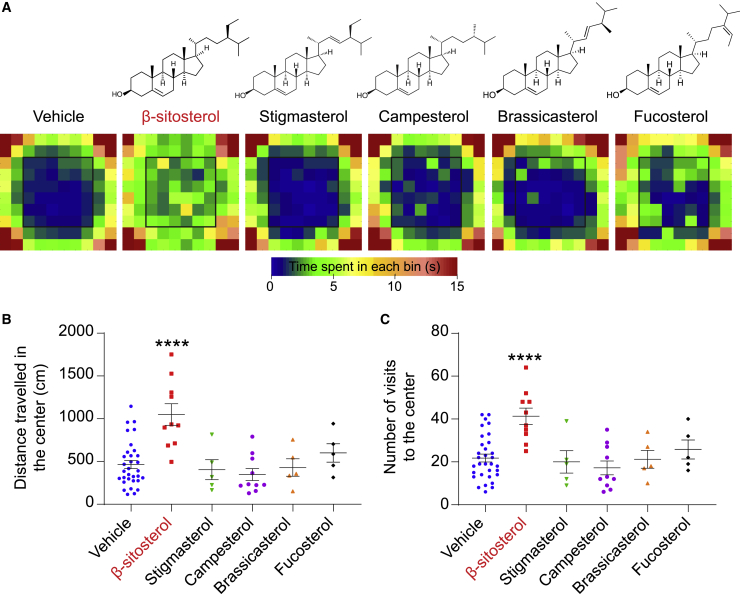
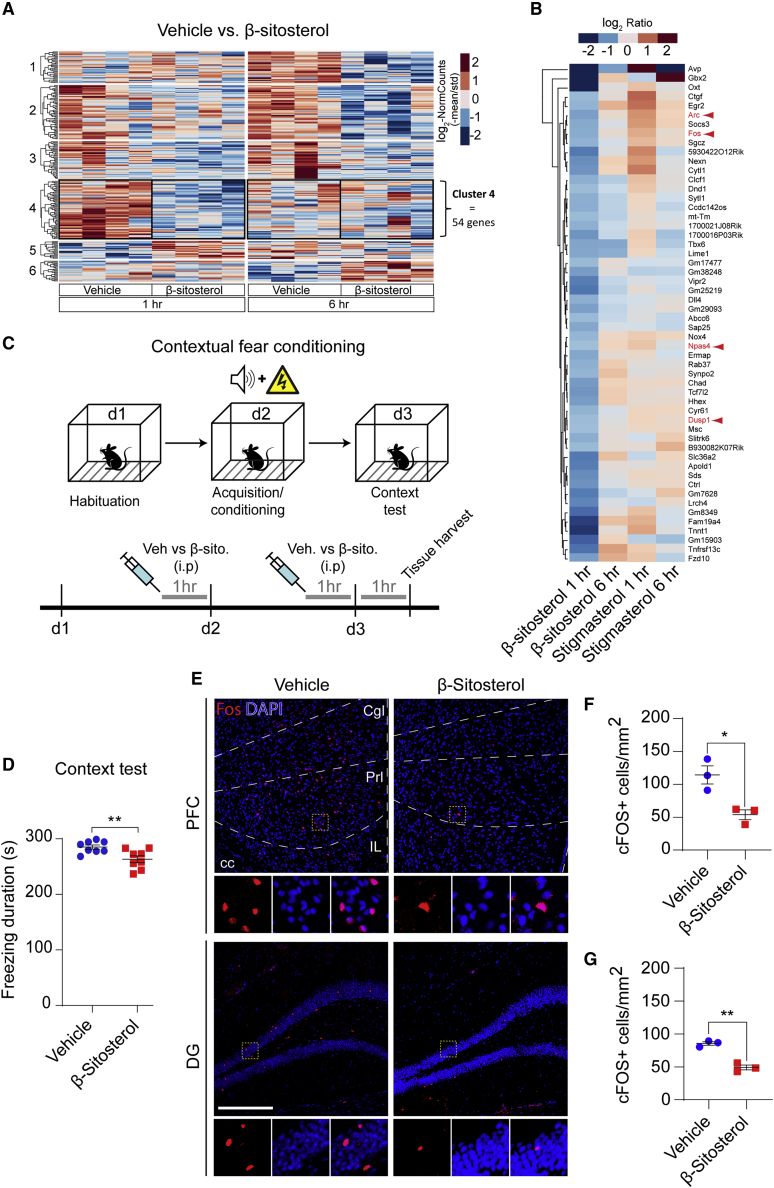
Anxiety and stress-related conditions represent a significant health burden in modern society. Unfortunately, most anxiolytic drugs are prone to side effects, limiting their long-term usage. Here, we employ a bioinformatics screen to identify drugs for repurposing as anxiolytics. Comparison of drug-induced gene-expression profiles with the hippocampal transcriptome of an importin α5 mutant mouse model with reduced anxiety identifies the hypocholesterolemic agent β-sitosterol as a promising candidate. β-sitosterol activity is validated by both intraperitoneal and oral application in mice, revealing it as the only clear anxiolytic from five closely related phytosterols. β-sitosterol injection reduces the effects of restraint stress, contextual fear memory, and c-Fos activation in the prefrontal cortex and dentate gyrus. Moreover, synergistic anxiolysis is observed when combining sub-efficacious doses of β-sitosterol with the SSRI fluoxetine. These preclinical findings support further development of β-sitosterol, either as a standalone anxiolytic or in combination with low-dose SSRIs.
Keywords: CNS drugs; SSRIs; anxiolytics; drug repositioning; fluoxetine; metabolomics; phytosterol; transcriptomics; β-Sitosterol.
© 2021 The Author(s).
Conflict of interest statement
N.P. and M.F. have a patent application related to this work, PCT patent application number PCT/IL2018/050495, Publication number WO/2018/207178, on “Methods of treating psychiatric stress disorders.”
Figures



References
Publication types
MeSH terms
Substances
LinkOut - more resources
Full Text Sources
Medical
Molecular Biology Databases
