


Evaluation of a continuous glucose monitoring system in neonatal foals
- PMID: 34096103
- PMCID: PMC8295665
- DOI: 10.1111/jvim.16186
Evaluation of a continuous glucose monitoring system in neonatal foals
Abstract
Background: Monitoring blood glucose concentrations is common in critically ill neonatal foals, especially septic foals and those receiving naso-esophageal feedings or IV parenteral nutrition. Glucose typically is measured using a point-of-care (POC) glucometer but requires repeated restraint and blood collections, which may cause irritation at venipuncture sites and increased demands on nursing staff. Continuous glucose monitoring systems (CGMS) may provide an accurate alternative for monitoring blood glucose concentration.
Objectives: To determine the correlation and accuracy of a CGMS to monitor neonatal foals' blood glucose concentrations as compared to a POC glucometer and laboratory chemistry analysis (CHEM).
Animals: Samples from 4 healthy and 4 ill neonatal foals.
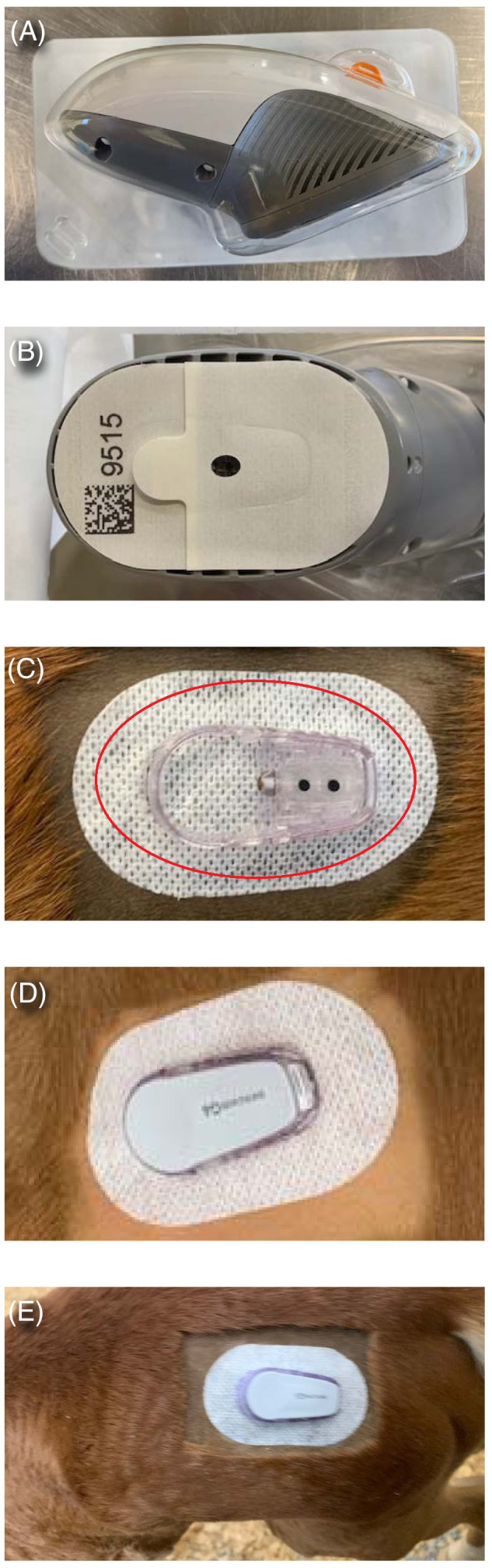
Methods: A CGMS was placed on each foal, and glucose measurements acquired from this device were compared to simultaneous measurements of blood glucose concentration using a POC glucometer and CHEM.
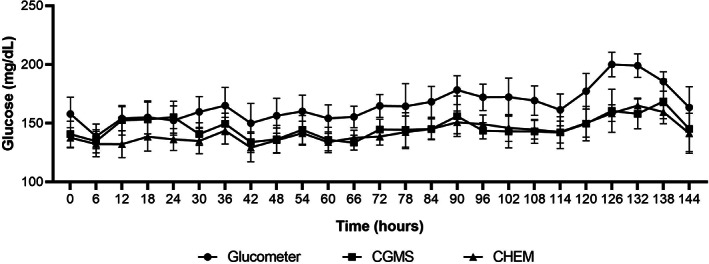
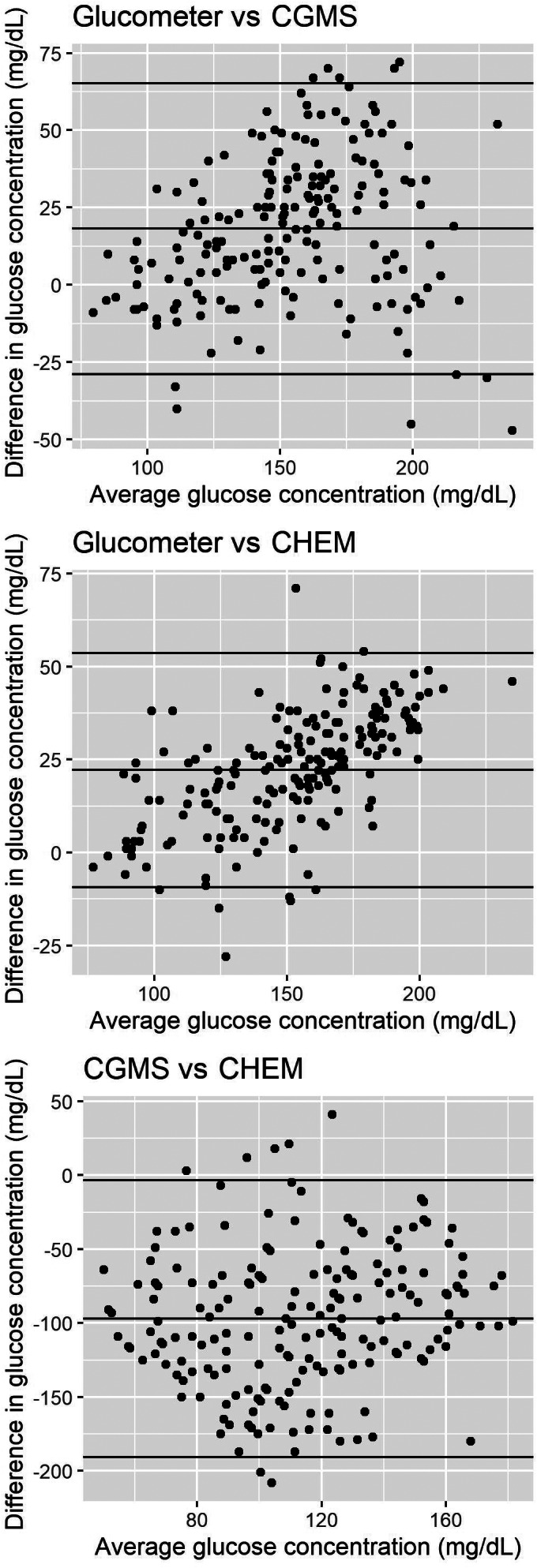
Results: Two-hundred matched glucose measurements were collected from 8 neonatal foals. The mean bias (95% limits of agreement) between CGMS and CHEM, CGMS and POC glucometer, and POC glucometer and CHEM was 3.97 mg/dL (-32.5 to 40.4), 18.2 mg/dL (-28.8 to 65.2), and 22.18 mg/dL (-9.3 to 53.67), respectively. The Pearson's correlation coefficient (r) was significantly correlated among all devices: GCMS and CHEM (r = 0.81), CGMS and POC glucometer (r = 0.77) and POC glucometer-CHEM (r = 0.92).
Conclusions and clinical importance: Within the blood glucose concentration ranges in this study (78-212 mg/dL), CGMS measurements were significantly correlated with CHEM, suggesting that it is an acceptable method to provide meaningful, immediate, and continuous glucose concentration measurements in neonatal foals while eliminating the need for repeated restraint and blood collection.
Keywords: critical care; nutrition; point-of-care; sepsis.
© 2021 The Authors. Journal of Veterinary Internal Medicine published by Wiley Periodicals LLC on behalf of American College of Veterinary Internal Medicine.
Conflict of interest statement
Authors declare no conflict of interest.
Figures
References
-
- Hollis AR, Furr MO, Magdesian KG, et al. Blood glucose concentrations in critically ill neonatal foals. J Vet Intern Med. 2008;22:1223‐1227. - PubMed
-
- Gayle JM, Cohen ND, Chaffin MK. Factors associated with survival in septicemic foals: 65 cases (1988‐1995). J Vet Intern Med. 1998;12:140‐146. - PubMed
-
- Peek SF, Semrad S, McGurik SM, et al. Prognostic value of clinicopathologic variables obtained at admission and effect of antiendotoxin plasma on survival in septic and critically ill foals. J Vet Intern Med. 2006;20:569‐574. - PubMed
-
- Lheureux O, Prevedollo D, Presier JC. Update on glucose in critical care. Nutrition. 2019;59:14‐20. - PubMed
-
- McKenzie HC, Geor RJ. Feeding management of sick neonatal foals. Vet Clin Equine. 2009;25:109‐119. - PubMed
MeSH terms
Substances
Grants and funding
LinkOut - more resources
Full Text Sources
Medical
