


Persistence and adherence to non-vitamin K antagonist oral anticoagulant treatment in patients with atrial fibrillation across five Western European countries
- PMID: 34096584
- PMCID: PMC8576279
- DOI: 10.1093/europace/euab091
Persistence and adherence to non-vitamin K antagonist oral anticoagulant treatment in patients with atrial fibrillation across five Western European countries
Abstract
Aims: To assess persistence and adherence to non-vitamin K antagonist oral anticoagulant (NOAC) treatment in patients with atrial fibrillation (AF) in five Western European healthcare settings.
Methods and results: We conducted a multi-country observational cohort study, including 559 445 AF patients initiating NOAC therapy from Stockholm (Sweden), Denmark, Scotland, Norway, and Germany between 2011 and 2018. Patients were followed from their first prescription until they switched to a vitamin K antagonist, emigrated, died, or the end of follow-up. We measured persistence and adherence over time and defined adequate adherence as medication possession rate ≥90% among persistent patients only.
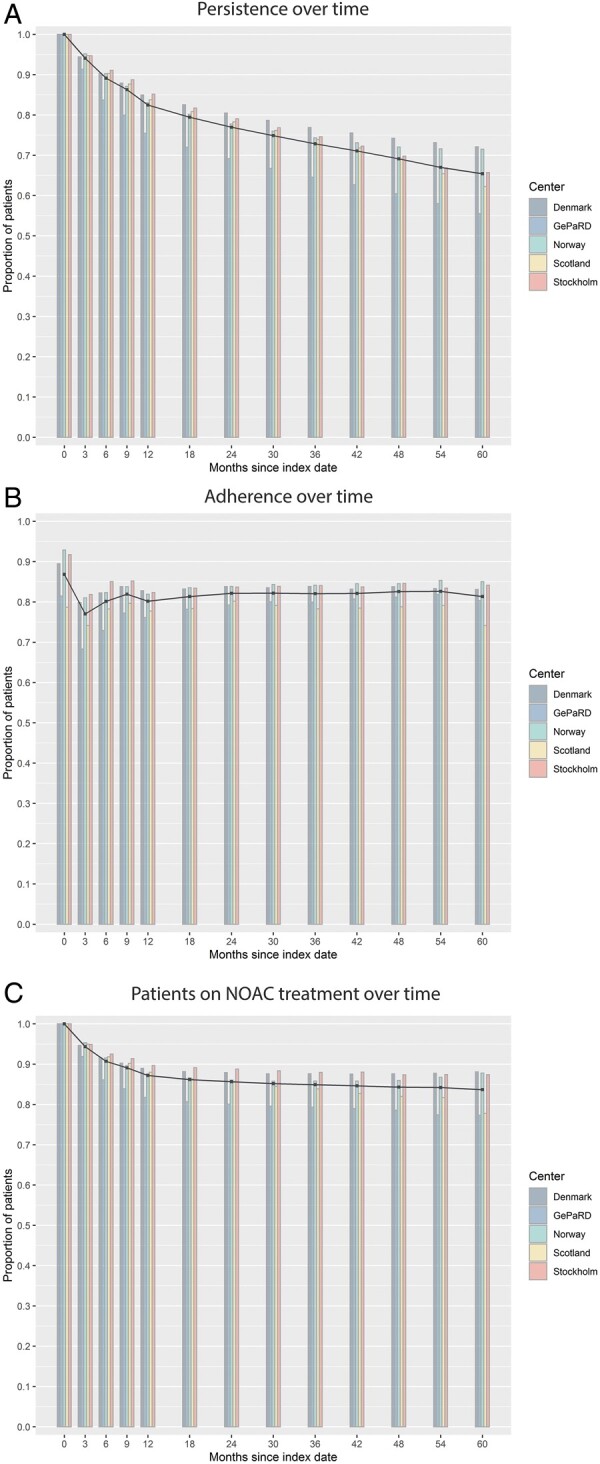
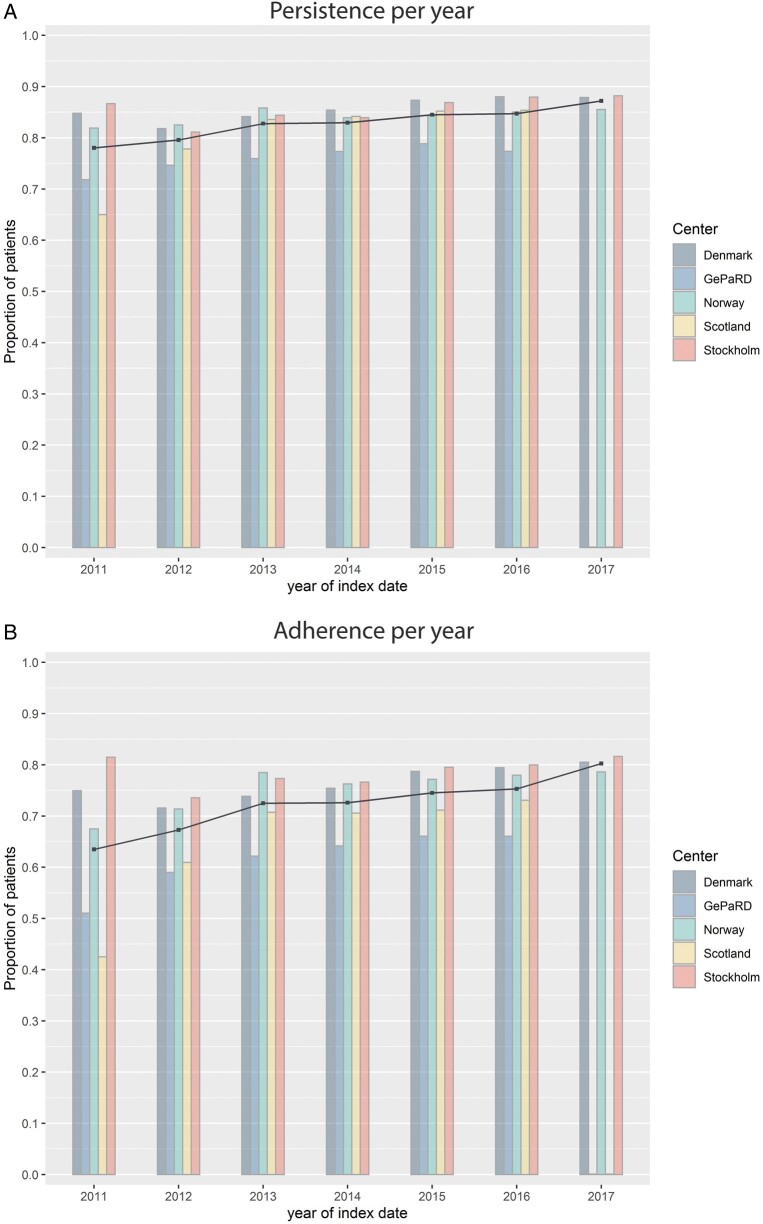
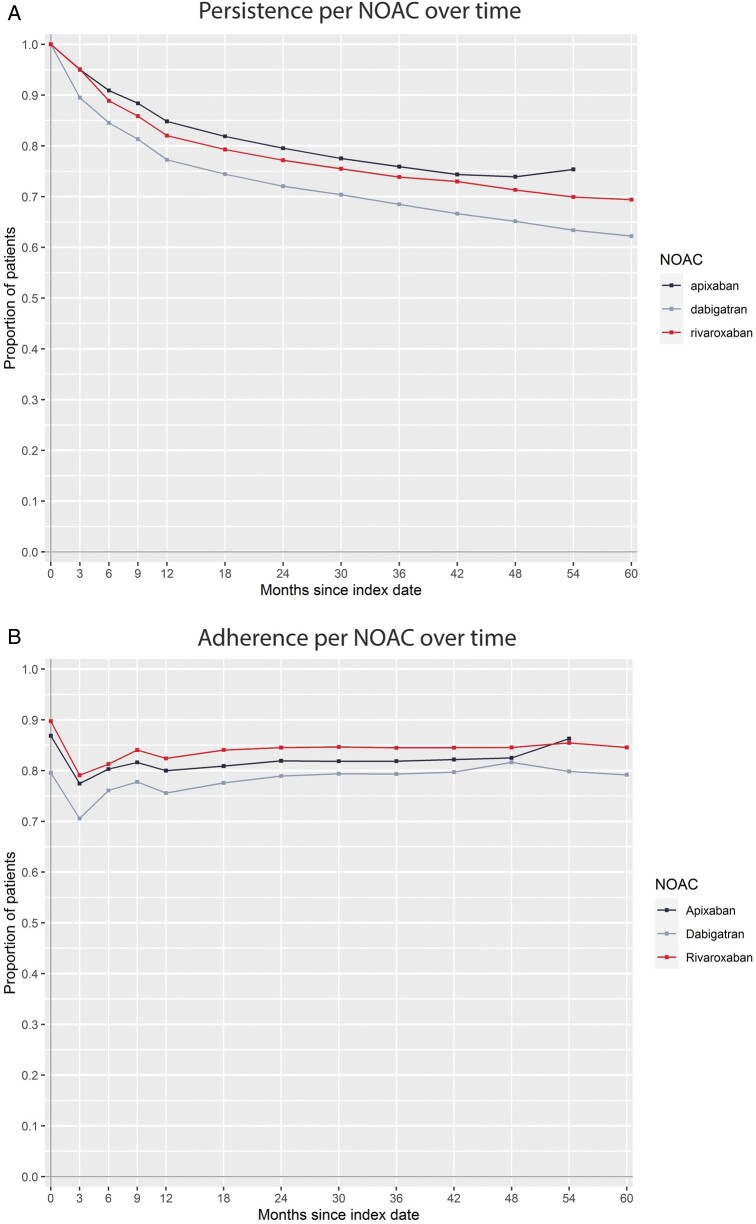
Results: Overall, persistence declined to 82% after 1 year and to 63% after 5 years. When including restarters of NOAC treatment, 85% of the patients were treated with NOACs after 5 years. The proportion of patients with adequate adherence remained above 80% throughout follow-up. Persistence and adherence were similar between countries and was higher in patients starting treatment in later years. Both first year persistence and adherence were lower with dabigatran (persistence: 77%, adherence: 65%) compared with apixaban (86% and 75%) and rivaroxaban (83% and 75%) and were statistically lower after adjusting for patient characteristics. Adherence and persistence with dabigatran remained lower throughout follow-up.
Conclusion: Persistence and adherence were high among NOAC users in five Western European healthcare settings and increased in later years. Dabigatran use was associated with slightly lower persistence and adherence compared with apixaban and rivaroxaban.
Keywords: Adherence; Atrial fibrillation; Oral anticoagulants; Persistence; Stroke.
© The Author(s) 2021. Published by Oxford University Press on behalf of the European Society of Cardiology.
Figures
References
-
- Hindricks G, Potpara T, Dagres N, Arbelo E, Bax JJ, Blomström-Lundqvist C. et al. 2020 ESC Guidelines for the diagnosis and management of atrial fibrillation developed in collaboration with the European Association of Cardio-Thoracic Surgery (EACTS). Eur Heart J 2021;42:373–498. - PubMed
-
- Ruff CT, Giugliano RP, Braunwald E, Hoffman EB, Deenadayalu N, Ezekowitz MD. et al. Comparison of the efficacy and safety of new oral anticoagulants with warfarin in patients with atrial fibrillation: a meta-analysis of randomised trials. Lancet 2014;383:955–62. - PubMed
-
- Heidbuchel H, Vrijens B.. Non-vitamin K antagonist oral anticoagulants (NOAC): considerations on once- vs. twice-daily regimens and their potential impact on medication adherence. Europace 2015;17:1317–8. - PubMed
Publication types
MeSH terms
Substances
LinkOut - more resources
Full Text Sources
Medical
