


Antimicrobial Photodynamic Inactivation Using Topical and Superhydrophobic Sensitizer Techniques: A Perspective from Diffusion in Biofilms
- PMID: 34097752
- PMCID: PMC10375486
- DOI: 10.1111/php.13461
Antimicrobial Photodynamic Inactivation Using Topical and Superhydrophobic Sensitizer Techniques: A Perspective from Diffusion in Biofilms
Abstract
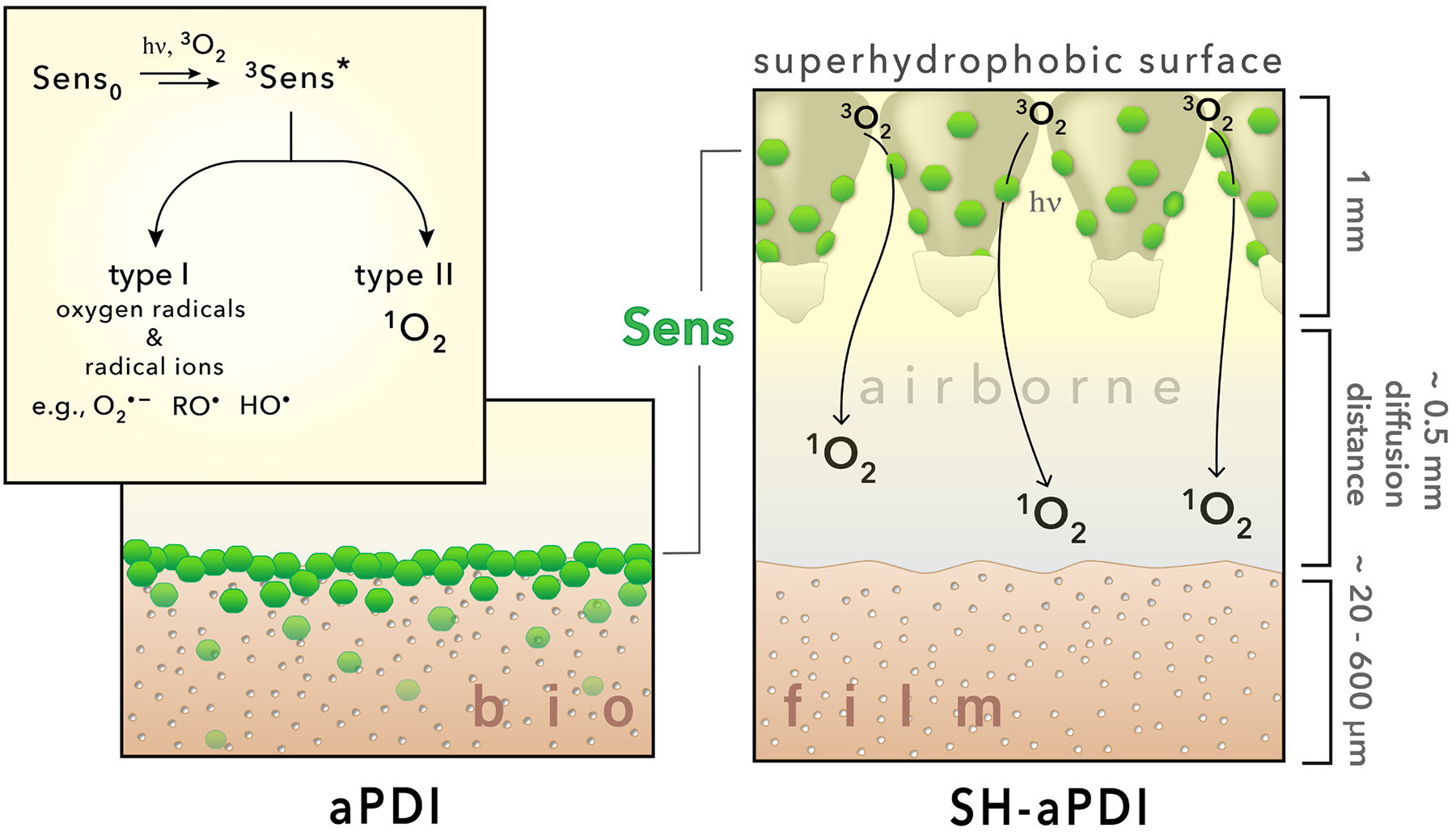
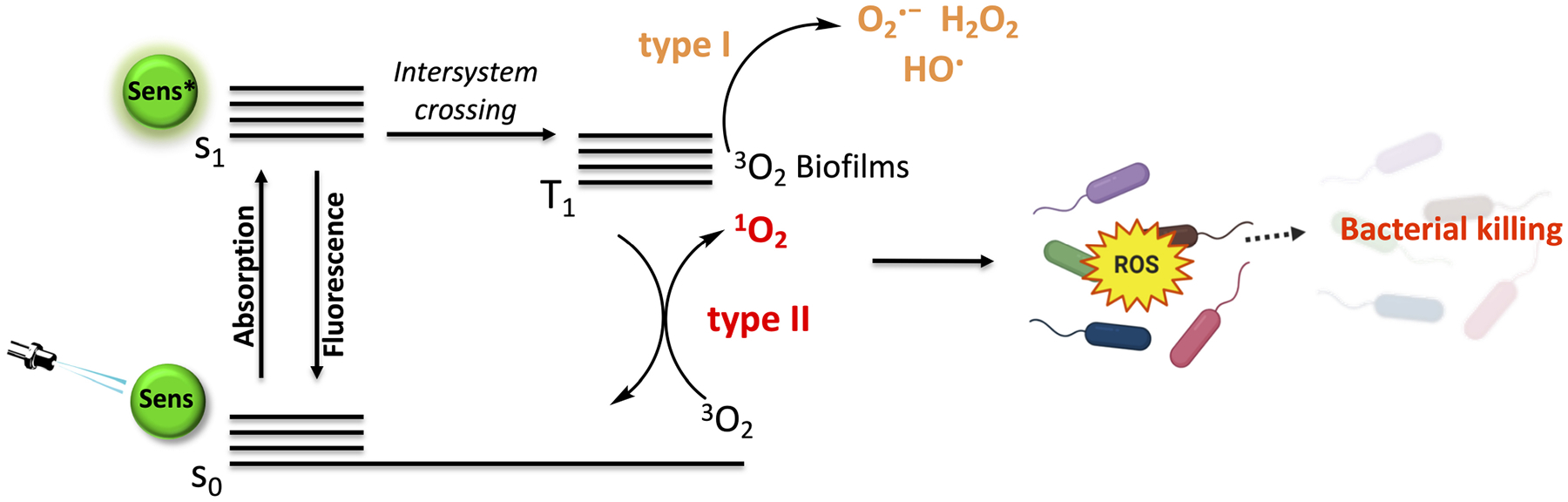
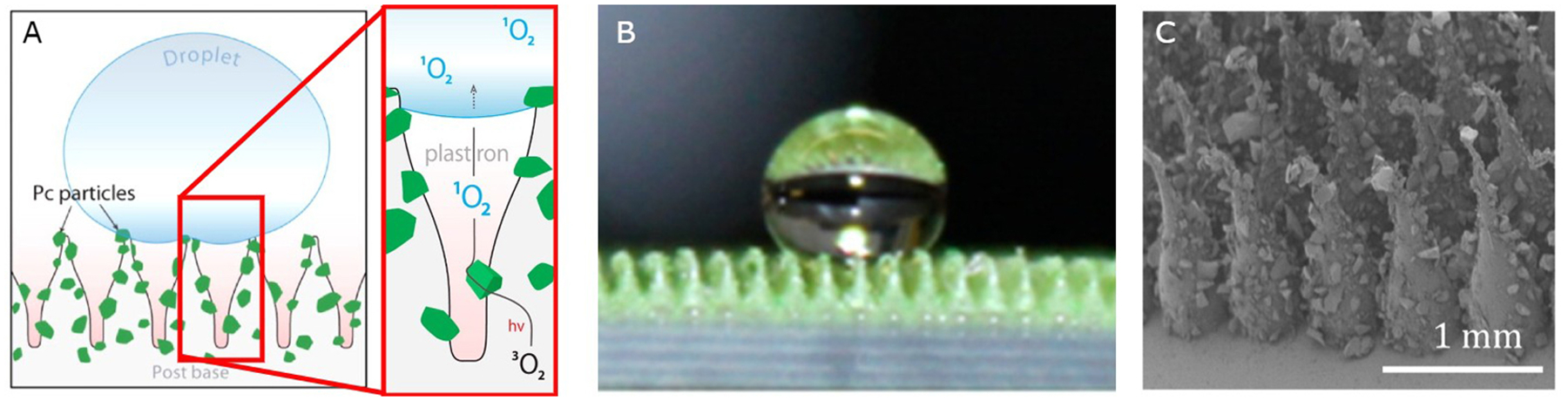
This review describes nanoparticle and dye diffusion in bacterial biofilms in the context of antimicrobial photodynamic inactivation (aPDI). aPDI requires the diffusion of a photosensitizer (Sens) into the biofilm and subsequent photoactivation of oxygen for the generation of reactive oxygen species (ROS) that inactivate microbes. Molecular diffusion in biofilms has been long investigated, whereas this review is intended to draw a logical link between diffusion in biofilms and ROS, a combination that leads to the current state of aPDI and superhydrophobic aPDI (SH-aPDI). This review should be of interest to photochemists, photobiologists and researchers in material and antimicrobial sciences as is ties together conventional aPDI with the emerging subject of SH-aPDI.
© 2021 American Society for Photobiology.
Figures
References
-
- Felgenträger A, Maisch T, Spath A, Schroder JA and Bäumler W (2014) Singlet oxygen generation in porphyrin-doped polymeric surface coating enables antimicrobial effects on Staphylococcus aureus. Phys. Chem. Chem. Phys 16, 20598–20607. - PubMed
-
- Cieplik F, Deng D, Crielaard W, Buchalla W, Hellwig E, Al-Ahmad A and Maisch T (2018) Antimicrobial photodynamic therapy—What we know and what we don’t. Crit. Rev. Microbiol 44, 571–589. - PubMed
-
- Cieplik F, Buchalla W, Hellwig E, Al-Ahmad A, Hiller K-A, Maisch T and Karygianni L (2017) Antimicrobial photodynamic therapy as an adjunct for treatment of deep carious lesions—A systematic review. Photodiagnosis Photodyn. Ther 18, 54–62. - PubMed
Publication types
MeSH terms
Substances
Grants and funding
LinkOut - more resources
Full Text Sources
