


Thyroid dysfunction in COVID-19 patients
- PMID: 34101132
- PMCID: PMC8185485
- DOI: 10.1007/s40618-021-01599-0
Thyroid dysfunction in COVID-19 patients
Abstract
Purpose: "Non thyroidal illness syndrome" (NTIS) or "euthyroid sick syndrome" (ESS) is a possible biochemical finding in euthyroid patients with severe diseases. It is characterized by a reduction of serum T3 (fT3), sometimes followed by reduction of serum T4 (fT4). The relationship between thyroid hormones levels and mortality is well known and different studies showed a direct association between NTIS and mortality. The sudden spread of the 2019 novel coronavirus (SARS-CoV 2) infection (COVID-19) and its high mortality become a world healthcare problem. Our aim in this paper was to investigate if patients affected by COVID-19 presented NTIS and the relationship between thyroid function and severity of this infection.
Methods: We evaluated the thyroid function in two different groups of consecutive patients affected by COVID-19 with respect to a control group of euthyroid patients. Group A included patients hospitalized for COVID-19 pneumonia while patients requiring intensive care unit (ICU) for acute respiratory syndrome formed the group B. Group C identified the control group of euthyroid patients.
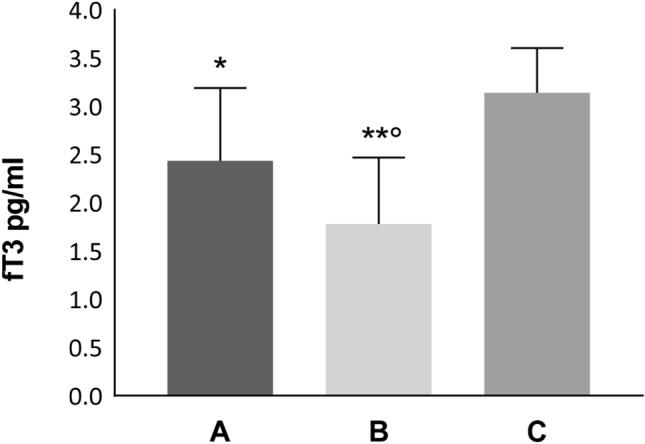
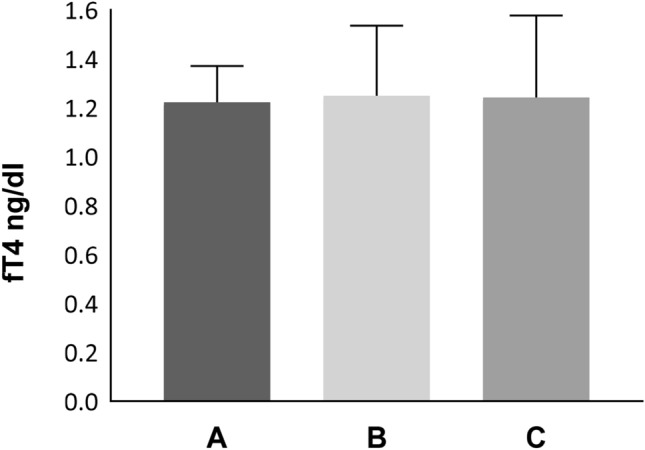
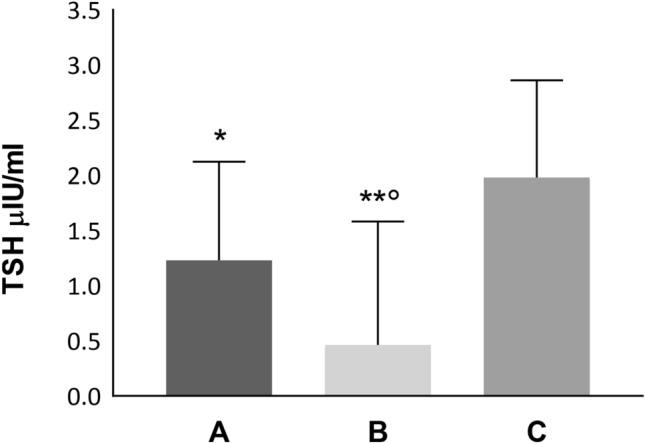
Results: Patients from group A and group B showed a statistically significant reduction in fT3 and TSH compared to group C. In group B, compared to group A, a further statistically significant reduction of fT3 and TSH was found.
Conclusions: COVID-19 in-patients can present NTIS. FT3 and TSH serum levels are lower in patients with more severe symptoms.
Keywords: COVID-19; Euthyroid sick syndrome; Non-thyroidal illness syndrome; SARS-CoV 2; Thyroid function; Thyroid hormones.
© 2021. Italian Society of Endocrinology (SIE).
Conflict of interest statement
The authors declare that they have no conflict of interest.
Figures
References
-
- DeGroot LJ (2000) The Non-Thyroidal Illness Syndrome. In: Feingold KR, Anawalt B, Boyce A, Chrousos G, de Herder WW, Dungan K, et al., editors. Endotext. South Dartmouth (MA) - PubMed
-
- Van den Berghe G, de Zegher F, Bouillon R. Clinical review 95: acute and prolonged critical illness as different neuroendocrine paradigms. J Clin Endocrinol Metab. 1998;83(6):1827–1834. - PubMed
MeSH terms
Substances
LinkOut - more resources
Full Text Sources
Medical
Miscellaneous
