Review
. 2021 Sep;110(3):649-661.
doi: 10.1002/cpt.2327. Epub 2021 Jul 7.

Moving Pharmacogenetics Into Practice: It's All About the Evidence!

Affiliations
Review

Moving Pharmacogenetics Into Practice: It's All About the Evidence!

Jasmine A Luzum et al. Clin Pharmacol Ther. 2021 Sep.

Abstract

The evidence for pharmacogenetics has grown rapidly in recent decades. However, the strength of evidence required for the clinical implementation of pharmacogenetics is highly debated. Therefore, the purpose of this review is to summarize different perspectives on the evidence required for the clinical implementation of pharmacogenetics. First, we present two patient cases that demonstrate how knowledge of pharmacogenetic evidence affected their care. Then we summarize resources that curate pharmacogenetic evidence, types of evidence (with an emphasis on randomized controlled trials [RCT]) and their limitations, and different perspectives from implementers, clinicians, and patients. We compare pharmacogenetics to a historical example (i.e., the evidence required for the clinical implementation of pharmacokinetics/therapeutic drug monitoring), and we provide future perspectives on the evidence for pharmacogenetic panels and the need for more education in addition to evidence. Although there are differences in the interpretation of pharmacogenetic evidence across resources, efforts for standardization are underway. Survey data illustrate the value of pharmacogenetic testing from the patient perspective, with their providers seen as key to ensuring maximum benefit from test results. However, clinicians and practice guidelines from medical societies often rely on RCT data to guide treatment decisions, which are not always feasible or ethical in pharmacogenetics. Thus, recognition of other types of evidence to support pharmacogenetic implementation is needed. Among pharmacogenetic implementers, consistent evidence of pharmacogenetic associations is deemed most critical. Ultimately, moving pharmacogenetics into practice will require consideration of multiple stakeholder perspectives, keeping particularly attuned to the voice of the ultimate stakeholder-the patient.


Conflict of interest statement

Conflict of Interests: AKT is a Technical Director at Laboratory Corporation of America Holdings. All other authors declared no competing interests for this work.

Figures

Figures 1A-C:
Figures 1A-C:
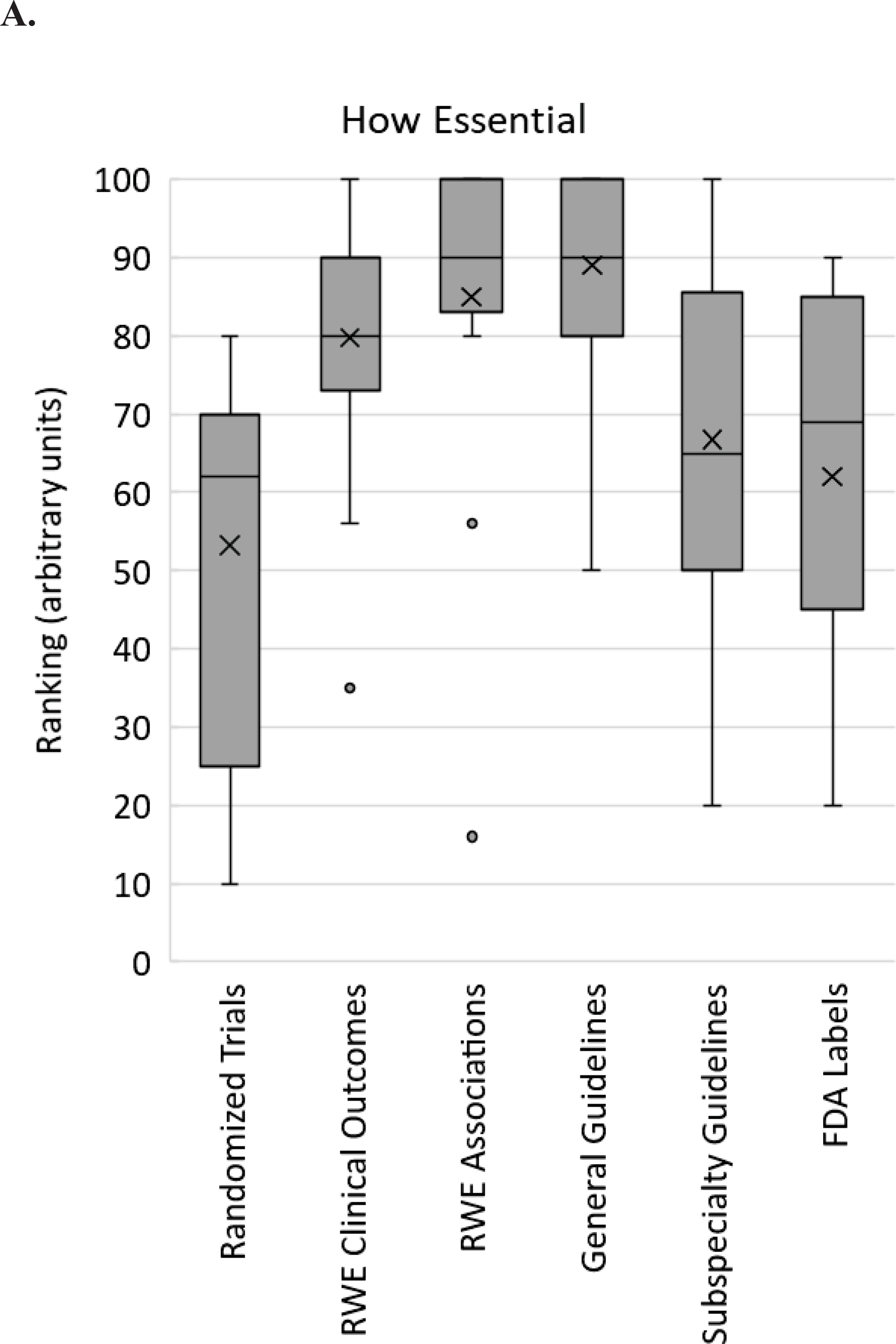
Survey respondent scores from implementers regarding pharmacogenomic evidence. For each of the 6 types of evidence listed on the X-axis, respondents were asked to rank how essential (A), how easy to interpret (B) and how available (C) that type of evidence is for clinical pharmacogenomic implementation on a scale from 0 to 100. The box and whisker plot shows the medians (horizontal lines within boxes), means (X), the interquartile ranges (boxes), the adjacent values (whiskers) and outliers (dots). RWE – real world evidence; FDA – Food and Drug Association.
Figures 1A-C:
Figures 1A-C:
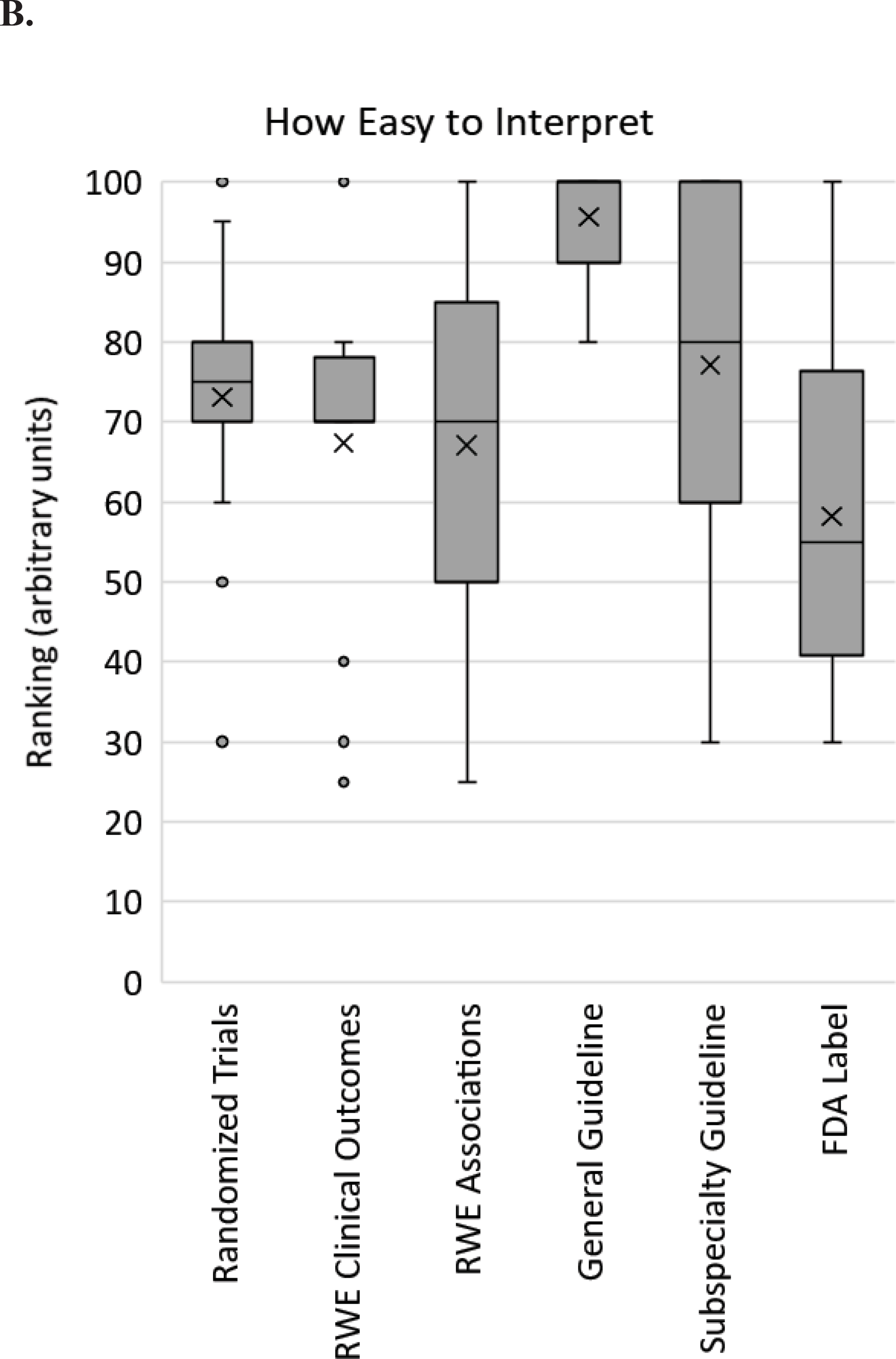
Survey respondent scores from implementers regarding pharmacogenomic evidence. For each of the 6 types of evidence listed on the X-axis, respondents were asked to rank how essential (A), how easy to interpret (B) and how available (C) that type of evidence is for clinical pharmacogenomic implementation on a scale from 0 to 100. The box and whisker plot shows the medians (horizontal lines within boxes), means (X), the interquartile ranges (boxes), the adjacent values (whiskers) and outliers (dots). RWE – real world evidence; FDA – Food and Drug Association.
Figures 1A-C:
Figures 1A-C:
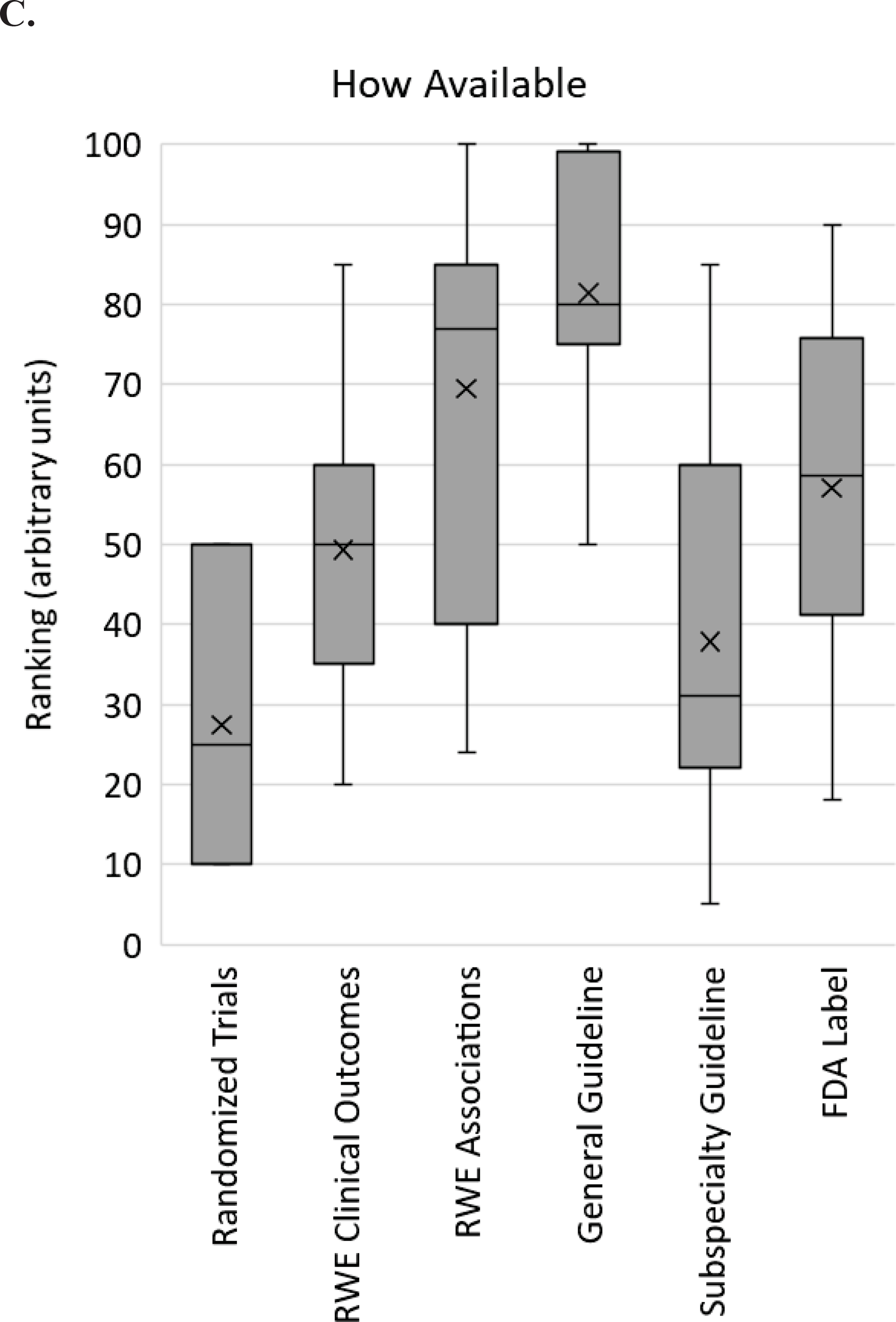
Survey respondent scores from implementers regarding pharmacogenomic evidence. For each of the 6 types of evidence listed on the X-axis, respondents were asked to rank how essential (A), how easy to interpret (B) and how available (C) that type of evidence is for clinical pharmacogenomic implementation on a scale from 0 to 100. The box and whisker plot shows the medians (horizontal lines within boxes), means (X), the interquartile ranges (boxes), the adjacent values (whiskers) and outliers (dots). RWE – real world evidence; FDA – Food and Drug Association.
Figure 2.
Figure 2.
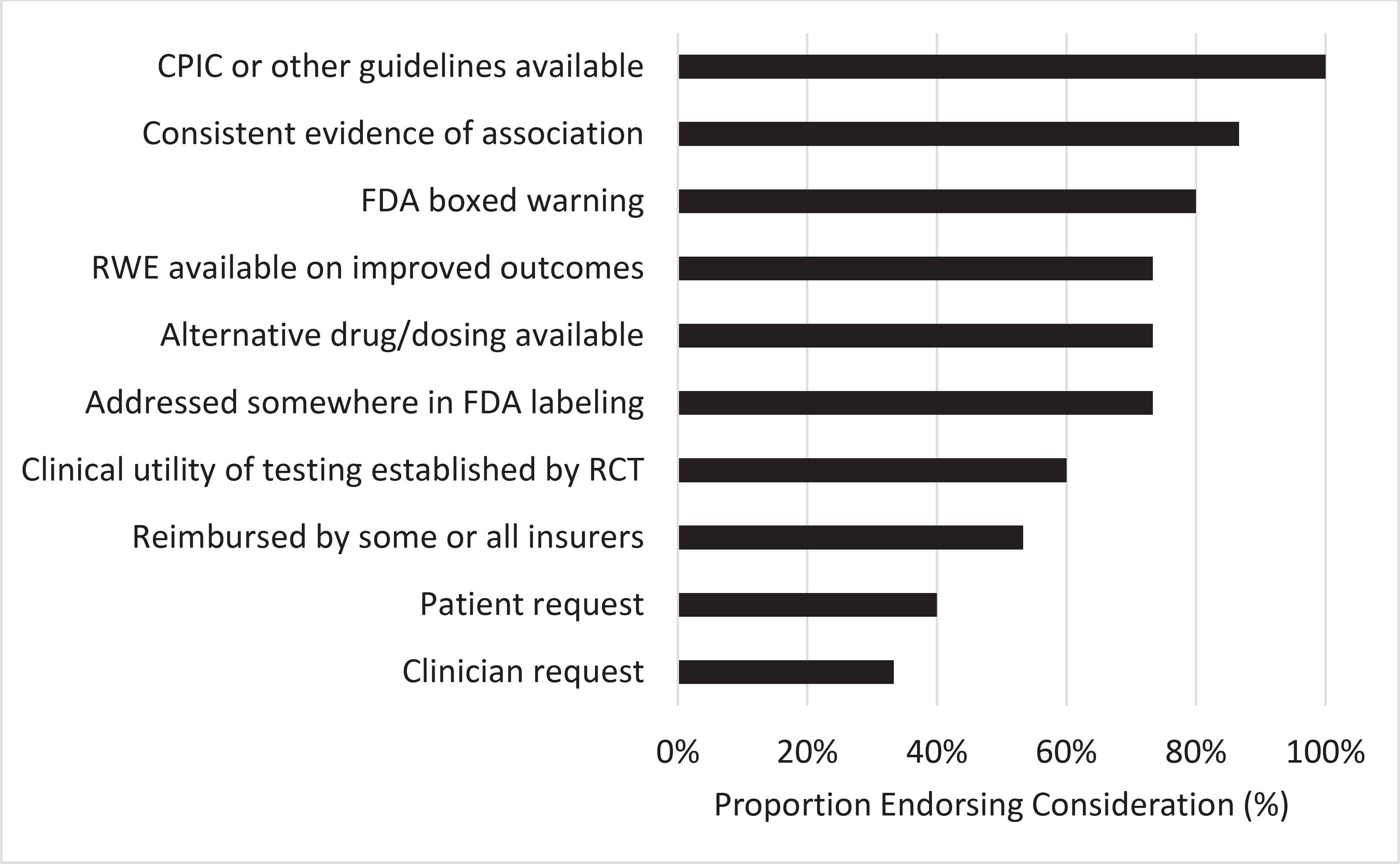
Factors considered by pharmacogenetic clinical implementers when determining whether or not to implement pharmacogenetic testing. Fifteen individuals from 13 different institutions were asked to rate their response on a scale from 0 to 100. CPIC = Clinical Pharmacogenetics Implementation Consortium; FDA = United States Food and Drug Administration; RWE = real world evidence
Figure 3.
Figure 3.
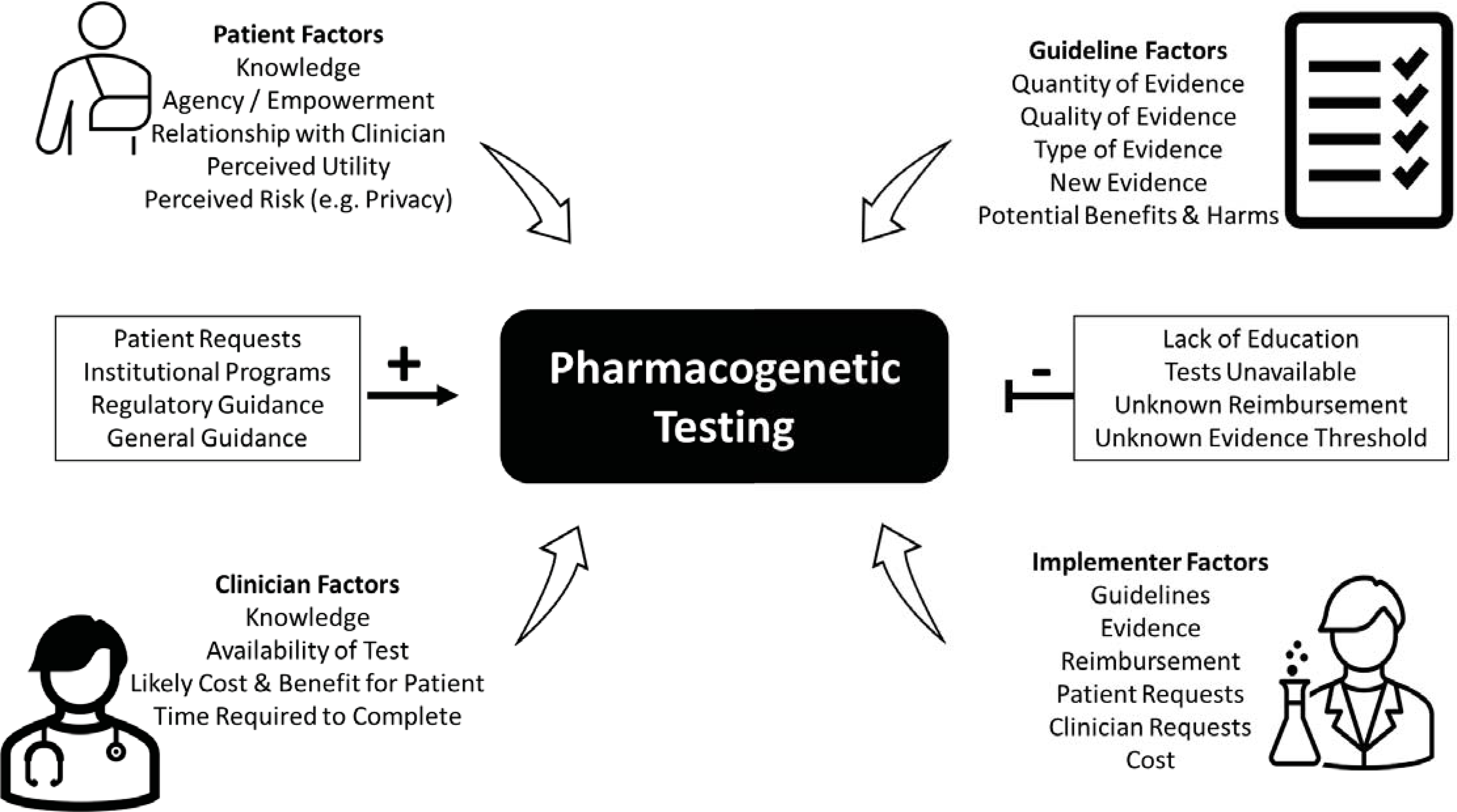
Factors to consider in the clinical implementation of pharmacogenetic testing. Plus sign indicates facilitators, and minus sign indicates barriers.

References

    1. Dunnenberger HM et al.Preemptive clinical pharmacogenetics implementation: current programs in five US medical centers. Annu Rev Pharmacol Toxicol 55, 89–106 (2015). - PMC - PubMed
    1. Hicks JK et al.Implementation of Clinical Pharmacogenomics within a Large Health System: From Electronic Health Record Decision Support to Consultation Services. Pharmacotherapy 36, 940–8 (2016). - PubMed
    1. Cavallari LH et al.The IGNITE Pharmacogenetics Working Group: An Opportunity for Building Evidence with Pharmacogenetic Implementation in a Real-World Setting. Clin Transl Sci 10, 143–6 (2017). - PMC - PubMed
    1. van der Wouden CH et al.Implementing Pharmacogenomics in Europe: Design and Implementation Strategy of the Ubiquitous Pharmacogenomics Consortium. Clin Pharmacol Ther 101, 341–58 (2017). - PubMed
    1. Petry N et al.Implementation of wide-scale pharmacogenetic testing in primary care. Pharmacogenomics 20, 903–13 (2019). - PubMed

Publication types